Audits conducted across Kenya’s public institutions have revealed persistent gaps in compliance with gender equality and inclusion standards, sparking calls for stronger collaboration between national and county governments to close the disparities.
The reviews, carried out in 2024 and 2025 by the National Gender and Equality Commission (NGEC), examined state corporations, public buildings, the teaching workforce and gender mainstreaming in ministries and agencies.
The reports indicate that while some institutions have made progress in mainstreaming gender and inclusion, significant shortcomings remain.
The findings are contained in four reports officially launched in Kilifi town on Tuesday. The publications included the Equality and Inclusion in Boards and Top Management of State Corporations Report (2025), the Accessibility Audit Report of Public and Private Buildings (2025), the Status of the Teachers’ Workforce in Kenya Report (2025) and the Gender Mainstreaming in the Public Sector Report (2024/2025).
The Equality and Inclusion in Boards and Top Management of State Corporations Report (2025) revealed that women accounted for just 33 per cent of board members, with only 19 percent serving as chairpersons, while representation of persons with disabilities stood at less than one percent, far below the constitutional threshold of 5 per cent.
Ethnic diversity in the state corporations was also limited, with seven communities dominating nearly 80 per cent of board seats, according to the Equality and Inclusion in Boards and Top Management of State Corporations Report (2025).
An audit of public and private buildings on accessibility by persons with disabilities across seven counties found widespread non-compliance with disability-friendly standards, as many facilities lacked ramps, tactile surfaces, accessible washrooms, and reserved parking, leaving persons with disabilities excluded from essential services.
The teaching workforce audit revealed that while women make up just over half of teachers employed by the Teachers Service Commission, they remain under-represented in leadership roles and in STEM subjects.
Cases of gender-based violence involving teachers and learners were also documented, underscoring systemic challenges in safeguarding inclusivity in education.
Meanwhile, a review of gender mainstreaming in ministries, departments, and agencies showed that although 92 per cent of institutions allocated budgets for gender mainstreaming, actual investment averaged only 0.08 per cent of total public sector spending.
The audit also revealed that representation of persons with disabilities in the public workforce stood at 1.6 per cent, with minority communities at just 2.3 per cent.
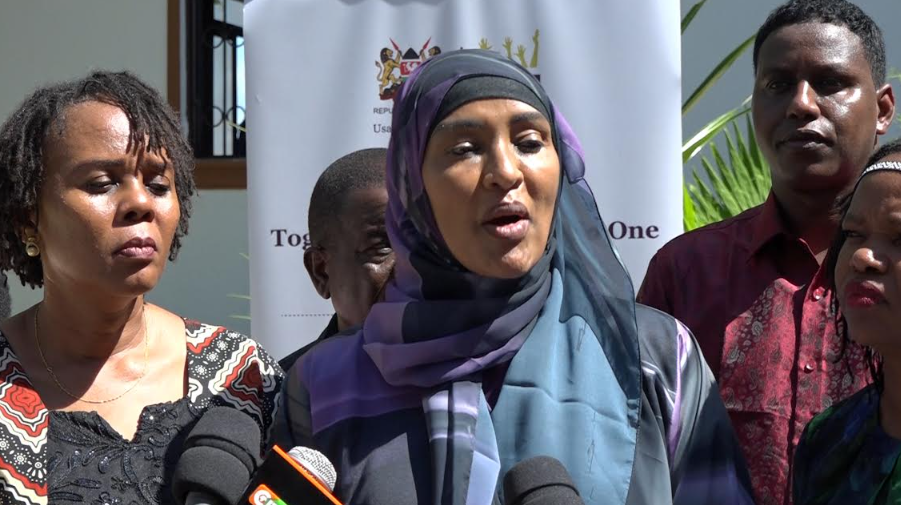
Speaking at the launch of the reports, NGEC chairperson Rehema Dika Jaldesa said the publications provide “critical evidence to guide both levels of government in shaping policy and improving service delivery.”
She emphasised that the findings should inform deliberate reforms, affirmative action, and accountability measures to ensure Kenya’s public institutions reflect the country’s diverse social fabric.
Kilifi Deputy Governor Flora Chibule, who was the chief guest, urged institutions to use the findings to embed equality and inclusion in their operations.
She noted that Kilifi County had achieved a 50-50 gender balance in employment across all cadres and was at the forefront in tackling gender-based violence, which she admitted remained a major concern.
Zedekia Dika, Chairperson of the Coast Civil Society Network for Human Rights, lamented that most counties in the region lack gender mainstreaming policies. He also pointed out that many public buildings in Mombasa remain inaccessible to persons with disabilities, urging developers to prioritise accessibility in public infrastructure.
Prudence Kai, Chairperson of Hopes and Dreams Community Based Organization, which champions the rights of widows, revealed that her organisation, in collaboration with NGEC, had drafted the Widowed Persons Bill 2026, currently before the National Assembly. She said the proposed law seeks to ensure widowed persons are included in decision-making processes.
During the event, various institutions and individuals were recognised with awards for their efforts in mainstreaming gender equality and inclusion.
By Emmanuel Masha