Kenya’s trade with East African Community (EAC) partner states has grown to Sh351 billion, cementing the regional bloc as the country’s most important export market.
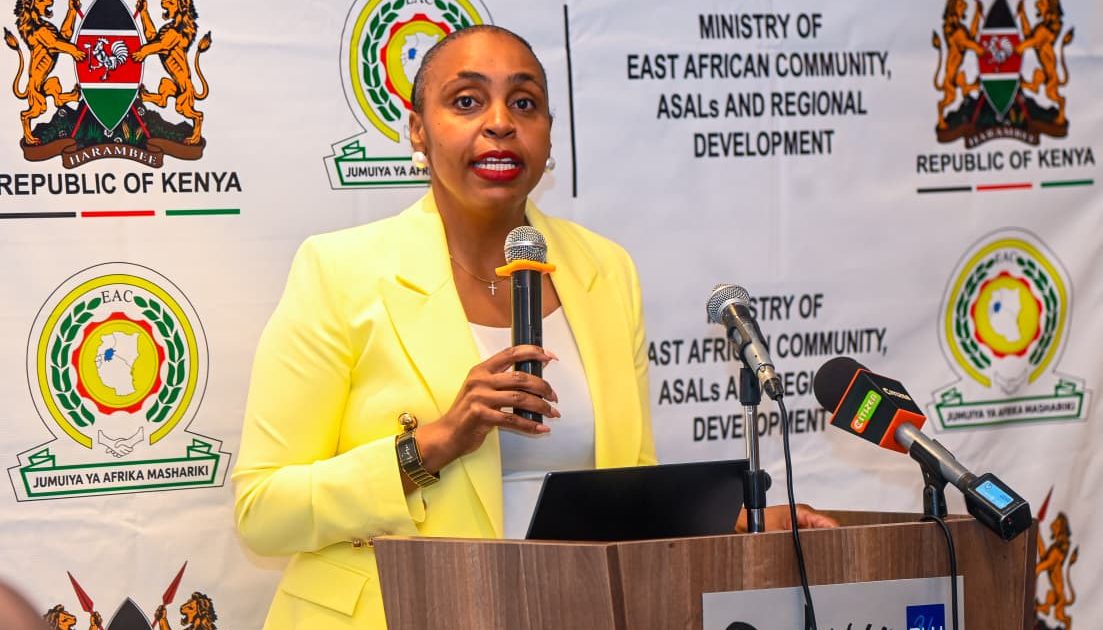
State Department for EAC Affairs Principal Secretary (PS), Caroline Karugu said the figures demonstrate that Kenya has been one of the biggest beneficiaries of regional integration, contrary to perceptions that the country gains little from its membership in the bloc.
Speaking during a media briefing on Monday, Karugu said that of the Sh351 billion worth of trade, Uganda alone accounts for about Sh126 billion, making it Kenya’s largest trading partner within the EAC.
The PS said the EAC remains Kenya’s single largest export destination, accounting for 77 per cent of Kenya’s exports to Africa and 31 per cent of the country’s total exports globally.
Unlike exports of raw materials and unprocessed produce to many overseas markets, Kenya exports largely manufactured products to the region, creating stronger value chains, sustaining industries and supporting thousands of jobs.
Officials noted that Kenya’s trade surplus within the EAC has continued to widen, with the country recording a positive trade balance of Sh248 billion, up from Sh217 billion a year earlier.
The State Department attributed the growth to sustained efforts to remove trade barriers, improve transport efficiency and strengthen bilateral engagement with partner states.
EAC, with a population of more than 300 million people and a combined Gross Domestic Product (GDP) of more than US$400 billion, offers Kenya an expanded market that is nearly five times larger than its domestic population.
Karugu said that while Uganda remains Kenya’s largest regional market, Tanzania presents even greater opportunities.
“Kenya currently exports goods worth Sh61 billion to Tanzania compared to Sh126 billion to Uganda, despite Tanzania having a larger economy and population,” she said.
The PS stressed that to unlock that potential, Kenya recently negotiated the removal of Tanzania’s Industrial Development Levy on 49 Kenyan manufactured products, including steel, cement, furniture, ceramics and automotive products.
Karugu said that the government expects the move to significantly boost exports to Tanzania.
According to Karugu, Kenya has intensified efforts to eliminate non-tariff barriers that increase the cost of doing business across the region.
Reported non-tariff barriers have fallen from 69 to 27, while police checkpoints along the Northern Corridor are targeted to be reduced from 26 to the EAC-recommended five, cutting delays for cargo transport.
The government is also engaging county governments to remove transit fees and other local levies that discourage cross-border trade.
A planned roundtable between President William Ruto and governors is expected to harmonize county policies affecting regional commerce.
The government also announced plans to unlock trade with South Sudan by completing the remaining 11-kilometre Nadapal-Nakodok road, a key missing link connecting Kenya directly to the South Sudanese market.
Officials estimate the project will reduce delivery times from 14 days to seven days, lowering transport costs and improving the competitiveness of Kenyan exports.
Kenya currently exports about Sh21 billion worth of goods to South Sudan, but most cargo is routed through Uganda due to the incomplete road connection.
Officials said the EAC market is particularly valuable because it absorbs high-value manufactured goods rather than raw commodities.
“These exports support local industries through demand for raw materials, factory production and employment, generating greater economic benefits than exports of primary products to other regions.”
The State Department said ongoing efforts to remove remaining trade barriers, operationalize the EAC Customs Bond and improve transport infrastructure are expected to further increase Kenya’s regional trade and strengthen the country’s position as East Africa’s leading trading hub.
Beyond regional trade, Karugu said the government has shifted its approach to drought and climate-related disasters by treating them as predictable events rather than emergencies.
With forecasts indicating El Niño rains between October and December, followed by La Niña, the government is preparing contingency plans under a committee chaired by Deputy President Kithure Kindiki.
Preparations include relocating communities living in flood-prone areas where necessary, pre-positioning relief supplies and increasing public awareness to minimise loss of life and livelihoods.
Karugu highlighted the close relationship between climate shocks, food security and peace, particularly in arid and semi-arid regions, saying government interventions would continue to focus on resilience and conflict prevention.
By Joseph Ng’ang’a