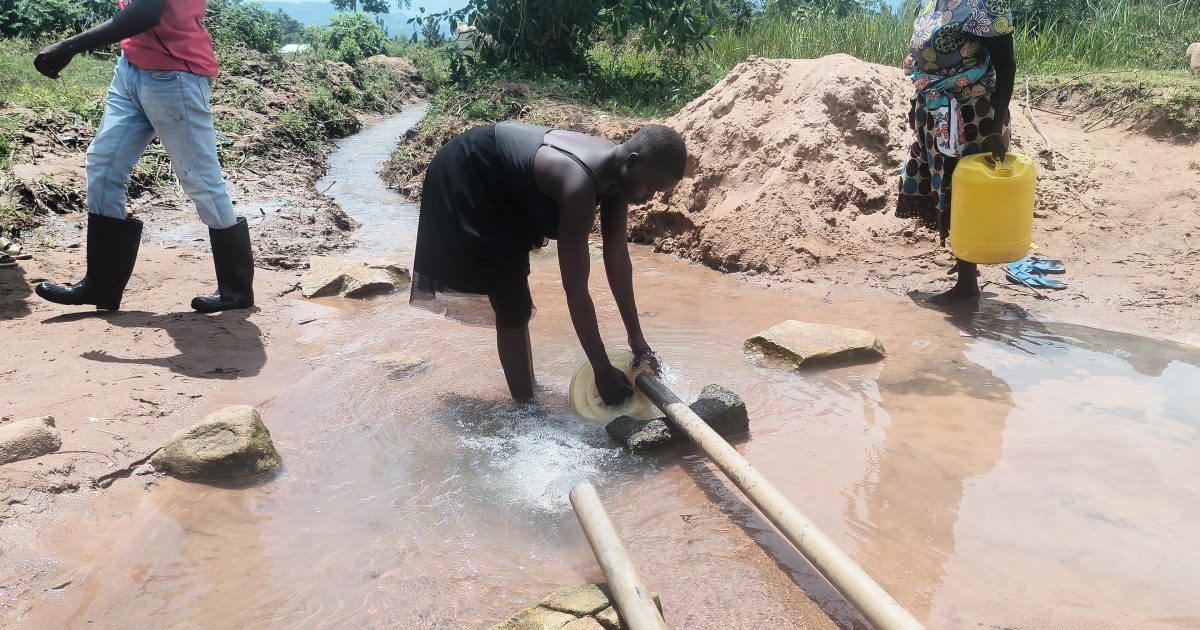
Residents of Odioi Village in Teso Central have called for urgent government intervention to protect Osia Water Spring, which serves as their main source of water.
Speaking to the media, the Chairman of the spring, Okodoi Micheal says the spring was previously earmarked for development to provide clean and reliable water to households through pipeline extension.
He says the programme had started with various development partners overseeing construction of underground storage tanks and installation of a motor.
The motor was meant to pump water from the underground storage tanks to two additional elevated tanks with a capacity of 10,000 litres each located about a kilometre away.
It’s from the elevated tanks that the water would then be distributed to homes through a network of pipes.
Okodoi says the project stalled halfway before completion of the works with the situation worsening after destruction of laid pipes during road construction.
“The motor that was to pump water and two solar panels were also stolen by unknown persons,” he said.
He noted that the stalled project has left the infrastructure in disrepair, with large volumes of water now going to waste as it flows unchecked into nearby farms.
Okodoi disclosed that the Osia water spring has the potential to supply water to a wider area, including Malaba and Amagoro in Teso North Sub-County, if fully developed.
“This spring can serve many people, but currently the water is going to waste due to lack of proper infrastructure,” he said.
Residents also expressed frustration over what they termed ‘unfulfilled promises’ by local leaders to revive the project.
Motor operator Leonard Rute said assurances have been made repeatedly during public meetings without any tangible progress. “We have been told many times that the project will be completed, but nothing has happened so far,” he said.
The incomplete infrastructure has also raised safety concerns among residents with Mercy Papai fearing that the partly covered underground tank poses a danger to children.
“We fear that a child could fall into the tank because it has not been fully secured yet it’s full of water from the spring,” she said.
The disruption has further affected livelihoods, with some residents reporting damage to their farms.
Jane Ingasagalit said water from the broken system sometimes floods her land, making farming difficult.
“The fertiliser we apply on our farm is washed away denying crops the nutrients they require,” she said, adding that she is still waiting for compensation for the use of a section of her farm during the project’s construction of underground water storage tanks.
She also raised concerns over stagnant water in the area, which she said has led to an increase in mosquito breeding despite recent indoor residual spraying programme.
by Moses Wekesa