A Senate Oversight Committee has raised alarm over the discharge of raw sewerage into River Nyando from the Ahero drainage system, a multi-million-shilling climate resilience project funded under the World Bank-backed Financing Locally-Led Climate Action (FLLoCA) programme.
The Senate Standing Committee on Finance and Budget, which toured Kisumu County to inspect implementation of Sh300 million FLLoCA projects, said the drainage infrastructure meant to mitigate flooding in Ahero was instead channeling untreated effluent into the river, posing a major environmental and public health threat.
The construction of the Ahero drainage system is among several climate change resilience investment projects funded through the FLLoCA initiative, which supports counties to implement projects aimed at combating the effects of climate change and strengthening local adaptation measures.
During a physical inspection of the site, senators expressed concern over what they termed a dangerous contradiction of the project’s intended purpose.
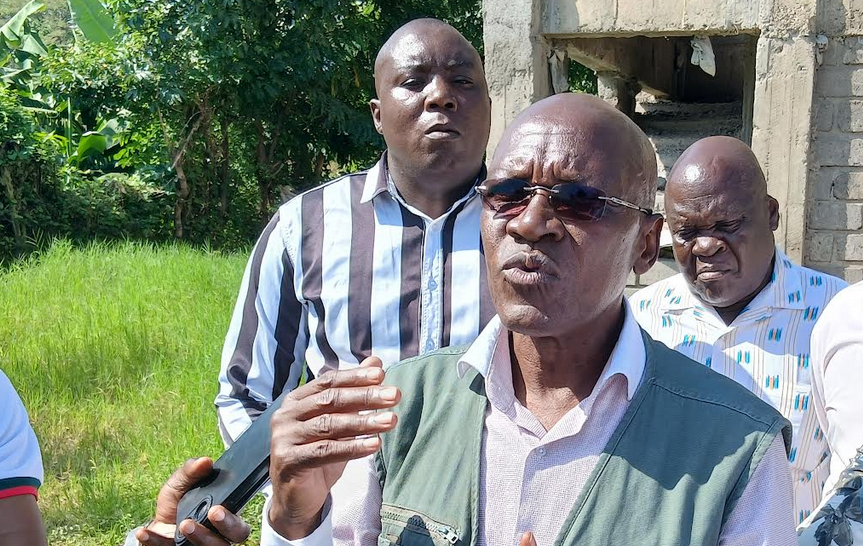
Kakamega Senator, Boni Khalwale, said the Committee found raw sewer flowing through a stone-pitched tunnel directly into River Nyando, warning that the situation amounted to an environmental emergency.
“I have seen in Ahero one of the projects that was meant to contain flood water; a tunnel has been dug, it has been stone-pitched, and raw sewer is draining into the River Nyando,” said Khalwale.
“It is a medical, environmental emergency, completely contrary to what FLLoCA was coming here to achieve,” Khalwale added.
The Senator directed the Kisumu County Government, to urgently address the matter and stop the discharge of untreated sewerage into fresh water sources.
“The County government of Kisumu must, with immediate effect, go and rectify the issue of raw sewer draining into fresh water,” he said.
Khalwale further warned that continued release of untreated effluent into River Nyando could expose residents to disease outbreaks, while also threatening aquatic life and livelihoods dependent on the river and Lake Victoria, where the river drains.
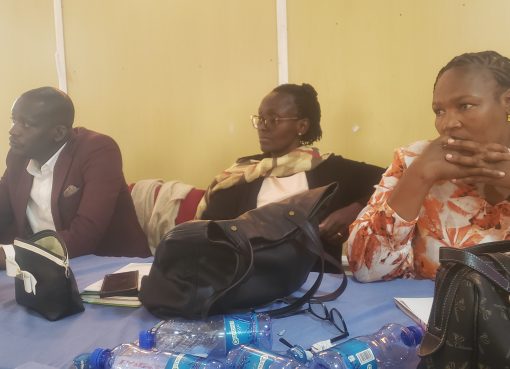
The lawmakers were in Kisumu as part of the Senate’s constitutional oversight mandate, to assess whether projects funded using public and donor resources, were delivering value for money and serving their intended purpose.
Committee Chairperson, Ali Ibrahim Roba, said the inspection focused on assessing project implementation, suitability and community impact.
“Our objective is only to assess whether the projects have taken place, the value for money, fitness for purpose, and to find out whether there is ownership from the locals,” Roba said.
He noted that the Committee conducted random sampling of projects due to the large number of initiatives being implemented under the programme.
Roba said the Senate was keen on ensuring that resources allocated to counties were utilised prudently and strictly for their intended purpose.
“We aim to ensure that we protect devolution at the national level, by way of fighting for resource allocation, as well as exercise oversight to protect devolution from itself,” he said.
The Committee also revealed that it had identified several concerns touching on project design and implementation during the inspection exercise, although senators declined to issue a final verdict before reviewing additional documentation requested from the County government.
The projects under review are jointly financed by the World Bank and the Kisumu County Government under the FLLoCA programme, with the sampled projects estimated to cost about Sh. 300 million.
The Committee said a final report will be prepared and tabled before the Senate after reconciling County documents with findings from the field assessment.
By Chris Mahandara