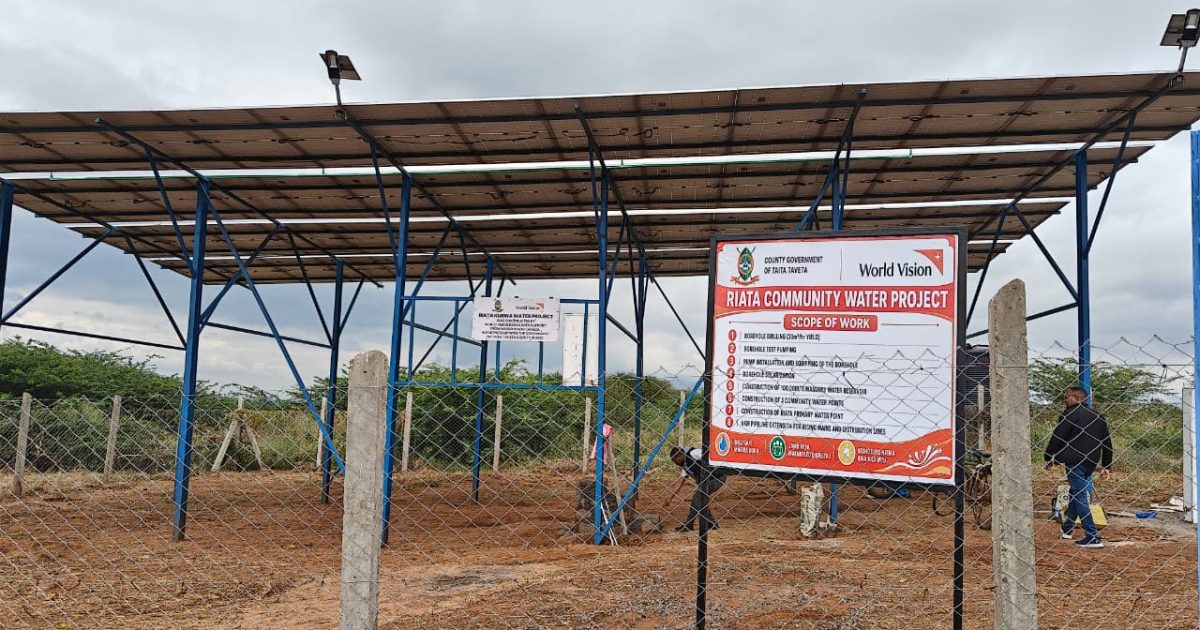
More than 500 learners and over 1,000 households in Riata, Taita Taveta County, are set to benefit from improved access to clean and safe water following the commissioning of the Sh21 million Riata Kubwa Water Project by the County Government of Taita Taveta in partnership with World Vision.
The renewable energy-powered project, which relies on solar energy, is expected to transform education, public health, sanitation and livelihoods by ending years of chronic water shortages that forced residents and schoolchildren to travel long distances in search of water.
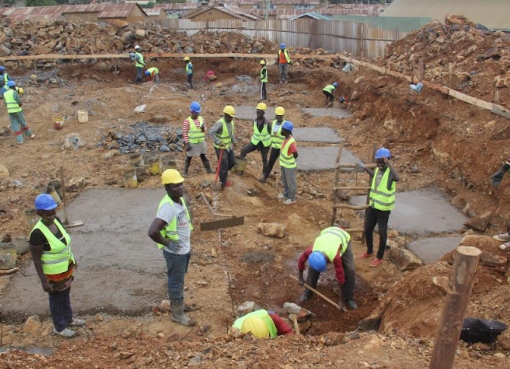
Implemented in two phases, the project involved borehole drilling, installation and equipping of pumping systems, solarisation, test pumping, construction of a 100,000-litre masonry water tank, four community water points and a six-kilometre water pipeline extension to serve households, schools and public institutions.
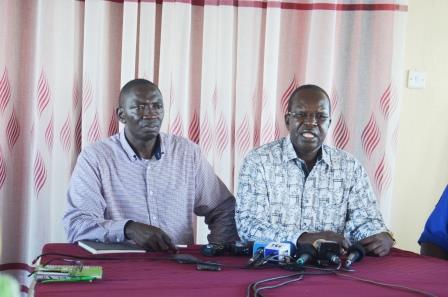
Speaking during the commissioning ceremony at Riata Primary School, Governor Andrew Mwadime said the project demonstrates his administration’s commitment to expanding access to clean and safe water across the county through partnerships with development agencies.
He said reliable water supply would significantly reduce the burden on households while improving school enrolment and attendance, noting that many learners previously missed classes because they spent hours searching for water.
“The Riata Kubwa Water Project will greatly reduce the distance residents’ travel to fetch water. School enrolment and attendance are expected to improve because learners will no longer spend valuable learning time searching for this basic commodity,” said Mwadime.
The Governor noted that improved access to clean water would reduce waterborne diseases, strengthen sanitation and hygiene, support food production through kitchen gardens and improve the overall well-being of residents.
He attributed the successful implementation of the project to the strong collaboration between the county government and World Vision, saying strategic partnerships remain essential in accelerating development amid limited public resources.
Riata resident and environmental activist Peninah Nzomo welcomed the project, saying dependable water supply would improve hygiene standards, reduce livestock deaths and ease the financial burden on families that previously spent considerable time and resources searching for water.
“Cases associated with poor hygiene will reduce, while livestock losses caused by prolonged water shortages are expected to decline. Families will also save money previously spent searching for water and invest it in other productive activities,” she said.
A Grade Nine candidate at Riata Primary School, Alex Mwendwa, said the project had strengthened sanitation, supported the school feeding programme and enabled learners to establish kitchen gardens within the school.
“We no longer have to carry two litres of water to school every day for cooking and sanitation. School hygiene has greatly improved, and we can now practice kitchen gardening,” he said.
Taveta Member of Parliament John Bwire pledged to complement the county government’s efforts by extending water distribution to households located beyond the current pipeline network.
He said his office would provide additional pipes to reach residents living more than 500 metres from the existing water line while also supporting plans to establish a secondary school in the area.
County Executive Committee Member for Water and Sanitation Grantone Mwandawiro said the county government continues to strengthen policy interventions aimed at addressing water scarcity through improved governance and sustainable management of water resources.
He noted that the establishment of rural water companies would enhance water governance, strengthen management systems and improve service delivery in underserved communities across the county.
World Vision Board Member Dr. Helgon Kitawi reaffirmed the organisation’s commitment to supporting water access initiatives in Taita Taveta County, saying the Riata Kubwa Water Project would improve public health, education outcomes, livelihoods and local economic activities while contributing to sustainable socio-economic development in the region.
By Arnold Linga Masila