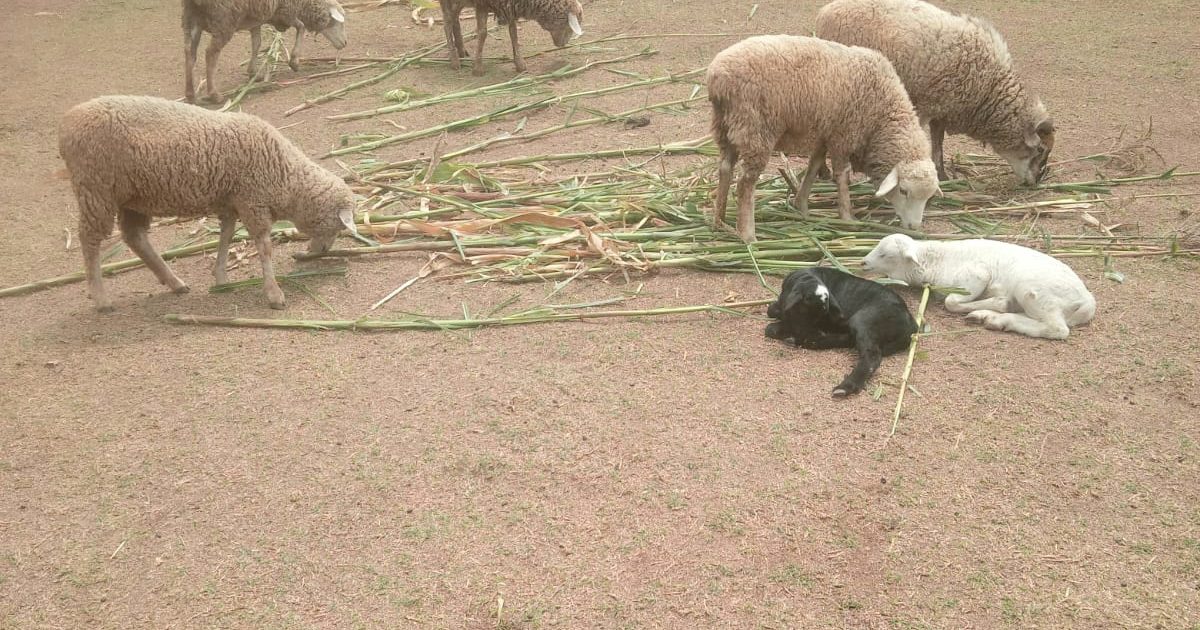
Every time Gladys Kanda looks at her flock of sheep, she sees more than livestock grazing around her farm.
She happily explains seeing it as an investment that can multiply to become a handsome source of income in case any need arises and also as an enterprise supported by a ready appetite for mutton in Kapsowar and surrounding areas.
For Kanda, who has been rearing sheep in Kapsowar for several years now, the animals have proved attractive because they grow relatively fast and reproduce within a short period than the larger livestock.
“Sheep grow faster and give birth faster. They can also give birth to twins at a go, so the economic benefits are attractive,” Kanda explains
Twin births are particularly appealing to farmers because a single ewe can add more than one lamb to the flock at a time, accelerating numerical growth if the animals are well managed.
For Kanda, this means a farmer does not always have to buy new animals to expand the flock. By retaining healthy breeding animals and selling mature ones, the flock can continue reproducing while providing income.
“When the animals multiply quickly, and there is a ready market for them. The farmer can keep increasing the flock while earning an income from the animals sold,” she said.
It is this combination of reproduction and market demand that has made sheep rearing increasingly attractive to some farmers in Marakwet West.
Unlike cattle, sheep require less space and can be kept by farmers who may not have large parcels of land. Their feeding requirements are also comparatively manageable, enabling households to combine sheep keeping with crop farming and other livelihood activities.
For Kanda, the enterprise offers another advantage of flexibility because a farmer can keep the flock for breeding and sell selected animals when financial need arises. The animals can therefore, serve as a form of household savings, with the farmer deciding when to convert part of the flock into cash.
Another farmer, Kiprono Yator, said sheep keeping offered farmers an opportunity to gradually build their livestock wealth.
“A farmer does not have to wait for many years before benefiting from sheep. Once the flock starts increasing, some animals can be sold while others are retained for breeding,” Yator said.
He said the ability to combine breeding and sales made sheep suitable for farmers seeking an enterprise that could generate both short-term income and longer-term livestock assets.
But the story of sheep farming in Kapsowar does not end at the farm gate, as every animal sold by a farmer eventually enters a market where consumers’ appetite for mutton determines its value.
A local butcher, Wilson Koech has witnessed rising demand for sheep meat from the at the other end of the value chain.
Koech confirms that mutton is preferred in Kapsowar town and there is high demand hence it is easier to absorb a sheep carcass than that of the larger animals.
“Slaughtering a cow is a waste because the population in the town is small. That can lead to wastage, with the meat remaining unsold and eventually going bad. Mutton is a better option because it moves fast in the market,” Koech said.
He explained that the smaller quantity of meat from a sheep allows traders to match slaughtering with the number of customers, reducing the risk of unsold meat.
For the butcher, therefore, a sheep is not simply another animal for slaughter. It is a product that fits the consumption patterns of the local market and for farmers, that demand translates into an opportunity to sell.
This creates a simple but important cycle. A farmer breeds and raises sheep. A trader purchases the animals. The butcher provides mutton to consumers. The money then flows back through the value chain, encouraging farmers to continue producing.
Kanda said the availability of buyers gives farmers confidence to expand their flocks because they know that mature animals can be sold when the need arises.
However, she cautioned that farmers should view sheep keeping as a business requiring proper management rather than simply allowing animals to multiply.
Kanda reveals that farmers need to pay attention to feeding, water, shelter, disease prevention and breeding so that the flock remains healthy and productive.
She also advised farmers to be selective when selling, retaining good breeding animals to ensure the flock continues to grow.
“You have to know which animals to sell and which ones to keep for breeding. If you sell everything, you will have to start again,” she said.
Yator said better management and improved breeding could further increase the returns farmers obtain from sheep.
He noted that as more households embrace livestock farming as a business, sheep could provide an accessible entry point for farmers who cannot afford the capital and land requirements associated with cattle.
For Koech, what matters is that consumers continue to ask for mutton. “Mutton moves fast in the market,” he said, noting that regular demand gives butchery operators a reason to continue buying sheep from local farmers and enjoy quick reaps from the business.
Back at the farm, Kanda’s interest in sheep farming is driven by the same market, but viewed from a different angle.
She sees every lamb as a potential addition to her flock and every mature sheep as a potential source of income.
Her experience reflects a broader shift in how some residents are viewing sheep not merely as animals kept for meat, but as an enterprise capable of generating income and building household assets.
With their relatively fast growth, reproductive potential and suitability for small-scale farmers, sheep are gradually finding a stronger place in the livestock economy of Marakwet West.
And as long as consumers in Kapsowar continue to ask for mutton, farmers such as Kanda have a market waiting at the end of the day.
For her, the calculation is straightforward. Let the sheep multiply, keep the flock healthy and sell when the market or household needs call.
by Rennish Okong’o