For decades, the vast landscapes of Sigor in West Pokot County were defined by harsh realities such as unpredictable rainfall, recurring food shortages, poverty, and fierce competition for scarce resources.
Today, however, green maize fields stretch across what was once a drought-prone landscape, standing as a powerful symbol of resilience, investment and community transformation.
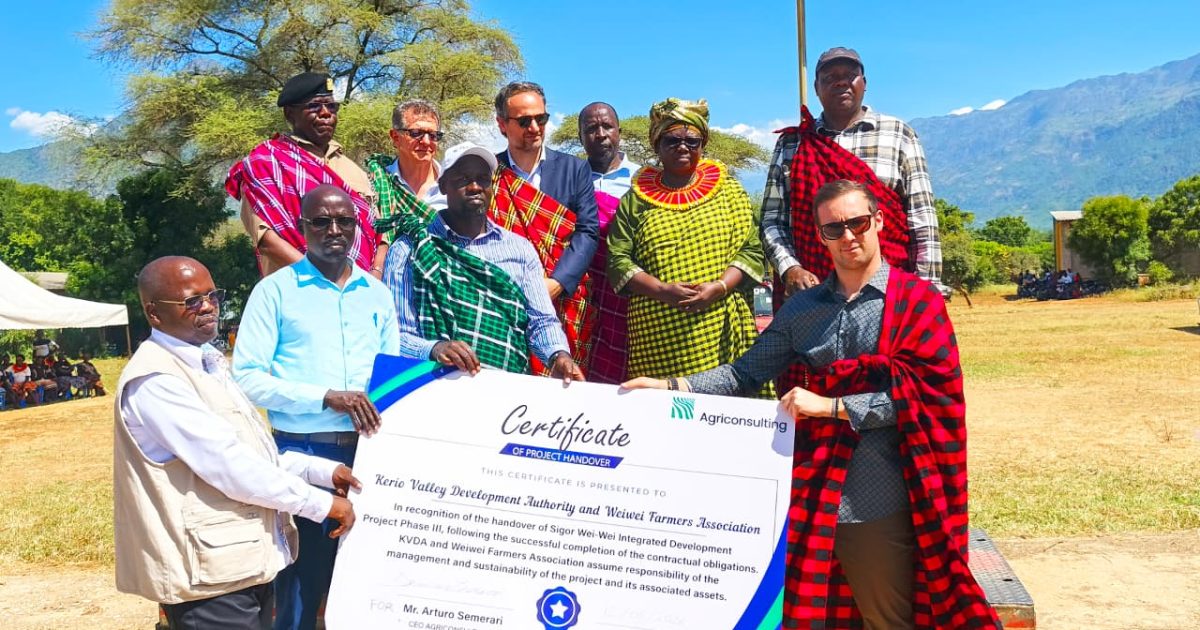
That transformation reached a significant milestone when the Cabinet Secretary for the Ministry of East African Community (EAC), ASALs and Regional Development, Beatrice Askul Moe, officially commissioned and oversaw the handing over of the Sigor Wei Wei Integrated Development Project Phase III to the Wei Wei Farmers Community.
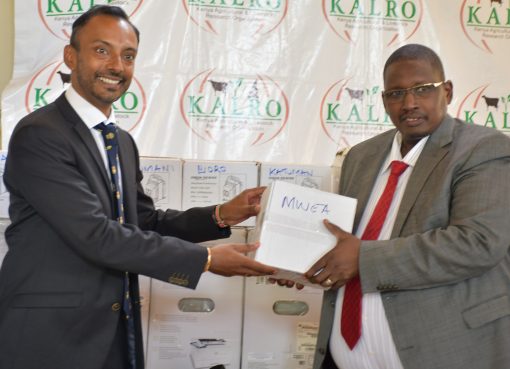
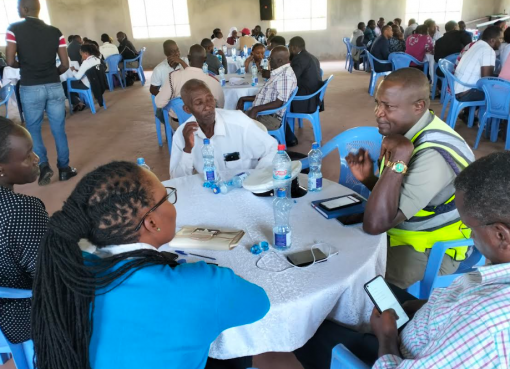
The event brought together national and county leaders, representatives from the Italian Government, development partners, Kerio Valley Development Authority (KVDA), and hundreds of farmers who have witnessed firsthand the impact of one of the largest agricultural development projects in Kenya’s arid and semi-arid lands (ASALs).
Speaking during the handover ceremony, Askul described the occasion as a historic moment, not only for the farmers, but also for the country’s food security agenda.
“I am humbled and happy to join you today to commission and officially hand over the Sigor Wei Wei Integrated Development Project Phase III to the Wei Wei farmers community together with all the equipment and machinery that will enable the beneficiaries to sustain their livelihoods even beyond the support of funding partners,” she said.
The Sigor Wei Wei Project traces its origins to 1987 when efforts began to address persistent challenges affecting communities in the region.
The project was designed to tackle low agricultural productivity, poverty, insecurity, limited livelihood opportunities and the devastating effects of climate change.
Its primary goal was ambitious to develop an irrigation system covering 1,500 acres (600 hectares) to improve food security and strengthen community resilience.
The project was implemented in three phases through a partnership between the Government of Kenya and the Italian Government through the Italian Agency for Development Cooperation (AICS).
Phase I received funding of over Sh905 million, focusing on hydraulic works, mechanization support, and construction of a service center and machinery workshop.
Following its success, Phase II attracted an additional Sh1.03 billion, facilitating the expansion of irrigation infrastructure and opening up 205 hectares for agricultural production.
The newly completed Phase III involved further expansion, capacity building, and the supply of machinery and equipment worth Sh417.3 million, bringing an additional 325 hectares under irrigation.
The cumulative investment in the project now stands at approximately Sh3.21 billion, making it one of the most significant agricultural investments in Kenya’s ASAL regions.
Fields that once struggled to support subsistence farming now produce certified maize seed under contract farming arrangements, contributing significantly to both local and national food production.
According to project officials, the scheme currently produces approximately 1,000 tonnes of seed maize annually, generating more than Sh60 million in income for participating farmers.
The project has also created over 1,000 jobs across agricultural value chains, while ensuring reliable water supplies for farming, livestock and domestic use.
Phase III alone directly benefits 325 households, with each household allocated one hectare of irrigated farmland.
Recent aerial imagery comparing the area before and after project implementation reveals dramatic changes in vegetation cover, farming activity, and overall landscape transformation, highlighting the project’s profound environmental and socio-economic impact.
Head of Cooperation at the Italian Agency for Development Cooperation, Fabio Minniti, expressed pride in the project’s achievements, noting that it demonstrates how strategic investments can transform vulnerable communities.
Minniti said the Italian Government remains encouraged by the visible improvements in livelihoods, agricultural productivity, and economic opportunities generated by the project.
He noted that the initiative has become a model of successful international cooperation, particularly in Kenya’s ASAL regions where climate-related challenges continue to threaten livelihoods.
“This project demonstrates the power of partnerships in creating lasting socio-economic change. The impact extends beyond the immediate beneficiaries to neighboring communities and contributes to national food security,” he said.
The handover ceremony marked more than the completion of infrastructure, but also it signaled the beginning of local ownership.
KVDA Board Chairman Mark Chesergon challenged the Wei Wei Farmers Community to safeguard the investment and ensure its sustainability for future generations.
He emphasized that the project’s success would ultimately depend on sound governance, responsible management of resources, and continued collaboration among stakeholders.
Similarly, West Pokot County Commissioner David Saruni praised the partnership between the national government, development agencies, and local communities, noting that such initiatives play a crucial role in enhancing stability and economic development in the region.
He assured residents of the government’s commitment to enhancing security in the region, particularly in areas that had previously experienced insecurity. He praised the close collaboration between security agencies, local administration, and communities, noting that it has fostered peaceful coexistence among neighbouring communities.
Saruni added that the Wei Wei Irrigation Project will play a key role in transforming livelihoods by enabling many residents, who have traditionally depended on pastoralism, to embrace crop farming and diversify their sources of income. He described the project as a game-changer that brings new economic opportunities directly to local communities.
Pokot Central MP Peter Lochakapong lauded the project for improving livelihoods and creating opportunities for young people through agriculture. He urged farmers to maximize the use of the irrigation infrastructure and modern machinery now at their disposal.
He added that the Wei Wei Irrigation Project has significantly improved food security in the area by enabling farmers to produce crops twice a year.
He noted that communities that once depended on relief food are now producing enough for their own consumption, with surplus harvests being sold in local markets and neighboring counties as a source of income.
The Wei Wei Farmers Community leadership also welcomed the handover, describing it as the fulfillment of a long-held dream for hundreds of farming families who have waited years for full operationalization of Phase III.
While celebrating the milestone, Askul reminded beneficiaries that the future of the project now rests largely in their hands.
The CS called on farmers to embrace full ownership, strengthen governance structures, and work closely with KVDA to develop a comprehensive sustainability strategy.
“This is your project and you must maximize its use for your own benefit. Without embracing it as your property, sustainability cannot be achieved,” she told the farmers.
She further pledged continued support from the Ministry through KVDA and proposed the establishment of a joint committee between KVDA and the Wei Wei Farmers Association to oversee long-term sustainability.
As tractors move across newly irrigated fields and farmers harvest maize from land once considered marginal, the Sigor Wei Wei Integrated Development Project stands as a powerful example of what sustained investment, community participation, and international cooperation can achieve.
For the 325 households directly benefiting from Phase III and thousands more indirectly, the project represents more than irrigation canals, machinery, and infrastructure.
It represents food on the table, income in households, jobs for youth, and hope for a region that has long battled the challenges of aridity and poverty.
With the final phase now officially in the hands of the community, the challenge ahead is clear: ensuring that this multi-billion-shilling investment continues to transform lives for generations to come.
By Parklea Ivor