As evening descends on Kisumu, hundreds of children prepare for another night on the streets, seeking shelter in shop verandas, alleyways and crowded corners of the city.
What was once a challenge involving about 120 children has grown into a full-blown crisis.
Recent street census data shows that more than 216 children now spend their nights on the streets, exposing them to hunger, disease, violence and exploitation.
For 19-year-old Kevin Omondi, life on the streets has become a harsh reality he has endured for nearly a decade.
The former schoolboy from Uyoma says he arrived in Kisumu in 2016 after dropping out of school due to lack of fees.
“Life on the streets is very difficult,” he says. “When it rains, I get sick because I have nowhere to sleep. Some of my friends have died from illness. I can count four of them.”
Kevin recalls narrowly escaping death during the Saba Saba protests, an experience that left lasting scars.
“I almost died during the riots. I went into hiding but instead became the hunted,” he says.
To survive, he takes on casual jobs, carrying luggage and fetching water for hotels in exchange for food or small payments.
Like many children living on the streets, Kevin traces his journey to family conflict. He says he fled home after being accused of theft and fearing retaliation from villagers.
Despite years of hardship, he has not abandoned hope.
“If I get a chance, I would like to go back home. I did not steal, and I know my family misses me,” he says.
A trained welder, Kevin dreams of rebuilding his life through the trade if given an opportunity.
His story mirrors the experiences of many street children in Kisumu — young people caught between poverty, family breakdown and the daily struggle for survival, yet still holding onto hopes of a better future.
At Kisumu’s bus park, food vendor Nancy Akinyi Otieno witnesses the crisis unfold every day.
The mother of four has operated her canteen for two years, relying on the modest earnings to support her family and educate her children.
But beyond running her business, she has become an unlikely source of support for children living on the streets.
“Most of these children lack basic necessities. They sleep on the pavement and when it rains, they are soaked. Some do not even have proper clothing to protect them from the cold,” she says.
Unable to ignore their plight, Nancy often offers street children small tasks such as washing utensils before providing them with a meal.
“As a mother, it pains me to see children suffering in these conditions,” she says. “Some are very young and should be reunited with their families.”
While she does what she can, Nancy says the scale of the problem is beyond the capacity of well-wishers and small business owners.
She is calling on the county government and child protection agencies to intervene and rescue vulnerable children living on the streets.
“These children should be taken back to school and trained in different skills so they can have a future like other children,” she says.
For child welfare organisations, the growing numbers point to deeper social problems rooted in poverty, neglect and family instability.
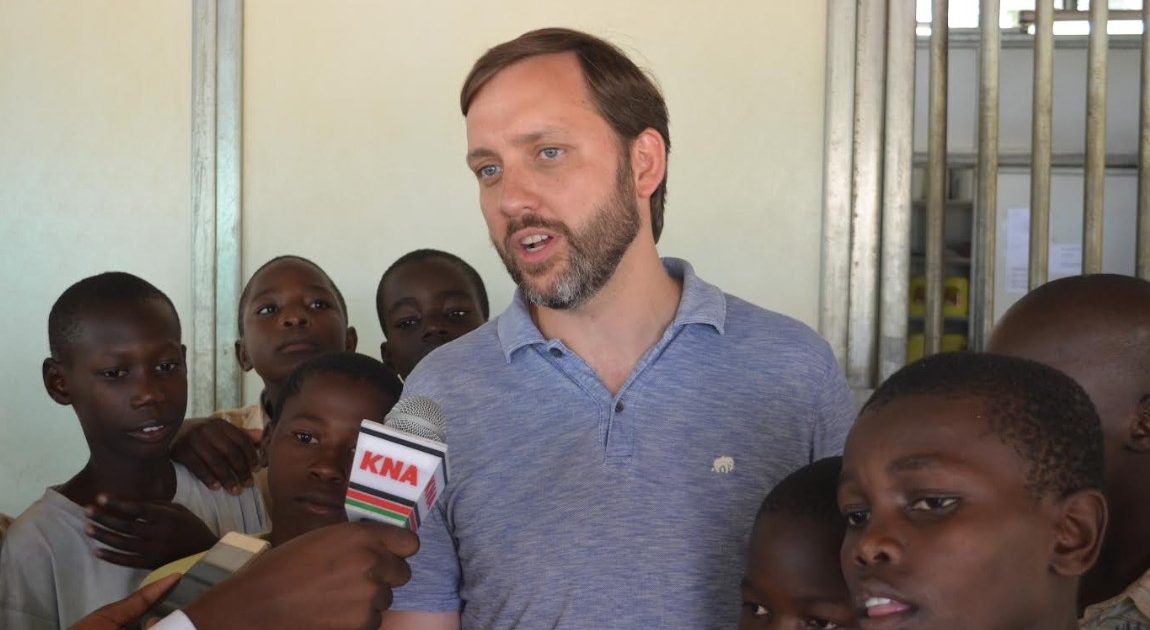
According to Chris Page, Country Director of Agape Children’s Ministry, family breakdown remains the leading driver of street life among children.
“Our mission is to rescue children from the streets, rehabilitate them and reconcile them with their families,” says Page.
The Christian rehabilitation centre works closely with government agencies and outreach teams to identify vulnerable children, offering temporary shelter, counselling and family reunification programmes.
On average, a child spends about two months at the facility before being reintegrated into the community yet the cycle is difficult to break.
“In every 16 children we rescue, 10 are new cases while six are returnees,” says Page.
“Some children return to the streets four or five times before finally settling back at home,” he adds.
This year alone, the organisation has rescued hundreds of children and reunited more than 160 with their families.
According to Page, most of the children are aged between 13 and 14 years, a stage often marked by peer pressure, adolescence and family instability.
He says nearly 85 per cent of boys and 87 per cent of girls living on the streets come from homes where parents no longer live together.
“Many are born into unstable family environments, while others leave home after being accused of theft or due to domestic violence, alcoholism and mistreatment,” says Page.
Contrary to popular belief, most street children in Kisumu are not natives of the county.
Page says two-thirds come from neighbouring counties, led by Siaya, followed by Vihiga and Homa Bay.
Kondele and Kisumu’s central business district have emerged as major hotspots where outreach teams regularly engage children before attempting rescue and rehabilitation.
“Many are suspicious because of what they have experienced,” says Page. “Our officers spend time listening to them, sharing meals and building trust.”
Police stations frequently refer vulnerable children to the organisation, while some girls admitted to the rehabilitation centre are survivors of sexual violence referred through the courts and child protection agencies.
For those who have fallen too far behind academically, Agape offers vocational training as an alternative pathway to self-reliance.
Despite ongoing rescue efforts, Page argues that public generosity can sometimes unintentionally sustain life on the streets.
“People mean well when they give money, food or casual jobs, but it often encourages children to remain on the streets,” he says.
He urges members of the public to direct vulnerable children to rehabilitation centres or law enforcement officers instead.
Agape itself faces mounting financial challenges after losing a major donor in the United States last year, forcing it to scale down some programmes even as demand for its services continues to rise.
Still, the organisation continues to monitor and support reintegrated children for up to a year after they return home.
For Page, addressing the crisis requires a collective effort from families, communities, government agencies and the public.
“Every child on the streets has a family somewhere,” he says. “The solution lies in helping them find their way back home and giving them a chance to rebuild their lives.”
By Vallery Nyagaka and Robert Onyango