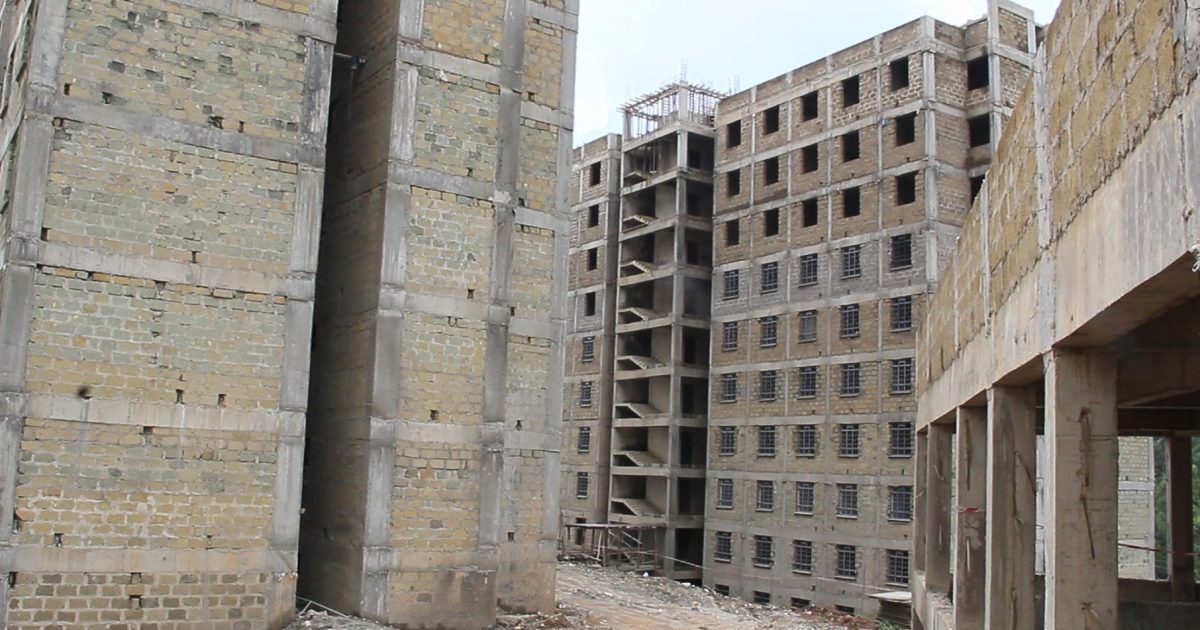
Construction of the Majengo Talai Affordable Housing Project in Kericho Town has crossed the 62 per cent mark, with the Sh778.2 million development entering a critical phase as work shifts from major structural construction to plastering, floor finishes, installation of doors and windows, plumbing and electrical works.
The latest site assessment puts the weighted actual progress at 62.12 per cent, while the Clerk of Works, Jobson Birundu, says overall physical progress is about 63 per cent. In an interview with KNA, Birundu said the contractor is targeting completion by the end of September, with additional labour, materials, working hours and machinery being deployed to maintain the pace of construction.
“This project is at 63 per cent. That is the physical progress at the moment. We expect this project to be complete 100 per cent by the end of September this year,” Birundu said.
The progress marks a significant advance from the 33 per cent recorded in August 2025 and 40.01 per cent in October 2025, with the project now moving from structural works into finishing and installation of services.
The development comprises 324 housing units in three blocks. At Block A1, walling from the ground to the 10th floor is 99 per cent complete, internal plastering 88 per cent and installation of steel casement windows and doors 75 per cent. Block A2 has also reached 99 per cent walling, 95 per cent internal plastering and 75 per cent window and door installation, while Block B has 99 per cent walling to the ninth floor, 90 per cent internal plastering and 70 per cent window and door installation.
A spot check by KNA found workers undertaking masonry, steel fixing, carpentry, plumbing, electrical installation and finishing works, while an excavator was being used to move sand and other construction materials within the site.
The supporting facilities are also advancing. The kindergarten is 99 percent complete in both walling and roofing, with internal plastering at 95 per cent and screeding at 80 per cent. The community centre has its surface bed, staircase slab and roof cover complete, while major retaining walls at different sections of the development have been completed.
First-fix plumbing and drainage works in the three residential blocks have reached 80 per cent, with electrical first-fix works also at 80 per cent. The figures show that the project has moved beyond putting up the structures to installing the systems required to make the apartments functional.
The development is also generating substantial local employment. Birundu says the workforce varies between 150 and 350 people, depending on the day’s workload, with more than 80 per cent drawn from the local community. The August 11 site record showed 122 labourers, comprising 34 skilled workers and 88 helpers, in addition to 21 contractor staff involved in management, supervision, safety, stores and other operations.
The workforce includes electricians, plumbers, steel fixers, masons, welders, machine operators and painters, providing both income and practical experience to residents who can carry the acquired skills into other construction projects.
For Nahashon Lubeme, the opportunity has provided both employment and a profession. He says he joined the project at a difficult point in his life but has since developed his masonry skills.
“When I started this project, I was at a loss. I had nothing. But as soon as I started this project, I improved a lot of things,” Lubeme said.
“I have started working as a mason. Now I continue with that. Now I am a qualified mason,” he added.
Alex Omonde Kahora joined the project about two and a half years ago as a helper after previously selling sugarcane. He has since progressed into carpentry, gaining skills in joinery while earning an income to support his family.
“Gradually I raised to be one of the best carpenters in this state,” Kahora said, adding that his earnings have enabled him to pay rent, provide food and meet his child’s school expenses.
Women are also benefiting from technical opportunities. Sylvia Chepkemoi, a steel fixer, says she has acquired skills in steel fabrication and welding while earning an income to support her family and pay school fees.
“I know how to make steel. I know how to weld steel. I know how to build a house,” she said.
The economic effect has spread beyond the construction fence. A spot check by KNA around Majengo Talai found hotels and food outlets serving workers, while other small enterprises have positioned themselves along routes used by people entering and leaving the project.
A previous KNA assessment found restaurants, cafeterias, barber shops, furniture businesses, chemists, phone repair shops, boutiques and mitumba enterprises operating around the development. The businesses have benefited from the steady flow of workers and visitors associated with the project.
Birundu says the economic impact will continue after construction when the 324 units are occupied, creating a permanent market for businesses in the surrounding area.
“After this project is complete it means that we are going to have urbanization effect of people moving in. Those people are going to purchase commodities and services within this area, creating more economic activity for businesses and additional revenue for the county,” Birundu said.
The estate is being developed with supporting facilities including a kindergarten, community centre, water storage, parking, waste management and security installations. The official Boma Yangu platform lists Talai Estate in Kericho Town and provides information on the housing categories and Tenant Purchase Scheme.
The project has nevertheless faced challenges, particularly heavy rainfall and additional works such as retaining walls. Birundu says the contractor has responded by increasing labour, materials, working hours and machinery, including excavators, to recover lost time.
Some external works, including sections of the boundary wall, sewer infrastructure, sewer treatment facilities, landscaping, road works and external electrical installations, remain to be completed. This means that although the three main blocks are substantially advanced, considerable work remains before the estate can be prepared for occupation.
The Talai project forms part of the Government’s wider Affordable Housing Programme, which seeks to increase access to decent and affordable homes while creating employment and business opportunities through construction. Government plans previously indicated a target of 8,480 housing units across Kericho’s six sub-counties, placing the Talai development within a wider transformation of the county’s housing stock.
For Kericho, the significance of Talai is already visible in the numbers: 324 housing units, a Sh778.2 million investments, up to 350 workers on active days, more than 80 per cent local employment and businesses growing around the construction site.
With progress now at about 63 per cent and completion targeted for September, the project is moving from the construction of structures to the final stages of turning them into homes.
For workers, it has provided jobs and skills. For businesses, it has created customers. And for Kericho Town, it is set to deliver new homes and a new residential community whose economic needs are expected to continue generating activity long after construction is complete.
By Gilbert Mutai