Kenyans have been urged to take advantage of the commercial opportunities in the forestry sector to boost their income, generate employment opportunities for others and improve their livelihoods.
With the Presidential Directive to plant 15 billion trees by 2030 and increase the country’s forest cover, stakeholders urged young people to take advantage of the programme and start tree nurseries, grow and sell tree seedlings thus generating income.
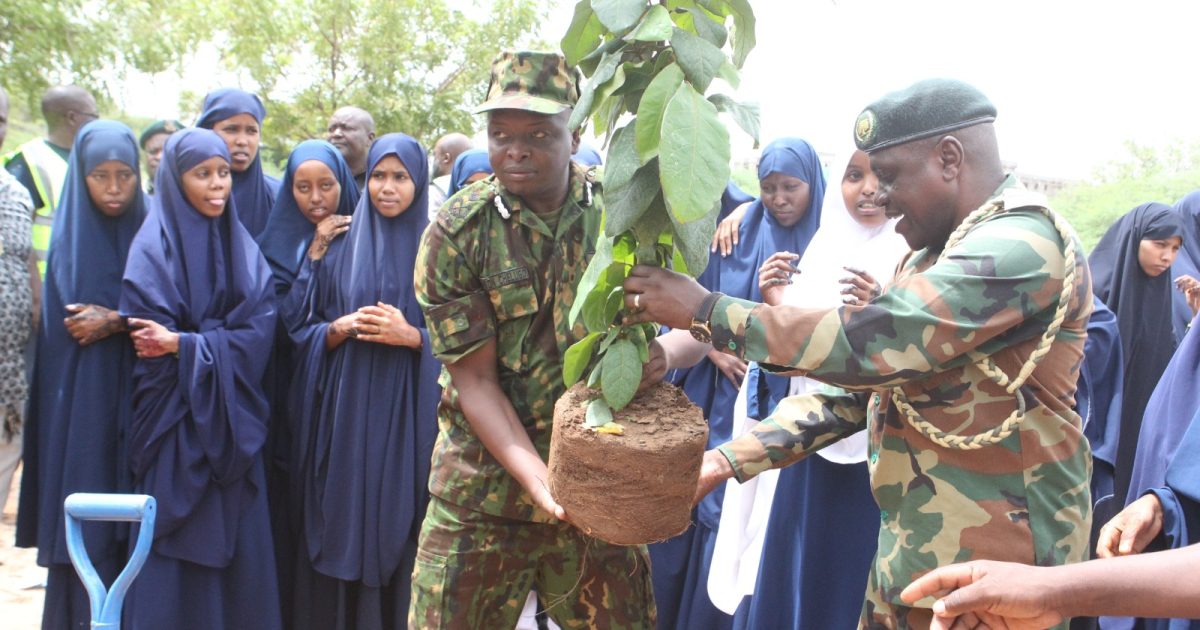
Speaking during the celebrations of the International Forests Day at the NEP Girls’ High School in Garissa, County Forests Conservator, Christopher Kapula, said that apart from generating income from the seedlings, Kenyans could also benefit from other natural related activities such as beekeeping on the forests.
“Our young people can generate income and create employment opportunities by starting tree nurseries. These nurseries offer income through selling of seedlings, especially at a time when we are talking about planting 15 billion trees,” Kapula said.
“Kenyans can also benefit from planting many trees by investing in beekeeping in those small forests. This is one of the many nature-based income opportunities that come with planting trees. People will be able to harvest and sell pure honey and generate income,” he added.
Garissa Central Assistant County Commissioner (ACC), Thumatia Muriuki, on his part however cautioned Kenyans against charcoal burning as an economic activity, noting that it would be catastrophic in the long-run.
Muriuki said that with the increased forest cover, the government will be able to create more employment opportunities, especially for forest rangers and researchers.
At the same time, the ACC called for planting of more commercial trees which are legally harvested for timber, thus creating income and employment opportunities for thousands of Kenyans.
“It is important that as we talk about forests and economy, we do not mix-up and confuse ourselves thinking that negative practices such as charcoal burning are a plus to the economy. In the long run, this will hurt the forests and so we should only engage in positive economic practices involving trees such as starting nurseries and selling seedlings,” Muriuki said.
“The government has employed very many Kenya forest service officers, forest researchers and many others who work to protect the forests. We also have harvesting of mature trees that have been planted for commercial purposes, as a source of timber guided by the logging laws,” he added.
Abdikadir Adan, a young environmentalist championing 15 million trees in Garissa called on the government to empower the youth across the country to plant tree seedlings and sell them back to the government.
“Right now we have a Presidential Directive on 15 billion trees. These tree seedlings have been produced and there are so many opportunities in that. A lot of young people can be supported to grow tree seedlings and sell them to the government at an affordable cost,” Adan said.
By Erick Kyalo