By M, KNA
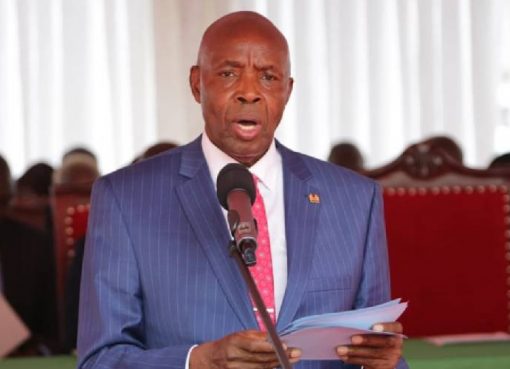
Education Cabinet Secretary, Julius Migos Ogamba, has challenged universities to embrace
evidence-based research that can be used to shape government policies and programmes.
Speaking during the launch of Harnessing of Education Research for Impact (HERI)
Africa initiative at Kisii University on the outskirts of Kisii town, CS Ogamba said that
universities should prioritize research in policy, funding and practice to ensure they provide
solutions to the routine challenges in the society.
“When universities lead in research and innovation, they produce skilled graduates,
generate homegrown solutions and contribute directly to economic and social transformation of the society,” he noted.
The CS pointed out that despite Africa witnessing a rapid expansion in higher education,
only three percent of the continent’s scholars were contributing to global education research.
As a result, Ogamba said that initiatives such as HERI Africa are working to bridge the
gap by fostering academic mobility and collaborative knowledge exchange.
“By setting an ambitious target to increase Africa’s research contribution to 30% by 2050, HERI Africa aims to ensure that the continent’s immense talent and potential drive local-led
solutions,” he added.
The CS reiterated the government’s commitment to reforming the research and
innovation system through reliable and predictable funding for long-term projects aligned to
national and regional priorities.
Kisii University Vice Chancellor Professor Nathan Ogechi said the initiative marks a
significant shift from Africa’s long-standing dependence on externally funded research.
Prof. Ogechi underscored the timeliness of HERI Africa even as Kenya embraced the
Competency-Based Curriculum saying the initiative goes beyond reform and seeks
transformative change by linking research to marginal priorities, informing policy and securing
sustainable funding mechanisms.
Under the landmark programme, three public universities will host Research Chairs in
three key disciplines, with Kisii University designated as the Chair in Language Education while
Embu and Kenyatta Universities host Chairs in Mathematics and Community and Social
Services respectively.
In Kenya’s multilingual setting, Prof. Ogechi said research in language education is
critical to boosting foundational literacy, improving classroom practice and preserving
indigenous knowledge systems.
He stressed that renewed research efforts are necessary to address persistent gaps and to
develop contextually appropriate strategies for multilingual education.
The Vice-Chancellor added the university will support faculty involved in the research
chair initiative through lighter workloads and flexible teaching schedules to enable them to
engage meaningfully in projects aligned with the forthcoming National Education Research
Agenda.
He challenged early-career researchers and postgraduate students to take advantage of the
programme to sharpen their research skills and contribute to national and continental
development.
Prof. Ogechi affirmed the institution’s commitment to align its research agenda with
national priorities, strengthen inter-institutional collaboration, support early-career and female
researchers, and promote research impact beyond academic publication.
On his part, the Commission for University Education Chief Executive Officer, Prof.
Mike Kuria, decried the challenges that Africa’s education research ecosystem is facing including inadequate frameworks that fail to reflect African realities, weak communication of research findings to policymakers, limited research capacity, and heavy reliance on foreign funding.
“Less than 10 percent of research reaches policymakers or communities in usable
formats, research is done, but it rarely transforms policy or classroom practice,” Kuria said.
As part of mitigating heavy reliance on foreign funding, Imaginable Futures Vice
President Dr. Laila Macharia pledged financial support for locally-led research by announcing a matching fund of 200,000 US dollars for every dollar raised towards the initiative.
Also present at the launch included members of the Kisii University Council, Kisii
County Commissioner Mwachaunga Chaunga and representatives from the National Gender and
Equality Commission, Safaricom and Mpesa Foundations, Zizi Afrique Foundation, among
others.
The HERI Africa initiative seeks to build institutional capacity, democratize research
funding, promote gender equality, and localize African-led research.
By 2030, at least three countries are expected to join the project, with a long-term vision
of shaping Africa’s global education theory by 2050.
The initiative aligns with Kenya’s national education research agenda that ensures
academic outputs move beyond the laboratory and into the hands of policy makers.