

The Centre for Mathematics, Science and Technology Education in Africa (CEMASTEA) has been commended for supporting the implementation of the Competency-Based Education (CBE) curriculum, following the rollout of virtual laboratories in junior schools.
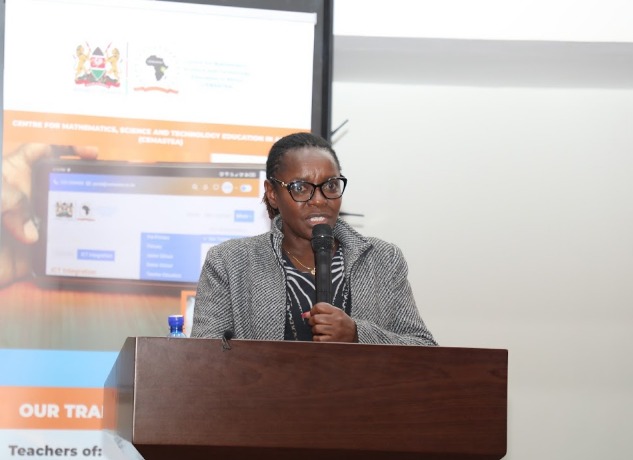
Speaking during the conclusion of a three-day intensive training for county trainers on Virtual Laboratories for Junior Schools in Karen, Nairobi, the Teachers Service Commission (TSC) Regional Director for Nairobi, Dr. Samwel Marigat, through a speech read on his behalf by Faith Kirimi, Deputy TSC Regional Director Nairobi, said digital innovation resources would help bridge gaps caused by inadequate laboratory facilities in many schools across the country.
“It is encouraging that CEMASTEA with the support of the Ministry of Education, has developed Virtual Laboratories for Mathematics and Integrated Science,” he commended.
Marigat said the initiative will complement government efforts to enhance Science, Technology, Engineering and Mathematics (STEM) learning by providing innovative digital tools that enrich practical science education and improve learners’ understanding of key concepts.
The Regional Director said adopting digital learning tools is now becoming essential in the modern education system, as it will help bridge disparities in access to practical science learning, particularly in underserved schools and remote communities.
He noted that virtual laboratories would enable learners from all parts of the country to equitably access quality STEM education regardless of their schools’ physical infrastructure or resource levels.
“The integration of technology into teaching and learning is no longer an option, but a necessity. As we embrace the digital age, virtual laboratories will play a critical role in ensuring equitable access to quality STEM education for all learners regardless of their geographical location or the level of resources available in their schools,” he said.
Dr. Marigat noted that while the implementation of CBE at the Junior School level is on steady progress with learners successfully transitioning to Grade 10 this year, access to practical learning resources continues to pose a big challenge, particularly in STEM subjects.
According to findings from studies conducted by CEMASTEA between 2023 and 2025, while teachers have made notable improvements in their pedagogical practices in Competency-Based Education (CBE) implementation, many schools still lack adequate laboratory equipment and instructional materials needed for effective practical learning.
“The reality is that many schools do not yet have sufficient laboratory facilities, equipment and materials required for effective practical learning. This challenge, if not addressed, could limit learners’ opportunities to develop the competencies, skills and scientific inquiry abilities envisioned under the Competency-Based Education framework,” said Regional Director.
He said that for this reason, CEMASTEA, with support from the Ministry of Education has developed virtual laboratories for Mathematics and Integrated Science.
Dr. Marigat revealed that through such digital platforms, learners can smoothly conduct experiments, visualize abstract concepts and participate in practical lessons, even where physical laboratory infrastructures are limited. “These innovative digital resources present a practical and sustainable solution to the resource constraints experienced in many schools. Through virtual laboratories, learners can conduct experiments, visualize abstract concepts and engage in practical learning experiences even where physical laboratory resources are limited,” he said.
Dr. Marigat said the success of the initiative will largely depend on teachers’ ability to effectively integrate the virtual laboratories into classroom instruction, urging the county trainers to serve as agents of change and champions of innovation in their respective regions.
The Regional Director commended the Ministry of Education, Teachers Service Commission and CEMASTEA for their continued efforts to strengthen teacher capacity and support the successful implementation of CBE.
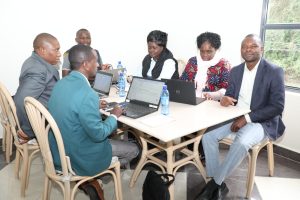
The programme began with the training of 240 county trainers during a workshop at CEMASTEA from June 18 to 20, 2026. The trainers are expected to cascade the skills and knowledge to Junior School Mathematics and Integrated Science teachers through county-based training sessions scheduled for Wednesday, June 24th to Friday 26th 2026.
Through the initiative, CEMASTEA aims to train approximately 7,000 Junior School Mathematics and Integrated Science teachers on the use of virtual laboratories.
The workshop, themed “Harnessing Virtual Laboratories for Effective Learning in STEM“, brought together county trainers from across the country to equip them with the knowledge and practical skills needed to support the nationwide adoption of the virtual learning platforms.
The initiative is expected to significantly enhance practical STEM learning and ensure that all Junior School learners acquire the competencies envisioned under the Competency-Based Education curriculum, regardless of the availability of physical laboratory facilities in their schools.
By Ian Chepkuto
