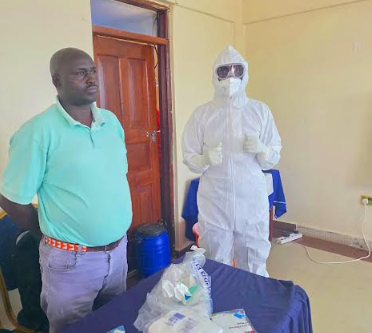
West Pokot has stepped up preparedness against the breakout of Ebola Virus Disease (EVD), with the County Health Department training 40 frontline healthcare workers to strengthen their capacity to detect, prevent, and respond to a possible outbreak.
Although Kenya has not reported any Ebola cases so far, health authorities in West Pokot have heightened surveillance because of the county’s proximity to neighbouring countries and the presence of porous international border points.
The five-day training, held in Makutano Centre, brought together nurses, clinicians, public health officers, laboratory technologists, and community health assistants from West Pokot, Pokot Central, Pokot South, Kipkomo, and Kacheliba sub-counties.
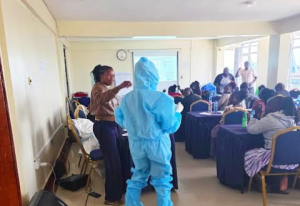
The training was conducted by Amref Health Africa with support from the United States Department of State, in collaboration with the Ministry of Health in West Pokot County and the Kenya National Public Health Institute (KNPHI).
The healthcare workers were trained using approved EVD modules covering infection prevention and control (IPC), risk communication and community engagement (RCCE), case management, and disease surveillance.
Speaking during the training, West Pokot County Chief Officer for Health and Sanitation Irene Lopakale said the exercise was aimed at strengthening the county’s readiness to respond effectively should an Ebola case or any other infectious disease outbreak occur.
“The main objective is to capacity-build our healthcare workers in terms of preparedness and response in case of any outbreak,” Lopakale said.
She assured residents that the county had put in place measures to detect and contain any potential outbreak, noting that preparedness was not only about responding when a disease emerged but also ensuring that health workers and communities were equipped beforehand.
Lopakale said the county was strengthening stakeholder engagement and coordination meetings while mapping hotspot areas into clusters to support risk management, capacity building, and targeted interventions.
She added that community-level preparedness was also being strengthened through the sensitisation of community health promoters (CHPs) and other key community gatekeepers.
“Measures have been put in place to ensure that the disease can be curbed and that we can respond effectively to any case or outbreak in the county,” she said.
The latest training brings to about 100 the number of healthcare workers who have been capacity-built in the county since the preparedness and sensitisation activities began. In addition, about 200 community health promoters have been reached through related awareness and preparedness initiatives.
The county health department is working closely with KNPHI, Amref Health Africa, and other partners to maintain heightened surveillance and ensure that residents remain informed about the current Ebola situation.
Rodgers Moraro, Amref’s EVD Response and Search Coordinator under the EVD Preparedness and Response Programme, said the initiative was part of a wider national effort supported by the United States Government Department of State to strengthen Kenya’s ability to respond to an Ebola outbreak.
Moraro said Amref was implementing the programme in 13 counties identified as being at very high risk following a national risk assessment conducted by KNPHI.
“KNPHI mapped counties across the country according to different risk profiles, and this prompted these preparedness activities to be implemented in the high-risk counties,” Moraro said.
He noted that West Pokot was among the counties prioritized because of its international borders, which increase the possibility of cross-border movement and transmission of infectious diseases.
The programme is expected to train more than 500 healthcare workers across the country, with the trained personnel serving as an important frontline defence in the event of an outbreak.
The practical component of the training also exposed the health workers to the correct use of personal protective equipment (PPE), an essential component of infection prevention and control when managing suspected cases of highly infectious diseases.
The preparedness programme comes as health authorities continue to emphasize the importance of early detection, rapid reporting, effective surveillance, and community awareness in preventing infectious diseases from spreading.
For West Pokot, strengthening preparedness is particularly significant given the county’s strategic location and extensive movement of people across its borders.
Health officials have therefore urged residents to remain vigilant, seek accurate information from health authorities, and promptly report suspected cases through the established health surveillance system.
The county government and its partners say continued training, coordination, surveillance, and community engagement will remain critical in ensuring that West Pokot is ready to respond swiftly should an Ebola threat emerge.
By Parklea Ivor