For many years in history, Kondele has largely been known as Kisumu’s politically charged neighborhood, a place often thrust into the national spotlight during protests and election unrest.
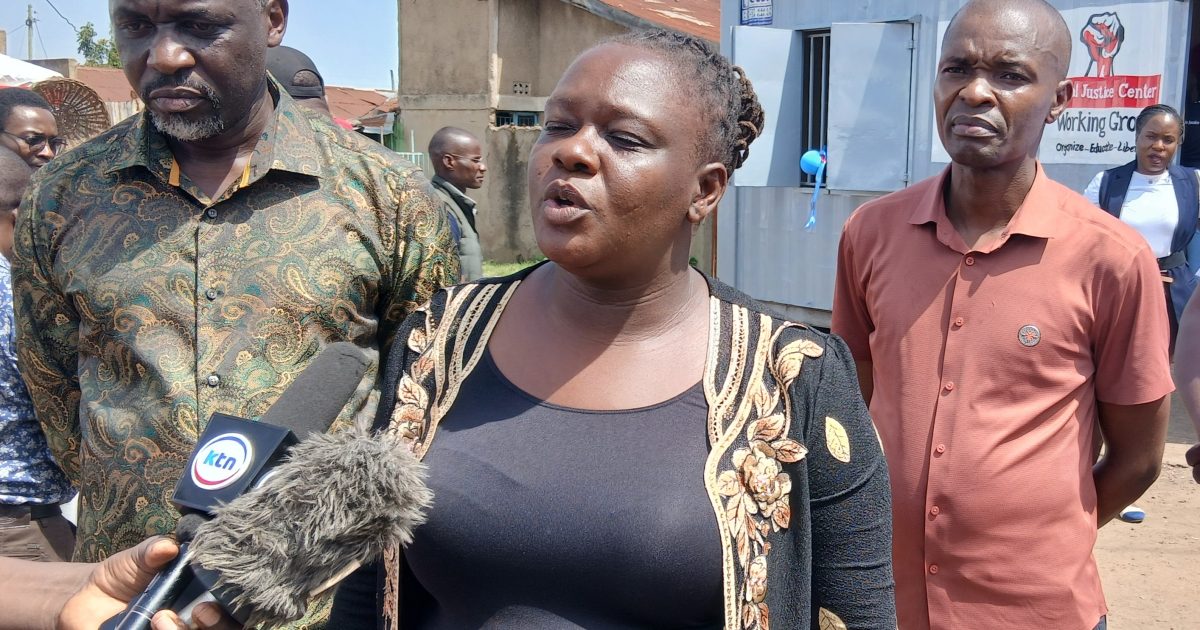
On Tuesday, however, the conversation shifted from confrontation to justice and community empowerment, as residents witnessed the launch of the Kondele Social Justice Centre, a facility expected to offer survivors of abuse, a safe space to seek help, report violations and access support services.
The Centre, which will also serve residents of Manyatta ‘B’ was launched with calls for stronger community engagement, accountability and protection of vulnerable groups.
Speaking during the launch, Vincent Chahale, the Country Director of the International Justice Mission (IJM), said the establishment of the facility carried special significance because of Kondele’s long history in Kenya’s struggle for civil rights and social justice.
“When we talk about civil rights, the history of Kondele and how residents fought for civil rights, cannot be forgotten,” said Chahale.

“It is important that residents now have a place where they can feel safe and secure enough to report cases of human rights abuse,” he added.
Chahale noted that many victims of abuse, especially those from low-income and marginalised communities, often struggle to seek justice because of fear, intimidation or lack of proper reporting channels.
He said the Centre would particularly help survivors who may feel uncomfortable reporting officers misconduct, at police stations.
“It is not easy for members of the public to walk into a police station and report police officers. Spaces such as this, make it easier for survivors to come forward without fear,” he said.
The facility, he added, will also double-up as a community hub for youth groups, women, artists, researchers and media practitioners.
National Social Justice Centres Convener, Happy Olal, said the Centre had been designed as a people-driven space, where residents can organize, hold discussions and access information on social justice issues.
“This is not just an office for complaints. It is a community space where people can meet, learn, organize and discuss solutions to challenges affecting them,” said Olal.
He expressed concern over rising cases of gender-based violence, femicide, disappearances, human trafficking and youth crime across the country, saying communities must become more proactive in addressing social injustices.
“As a country, we must start thinking about how we deal with these issues before they escalate further,” he said.
Olal added that the initiative was also aimed at promoting safer communities ahead of future elections, particularly in areas historically affected by political tensions.
Kondele has over the years experienced recurrent clashes, demonstrations and confrontations during election periods, making it one of Kisumu’s most politically sensitive Estates.
The Independent Policing Oversight Authority (IPOA), welcomed the move, terming it a major boost in improving trust between communities and law enforcement agencies.
IPOA Commissioner-In-Charge of the Nyanza Region, Ken Williams Nyakomita, said the Centre would complement efforts to ensure complaints against police officers are handled more effectively and confidentially.
“When the public lacks trust in the police, reporting cases becomes difficult. Centres like this help bridge that gap,” said Nyakomita.
He acknowledged that IPOA still faces a backlog of complaints in the Nyanza Region, however, he assured that investigations continue within the timelines provided under the law.
Nyakomita also revealed that some complainants fail to complete cases after reporting them, making prosecution difficult.
“Sometimes victims disappear or fail to provide sufficient evidence, which affects the progress of cases,” he said.
The launch also brought emotional testimonies from survivors of police abuse.
Joy Omolo recounted how she failed to pursue justice after allegedly suffering police abuse during the 2017 post-election period, because she lacked guidance and support.
“I did not know where to report my case or who could help me. That is why this Centre is important because services are now closer to the people,” she said.
Residents expressed hope that the new Centre will help transform Kondele into a stronger and more empowered community, where grievances can be addressed through dialogue, support systems and lawful channels.
by Chris Mahandara