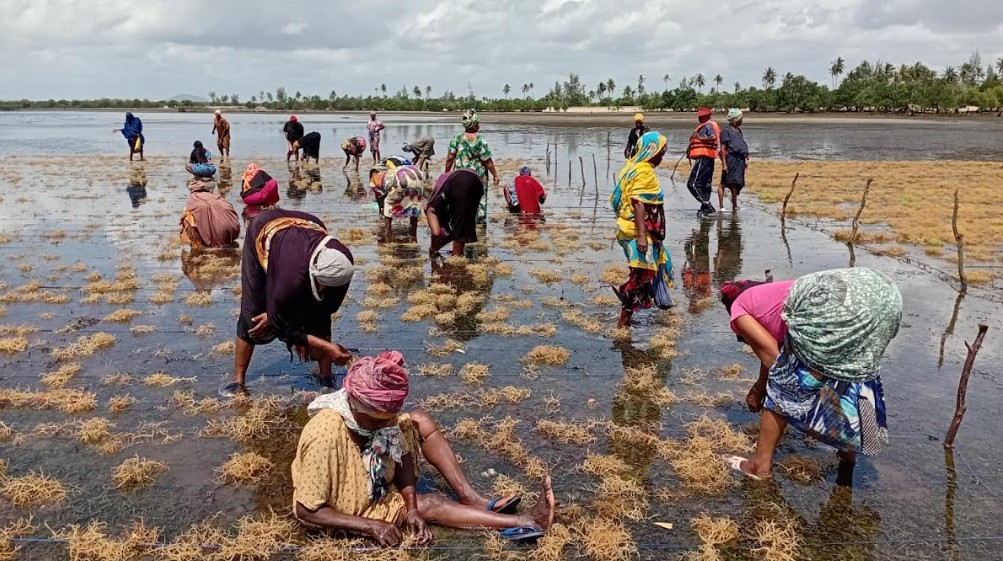
Along the muddy shores of Vanga and Mkwajuni in Kwale County, groups of women farmers are wading through deep waters, harsh tides and economic hardship in an ambitious effort to restore marine ecosystems through seaweed farming and mangrove conservation.
What started as a small environmental clean-up initiative has now evolved into a community-driven campaign to revive declining fish stocks, create livelihoods for women and combat the effects of climate change.
“We thank God because even though we are still beginners, we have managed to plant and harvest seaweed,” said Mwanamari Kombo, a member of a local seaweed farming group.
“We have not yet found a proper market, but people come to buy small quantities for medicinal purposes. Some buy seaweed for children’s fever, wounds and other illnesses,” she added.
The women say seaweed farming has shown promise both economically and environmentally. According to the farmers, fish have started returning to the areas where seaweed is planted because the farms act as feeding and breeding grounds.
“Seaweed is food for fish and their shelter. Whenever we harvest, we see many fish swimming around the farms,” said Kombo.
The women combine seaweed farming with mangrove restoration, which they say is helping protect marine biodiversity while also generating carbon credit income through conservation programs.
“We plant mangroves because they have many benefits. Mangroves are breeding grounds for fish, and they protect the environment. The carbon income we get benefits the whole community through schools, hospitals, laboratories and other projects,” she said.
The groups say climate change and declining fish stocks pushed them to embrace seaweed farming as an alternative livelihood.
Zaliha Mohammed from Vanga Farmers Community-Based Organisation said the group was initially formed for environmental clean-up activities before shifting to conservation and seaweed farming.
“We noticed fish catches were decreasing because of climate change,” she said, adding that they decided to start seaweed farming because seaweed attracts fish and restores marine life.
However, the women say the industry faces major logistical and technical obstacles.
Mohammed explained that farmers walk for nearly two hours to reach the farms, while hiring boats costs between Sh10,000 and Sh15,000 far beyond the means of the young community groups.
“Most of the money we contribute goes to hiring boats and paying boat operators,” she said.
The women also say they lack technical expertise and proper farming equipment.
“We planted seaweed traditionally without enough knowledge. The first, second and third harvests all resulted in losses because we were not properly trained,” added Mohammed.
The farmers identified one of their biggest challenges as conflicts with fishermen using drag nets that destroy underwater seaweed farms.
“When fishermen pull their nets through our farms, all the seaweed breaks apart. After working so hard, we are left with nothing,” said Mwanavua Mzara, another seaweed farmer.
The women are now appealing to the government to officially recognise their work and provide support through equipment, training and infrastructure.
They specifically requested boats, marker buoys, drying racks, tarpaulins and improved access to seaweed seedlings.
“We need buoys so fishermen can see where the farms are. Without them, our farms are destroyed all the time,” said Kombo.
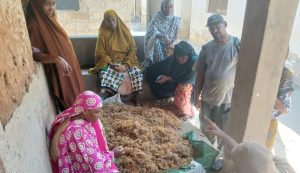
The lack of proper drying facilities is another major setback. Farmers currently dry seaweed directly on the ground, causing spoilage and poor-quality produce.
“We need raised drying racks and large tarpaulins. When we dry seaweed on the ground, it gets damaged,” one farmer explained.
Beyond selling raw seaweed, the groups also hope to venture into value addition by producing soaps, lotions and other products.
“We want training in value addition and marketing. Right now, we still have seaweed at home because we do not know where to sell it,” Mohammed said.
Meanwhile, the Jimbo Youth Group says mangrove restoration has already transformed local communities.
The group, which began conserving mangroves in 2004, says carbon financing projects have generated millions of shillings used to renovate schools, madrassas and community facilities across Vanga, Jimbo and Kiwegu villages.
“People used to laugh at us for planting mangroves, but now everyone understands their value because the projects are benefiting the entire community,” said Kombo.
The conservationists say mangroves also protect coastal communities from strong winds and waves while improving rainfall patterns and supporting crab harvesting.
As the women continue planting seaweed in the Indian Ocean’s shallow waters, they hope greater government support and market access will help transform their small-scale initiative into a sustainable blue economy enterprise capable of lifting coastal families out of poverty.
By Chari Suche