Pharmaceutical manufacturers and suppliers have been urged to support efforts to free Kenya from counterfeit drugs.
Pharmacists say continued proliferation of counterfeits is a major threat to patient safety, health security, and economic development and compromises the country’s medicine manufacturing industry that feeds the local and export markets.
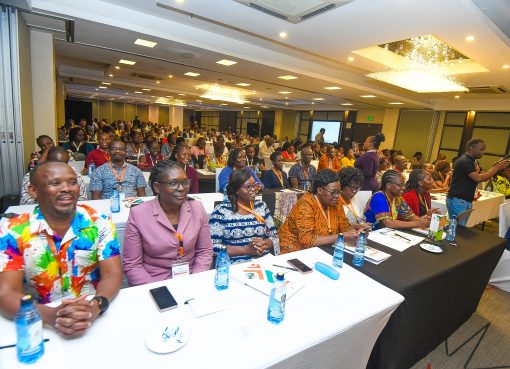
Speaking at Arap Moi Children’s Home in Nakuru, where members of the Pharmaceutical Society of Kenya (PSK) donated drugs and foodstuff, Dr. John Ng’ethe cautioned Kenyans against purchasing counterfeit drugs while issuing a detailed guideline on how to avoid buying fake drugs.
Dr. Ng’ethe, who is the former Chairman of the Pharmaceutical Society of Kenya Central Rift Branch, advised Kenyans to always ask, check, and verify the pharmacies before buying any drug.
“Kenyans can confirm licensed pharmacies through the Pharmacy and Poisons Board (PPB) website, which has a list of all authorized pharmacies in the country. Ask, check, and verify before you buy medicines. Confirm the pharmacy is licensed. Protect your health—buy from authorized pharmacies,” the pharmacist indicated.
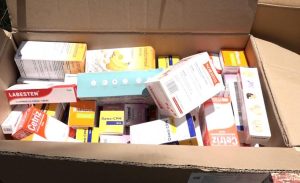
The donation to the children’s home was part of PSK’s Central Rift Branch’s events to mark the World Pharmacists Day (WPD) that is celebrated on September 25th of every year globally as designated by the International Pharmaceutical Federation (FIP) Council.
The day with this year’s theme, Empowering Pharmacists for Healthier Futures, is dedicated to celebrating and appreciating the work done by pharmacists.
The World Pharmacists Day (WPD) signifies the importance of a pharmacist in product development, manufacturing, and the entire lifecycle, while improving access, safety, quality, and efficacy of medical products and health technologies.
Dr. Ng’ethe, who is the Managing Director of High-tech Pharmaceuticals and Research Incorporated, a local pharmaceutical manufacturing and medical equipment company, called for stronger collaboration among stakeholders, saying the growing threat of counterfeit medicines cannot be addressed by a single institution.
“Safeguarding public health requires coordinated action across government institutions and partners to protect public health and strengthen the integrity of Kenya’s pharmaceutical supply chain,” he said.
He hailed the Pharmacy and Poisons Board for implementing sweeping regulatory reforms over the past one year to strengthen oversight of health products.
These include mandatory re-registration of legacy medical products, enhanced surveillance at ports of entry, strengthened risk-based inspections and enforcement across the supply chain, as well as expanded post-market surveillance and pharmacovigilance systems to improve early detection and response.
Despite the progress, Dr. Ng’ethe warned that counterfeit and substandard medical products continue to exploit weaknesses across supply chains, international trade, border control, law enforcement, digital commerce, and criminal networks.
“Substandard and falsified medical products continue to exploit weaknesses across supply chains, making it impossible for any single institution to address the challenge alone,” he said.
“Substandard and falsified medical products remain a major threat to patient safety, health security, and economic development,” the pharmacist said.
He added that tackling the challenge requires a whole-of-government approach involving regulatory agencies, law enforcement, border control authorities, county governments, healthcare professionals, manufacturers, distributors, development partners, and the public.
He said falsified batches “may contain incorrect, insufficient, or harmful ingredients,” adding that their “quality, safety, and efficacy cannot be guaranteed.”
Dr. Ng’ethe also urged stakeholders within the pharmaceutical supply chain to source health products and technologies only from licensed manufacturers, importers, distributors, and retailers.
“Procuring from unlicensed sources endangers patients and constitutes a violation of the Pharmacy and Poisons Act, Cap 244 of the Laws of Kenya,” he said.
He added that members of the Central Rift Pharmaceutical Society of Kenya would continue working with relevant government investigative agencies in addressing the matter.
“Together with relevant government investigative agencies, we will take firm action against any individual or entity involved in the distribution of this and any other falsified batches,” the statement said.
He asked members of the public and healthcare professionals to report any suspected falsified or substandard medicines through PPB’s official reporting channels, including its online portal, mobile application, email contacts, and telephone hotline.
The pharmacist said as Kenya strengthens regulatory coordination, surveillance, and enforcement, the challenge should focus not only on detecting unsafe medicines after they enter the market but also on preventing them from reaching patients.
Dr. Ng’ethe said the fight against substandard and falsified medical products could no longer remain a conversation limited to regulators, pharmacists, and public-health specialists.
Medicines move through complex commercial supply chains involving manufacturers, procurement organizations, freight forwarders, airlines, ports, customs, transporters, warehouses, wholesalers, and health facilities.
Each actor, he said, has a role in maintaining the integrity of medicines.
“A genuine product can leave a compliant manufacturer meeting its required specifications and subsequently lose quality because of poor transportation, inappropriate storage, temperature excursions, or failures in distribution,” he said.
“Quality assurance, therefore, cannot end at the factory gate. Although quality is not created in the supply chain, it can be lost there,” he said.
He cautioned unauthorized retail outlets against stocking, selling, or supplying prescription-only medicines.
Dr. Ng’ethe advised businesses that are unsure about which health products and technologies (HPTs) they are legally permitted to sell to seek guidance directly from the regulator and urged members of the public to play an active role in safeguarding the medicine supply chain by reporting suspected illegal activities.
Under the Pharmacy and Poisons Act, Cap 244 of the Laws of Kenya, the PPB is mandated to protect and promote public health by ensuring access to quality, safe, and effective health products and technologies.
The law expressly prohibits the importation, stocking, distribution, sale, or use of unregistered, falsified, counterfeit, or recalled health products within the Republic of Kenya. Possession or sale of such products is also a criminal offense.
The consequences for violating the law are severe. They include prosecution and criminal liability of the superintendent pharmacist or pharmaceutical technologist, any person acting under their direction, as well as the manager, directors, and owners of the establishment.
Additional penalties include suspension or revocation of licenses and the closure of premises found to be operating illegally.
PSK Central Rift Chairperson Dr. Lydia Giturwa warned that unregulated access to prescription medicines poses serious risks, including misuse, drug resistance, and adverse health outcomes.
She explained that falsified medicines deliberately misrepresent a product’s identity, composition, or source.
“They often closely resemble genuine medicines but contain the wrong ingredients, an inadequate amount of the active pharmaceutical ingredient, or none at all. For patients unknowingly taking them, the consequences can be severe: they follow their treatment faithfully, yet continue to deteriorate, because the medicine they trusted never had the intended effect,” noted Dr. Giturwa.
She emphasized that illegal pharmaceutical outlets pose a significant public health risk since they do not adhere to standards set by PPB.
Dr. Giturwa noted that some manufacturers were faking security features such as holograms and QR codes on packaging containing counterfeit pharmaceutical products.
She said strict enforcement is necessary to ensure medicines are dispensed responsibly and under proper professional supervision.
On July 1, the Pharmacy and Poisons Board (PPB) confirmed what many Kenyans and health experts had long suspected: that substandard and falsified medical products had been detected in pharmacies, health facilities, and other licensed outlets.
Among the products identified were falsified Truvada, the antiretroviral used by people living with HIV; falsified HIV rapid test kits that deliver inaccurate results; falsified heparin injections capable of causing bleeding, organ damage, and death; falsified Viagra; and counterfeit malaria and cancer drugs that had previously been withdrawn from the market.
“The alerts we have issued are based on real findings, not speculation. These products were in circulation,” said Dr. Edward Abwao, the PPB’s Head of Post-Market Surveillance.
In a presentation, Dr. Abwao revealed that Kenya recorded 1,413 product quality complaints and 99 product recalls between 2021 and 2025. Adverse event reports, cases where a medicine caused harm instead of healing, rose from 651 in 2011 to 32,833 in 2025.
Since 2020, the PPB has issued 18 suspected falsified medicine alerts, seven of them in 2025 alone and one already in 2026, and the recalls themselves have climbed steadily too: 18 in 2023, 32 in 2024, and 43 in 2025.
According to World Health Organization data, at least one in ten medicines in low- and middle-income countries is substandard or falsified, costing countries an estimated US$30.5 billion every year.
In Africa, more than 267,000 people die annually from falsified and substandard antimalarial medicines alone, and a further 169,271 deaths a year are linked to substandard antibiotics used to treat severe pneumonia in children.
A 2025 report by Kenya’s Anti-Counterfeit Authority (ACA) revealed a worrying rise in counterfeit pharmaceuticals and medical equipment across the country.
The authority warned that fake drugs and equipment endanger patient safety, hamper healthcare delivery, and undermine trust in Kenya’s medical sector. The report highlighted how counterfeit medications flood local markets, often bypassing quality checks and exploiting vulnerable communities.
Medical equipment such as diagnostic tools and surgical instruments is also impacted, posing serious risks to hospitals and patients.
The authority called for tighter enforcement, increased public awareness, and stronger penalties to combat this growing threat and protect Kenya’s healthcare.
It warned that unregulated access to prescription medicines poses serious risks, including misuse, drug resistance, and adverse health outcomes.
By Jane Ngugi and Dennis Rasto