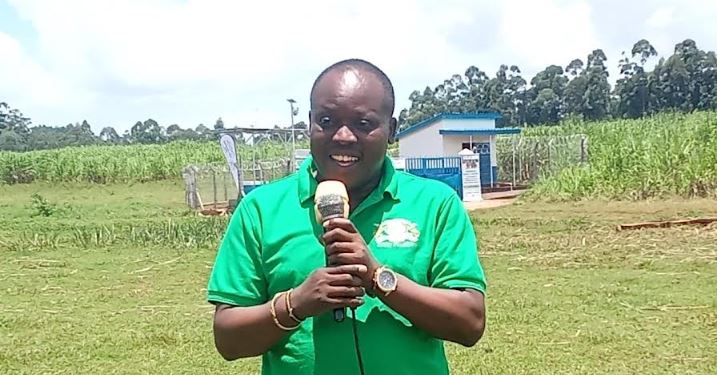
Residents of the Lukesi area in Saboti, Trans Nzoia County, are breathing a sigh of relief after decades of walking long distances in search of clean water came to an end.
The suffering has been eased by the completion of the Lukesi Mwitha Lukhome Community Borehole Water Supply and Groundwater Monitoring Pilot Project, which is now serving an estimated 843 households and about 600 learners at Bishop Crowley Primary and Secondary Schools.
The project comprises a borehole, an elevated storage tank, a reticulation system, and several water collection points that have brought water closer to homes and schools.
For years, residents endured salty, unsafe water and expensive costs, with some forced to buy water at Sh20 per 20-liter jerrican.
“Before, I used to walk long distances to fetch water, which wasn’t clean, and buying water was very expensive. Now things are easier and the water is very clean and safe,” said Rosemary Simiyu, a resident of Lukesi.
At Bishop Crowley Schools, Headteacher Robert Wafula Nyongesa said the water crisis had affected learning and hygiene, with teachers forced to carry water from home and the school relying on donkeys to transport water.
“The little water we had was salty and soapy. Teachers carried their own water. When our pump broke down, we transported water using donkeys, which wasn’t sanitary. Our students used to get very sick, and we would rush them to the hospital at night. Now our schools are clean and we have safe water,” he said.
The project was implemented by the Nile Basin Initiative (NBI) as part of efforts to strengthen sustainable management of groundwater and transboundary aquifers across the Nile Basin.
Speaking during the handover, the County Executive for Water, Environment, and Natural Resources Robert Wamalwa said the county will work with partners to extend distribution to more homes and markets while conserving the aquifer and surrounding wetlands.
State Department for Water and Sanitation representative Dr. Nancy Koech urged residents to protect the catchment by planting trees and avoiding farming on riparian land.
NBI Executive Director Dr. Nestor Niyonzima said the Nile Basin is facing increasing water scarcity due to climate change, population growth, and economic development, making sustainable management critical.
The project, supported by the Global Environment Facility through UNDP, has also been implemented in Burundi, Rwanda, and Uganda.
“We are happy to see what has been done. To construct is one thing and to maintain is another. I call upon residents to maintain the infrastructure,” he said.
Community project coordinator Boniface Mirikwa called on residents to protect the facility for future generations.
“As a community, let’s protect what we’ve received. We do not want our mothers to continue travelling long distances for water,” he said.
By Sandra Omondi