Trans Nzoia County has intensified calls for the protection of wetlands and crane habitats, warning that destruction of breeding grounds and rising human-wildlife conflict are threatening the survival of the birds and the tourism potential they hold.
County Secretary Truphosa Amere said the county government will continue working with conservation stakeholders to protect ecosystems while supporting livelihoods that depend on the environment.
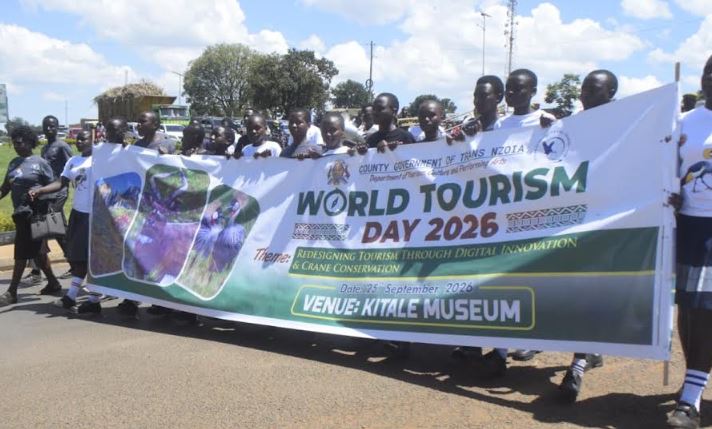
Speaking during celebrations to mark World Tourism Day and crane conservation at the Kitale National Museum, Amere said cranes are a vital part of the county’s natural heritage and commended partners supporting conservation.
“The interconnectedness of nature and development cannot be stressed enough. As a county government we will ensure that services are provided that support conservation and livelihoods,” she said.
The event, organized by the International Crane Foundation (ICF) in partnership with various stakeholders, was held under the theme “Redesigning Tourism through Digital Innovation and Crane Conservation.”
County Executive for Gender, Youth, Sports, Culture, and Tourism, Eliud Tormoi, said cranes are facing increasing threats following the destruction of wetlands, which serve as their breeding grounds.
“When we invade and destroy wetlands, we are telling cranes to stop growing and reproducing. We need to protect their breeding areas,” Tormoi said.
He noted that cranes are a key tourism attraction due to their unique characteristics and urged communities living near wildlife habitats to take a leading role in conservation.
Tormoi cited the recent death of 13 cranes in neighbouring Nandi County after poisoning by farmers as a clear reminder of the dangers posed by human-wildlife conflict.
“We need to protect the environment because without it there are no cranes, no food, and no tourism,” he said.
County Executive for Water, Environment, Natural Resources, and Climate Change, Robert Wamalwa, urged residents to be responsible stewards of wetlands, wildlife, and biodiversity, noting their direct link to tourism.
“Let us not continue to invade their ecosystems. I urge residents to be responsible for conservation, biodiversity, and the crane,” Wamalwa said, while calling for enhanced environmental education among children as future custodians of conservation.
ICF Country Manager Adan Kabelo said habitat destruction is already altering crane behaviour in Trans Nzoia, with some birds forced to seek alternative nesting sites.
He revealed that cranes have recently been observed laying eggs on trees in Botwa, Cherangany, instead of their traditional wetland habitats, a shift linked to encroachment on riparian areas.
“This is the first time in history cranes are moving to tall trees. When they nest on top of trees, it is an automatic death sentence for chicks because they were created to hatch on water at ground level,” Kabelo said.
He added that farmers are also experiencing losses as cranes feed on seedlings, creating conflict. He said ICF is working with farmers in Botwa, Kobos, and Sabwani to promote climate-smart agriculture and provide alternative food production methods away from wetlands.
“We do not want to punish our farmers, but we need to find ways to integrate living with these birds,” he said.
ICF Regional Director for East Africa, Dr. Adalbert Aine-Omucunguzi, said technology is now being used to monitor cranes and provide real-time data on their movements and breeding.
He said trained crane custodians are able to report incidents such as collisions with power lines, chick hatching, and egg-laying through digital platforms.
Dr. Aine-Omucunguzi noted that Trans Nzoia hosts about 12 per cent of Kenya’s crane population, presenting a major opportunity to grow tourism and revenue for the county.
“Trans Nzoia holds 12 percent of the crane population in Kenya, and that is a big tourist attraction. We can ride on them to promote tourism and make it a key revenue source through partnerships,” he said.
He identified wetland encroachment and other human activities as major challenges but said conservation efforts in Sabwani and Botwa are yielding positive results, with crane numbers increasing and breeding becoming more successful.
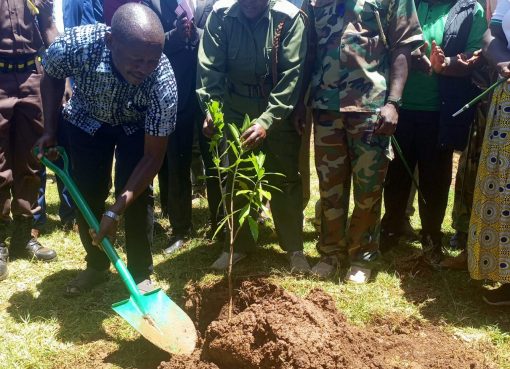
The celebrations brought together representatives from the Wildlife Research and Training Institute, National Environment Management Authority, Water Resources Authority, Kenya Wildlife Service, and other stakeholders, who called for sustained community participation in protecting wetlands to ensure conservation supports both environmental sustainability and tourism development.
By Isaiah Nayika