Residents living along the Kisumu-Kericho border have intensified efforts to prevent a resurgence of cattle rustling and election-related violence, warning that political incitement could reverse more than a decade of gains made through cross-border peace initiatives.
During a joint peace dialogue held at Onyongo Jimo in Sondu, community members, local administrators, security officers, religious leaders, and peace actors resolved to strengthen cooperation against cattle theft, drug abuse, and politically instigated violence that have historically disrupted relations between the neighbouring communities.
The forum participants discussed that cattle rustling incidents have significantly reduced following sustained peace-building efforts over the past 11 years, with stakeholders concerned that political competition ahead of the next General Election could inflame tensions and provide an opportunity for criminal activities to thrive.
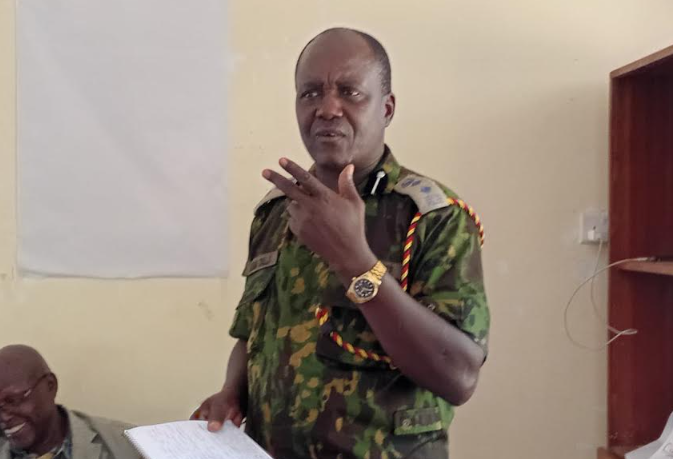
Nyakach Sub-County Police Commander (OCPD) Okumu Dulo asked residents to work closely with security agencies in identifying criminals and preventing crime.
Dulo said cattle rustling remains one of the biggest security threats facing communities living along the border, adding that many thefts are aided by local collaborators.
“The people from outside cannot carry out these crimes alone. Local collaborators facilitate the theft and movement of livestock. If communities reject the vice and share information with security agencies, we can eradicate the vice,” he said.
The police boss urged young people to become ambassadors of peace instead of engaging in criminal activities, noting that youths hold the key to the region’s future stability.
He expressed concern over increasing cases of drug and substance abuse among young people, warning that the trend was contributing to school dropouts and criminal behaviour.
“The youth are the most energetic members of society. If they are consuming alcohol and drugs as early as six in the morning, then the community is bound to loose important talent,” said Dulo.
He called on residents to embrace community policing and report criminal activities promptly to law enforcement agencies.
Community leader and teacher Josphat Omune said sustained dialogue between the two communities had yielded significant results, helping reduce insecurity and build trust across the county border.
“We have seen the fruits of dialogue over the years, but we must continue talking, especially as we head towards the election period when violence is often linked to politics,” he said.
Omune warned that inflammatory political rhetoric has historically strained relations between neighbouring communities and occasionally sparked violence.
He credited interventions spearheaded by the Geno Community Development Initiative with helping curb cattle theft in the region.
“While we appreciate this achievement, we are not satisfied with our 97 per cent achievement of our security goals. We want to reach 100 per cent and ensure sustainability in the fight against cattle theft and other forms of crime,” he said.
Omune urged political leaders to support peace initiatives and avoid actions or statements that could divide communities.
Peace Initiative Committee member Ann Koech echoed the sentiments, cautioning that elections have historically posed security challenges in border areas.
She said young people are often the biggest victims of election-related violence and should be protected from political manipulation.
“Politics come and go, but communities remain. We are one blood, and it is important that we live knowing that we are brothers and sisters,” she said.
Koech called on leaders to prioritize development and service delivery instead of engaging in divisive politics.
Senior Chief Judith Pande condemned cattle rustling, describing it as a major obstacle to peace, development, and harmonious coexistence.
She said the government remained committed to creating job opportunities for young people through ICT centers and technical training institutions to discourage them from engaging in crime.
“There are ICT centers and technical institutions in many locations. Young people should identify opportunities that can help them build their future because cattle rustling is not employment. It only causes suffering and insecurity within communities,” said Pande.
The administrator emphasized that development can only thrive in a peaceful environment and urged residents to continue supporting peace-building efforts.
The clergy also challenged parents and guardians to play a more active role in raising responsible citizens.
AIC Church pastor Richard Bii said churches remain critical in instilling values of responsibility, respect, and love for others, which are essential in preventing crime and fostering peaceful coexistence.
He urged communities to strengthen unity through social interactions, sports, and dialogue, particularly as the country heads to another election cycle.
The forum’s organizers warned that despite significant progress, complacency could undermine years of peace-building.
Geno Community Development Initiative Chief Executive Officer Enos Odera said the peace forums were deliberately convened ahead of the election period because border communities feared a recurrence of politically instigated violence.
“There has always been fracas in the border area, and now we are going into the election cycle. We are anticipating chaos that is normally agitated by politicians. The community is very concerned, and that is why we have these dialogue forums,” he said.
Odera said the forums, organized through the West Kenya Peace Alliance, had helped transform relations between communities on both sides of the border.
“We have done this for 11 years, and we are seeing results. Communities are now together. They have come together and are now communicating effectively,” he said.
He noted that cattle rustling, which initially prompted the peace dialogues, had reduced significantly but remained a concern due to the involvement of unemployed youth.
“The OCPD told us that it is our children who are also perpetuating this problem. They are the ones taking livestock from our areas and selling them elsewhere,” said Odera.
He challenged young people to pursue technical training and entrepreneurship education instead of engaging in livestock theft.
The Kisumu-Kericho border has for years experienced recurring insecurity arising from cattle rustling, livestock theft, and retaliatory attacks that have occasionally claimed lives, destroyed property, and disrupted economic activities.
However, sustained collaboration among local leaders, security agencies, faith-based organizations, and community groups has helped reduce crime and improve relations between residents of Nyakach and Sigowet.
At the end of the meeting, participants resolved to sustain dialogue forums, strengthen cross-border cooperation, and intensify efforts to eliminate cattle rustling, drug abuse, and election-related violence in a bid to protect development gains and maintain stability along the border.
By Dorothy Pamella