West Pokot County is grappling with one of its harshest droughts in recent years, with thousands of families in the arid parts of the county facing hunger as prolonged dry conditions continue to ravage livelihoods.
In Tkiit Village, Masol Ward in Pokot Central Sub-County, the once expansive grazing fields have turned into dusty plains, while rivers and seasonal water pans have dried up, forcing pastoralists to travel long distances in search of water and pasture for their livestock.
For many families whose livelihoods depend entirely on livestock, the drought has become more than an environmental challenge and it is now a humanitarian crisis.
Residents say the prolonged lack of rainfall has weakened their animals, drastically reduced milk production and led to livestock deaths, leaving many households without a reliable source of food or income.
The situation is particularly dire in Pokot Central and North Pokot sub-counties, where communities continue to battle acute water shortages and shrinking grazing fields.
As the drought tightens its grip, some families have been forced to migrate with their livestock to neighboring counties, including Baringo, Turkana and Elgeyo Marakwet, in search of pasture, while others have moved closer to trading centres hoping to access government food relief and humanitarian assistance.
Women and children remain the most affected, spending hours every day walking long distances to fetch water while also queuing for food aid. Local leaders warn that unless the situation improves soon, cases of malnutrition, livestock deaths and food insecurity are likely to escalate.
Pokot Central Deputy County Commissioner Philip Mbuvi said approximately 60,000 residents in the affected areas are currently facing severe food shortages due to the prolonged drought.
“Our office is working closely with the humanitarian agencies to mobilize food assistance, water supplies and drought-resilient livestock to support affected households,” said Mbuvi.
He noted that the government has also rolled out a school feeding programme to ensure children continue attending classes despite the difficult conditions.
“The programme has greatly helped sustain learners and we have not recorded school dropouts due to hunger,” he added.
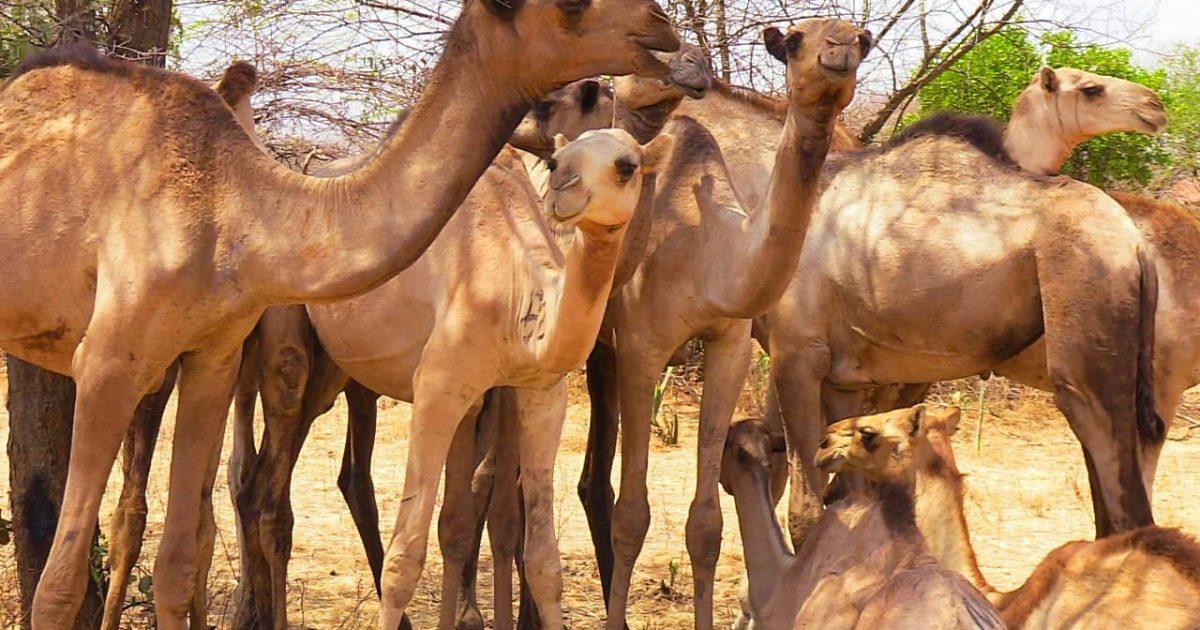
In an effort to strengthen climate resilience among pastoral communities, the government, through the Kerio Valley Development Authority (KVDA), has distributed 100 drought-resistant camels to residents of Tkiit Village under a livelihood improvement programme.
The initiative seeks to diversify livestock production by introducing animals that are better adapted to harsh climatic conditions where cattle, sheep and goats struggle to survive.
Speaking during the launch, Sigor Member of Parliament Peter Lochakapong, who also chairs the National Assembly Departmental Committee on Regional Development, described the programme as a timely intervention for vulnerable communities affected by recurring droughts.
“We are happy that the government has come up with this programme to cushion our people against the devastating effects of drought. Camels are well suited to this environment because they require less water, can survive prolonged dry spells and provide nutritious milk that can also generate income for households,” said Lochakapong.
He urged beneficiaries to properly care for the animals to ensure they reproduce, enabling future generations to benefit from the programme through the distribution of offspring to more households.
The legislator also applauded ongoing government security initiatives, particularly ‘Komesha Uhalifu’, saying sustained peace had significantly reduced incidents of cattle rustling that previously disrupted pastoral livelihoods in the region.
“Development thrives where there is peace. Today, our pastoralists can graze their livestock with greater confidence because insecurity has greatly reduced,” he said.
Lochakapong further appealed to the Ministry of Interior to sustain the disarmament exercise aimed at eliminating illegal firearms, which he said had for years fuelled insecurity across the North Rift region.
He assured residents that the government remained committed to ensuring no Kenyan suffers from hunger.
“The government is fully prepared to continue supporting vulnerable communities through various interventions whenever the need arises,” he said.
KVDA Acting Chief Executive Officer Moses Kipchumba said the camel distribution programme forms part of a broader livelihood improvement strategy targeting communities living in Kenya’s Arid and Semi-Arid Lands (ASALs).
He explained that water scarcity has become a perennial challenge in the area, making camel farming a practical and sustainable alternative for pastoral households.
“We have handed over 100 camels comprising 90 females and 10 males. The objective is for these animals to multiply, after which their offspring will be distributed to more families within the community,” said Kipchumba.
He noted that although pasture remains a challenge, camels are highly resilient and can browse on vegetation that other livestock cannot utilize.
“Camels are well adapted to dry environments. They survive where many other livestock cannot, require less water and produce high-quality milk that fetches premium prices in the market. This presents an opportunity for families to improve their incomes even under harsh climatic conditions,” he explained.
Kipchumba said the initiative demonstrates the government’s commitment to implementing practical climate adaptation measures through KVDA, which operates under the Ministry of East African Community, Regional Development and the ASALs.
The programme is expected to improve household food security, increase access to nutritious camel milk, diversify sources of income and strengthen community resilience against the growing impacts of climate change.
As climate shocks become more frequent across Kenya’s drylands, leaders say interventions such as the promotion of drought-tolerant livestock, expansion of water infrastructure and continued humanitarian support will be critical in safeguarding livelihoods and reducing vulnerability among pastoral communities.
For the residents of Tkiit Village, the newly acquired camels represent more than livestock, they symbolize hope for survival, resilience and a more secure future amid increasingly unpredictable weather patterns.
By Parklea Ivor