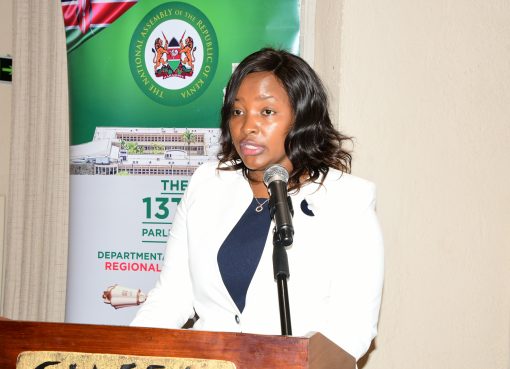
Acting Chief Executive Officer of the Centre for Mathematics, Science, and Technology Education in Africa (CEMASTEA), Gladys Masai, has urged In-Service Education and Training (INSET) Centre Principals and County Trainers to ensure that skills gained during training are effectively shared and applied to strengthen Science, Technology, Engineering, and Mathematics (STEM) in schools.
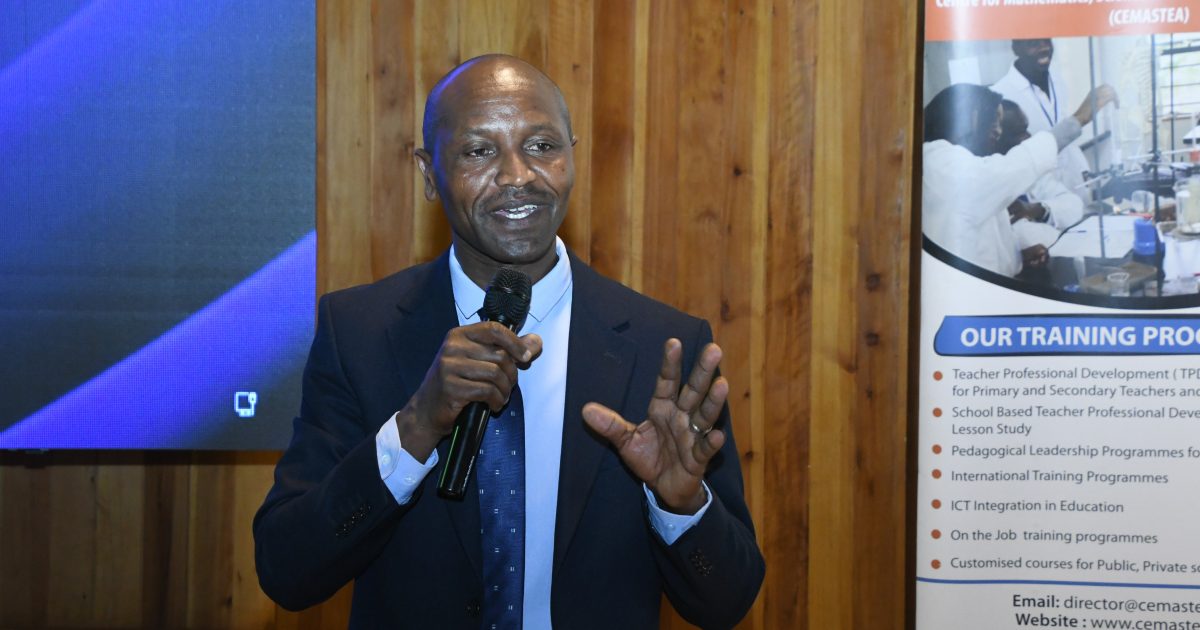
In a speech delivered on her behalf by Acting Director of STEM Research and Innovation, Karanja Mutitu, Ms. Masai emphasized the need for teachers to consistently apply new teaching approaches in the classroom.
She noted that sustained support for STEM training is essential in achieving meaningful impact in learning outcomes.
She highlighted the key roles of different stakeholders in the programme, saying County Trainers are instrumental in cascading training to teachers at the grassroots level, ensuring capacity-building efforts reach schools effectively.
INSET Centre Principals, she added, oversee and manage training centres while supporting implementation at the school level.
She said teachers and education officers remain the backbone of the STEM programme, playing a central role in transferring skills learned during training to learners and thereby improving learning outcomes.
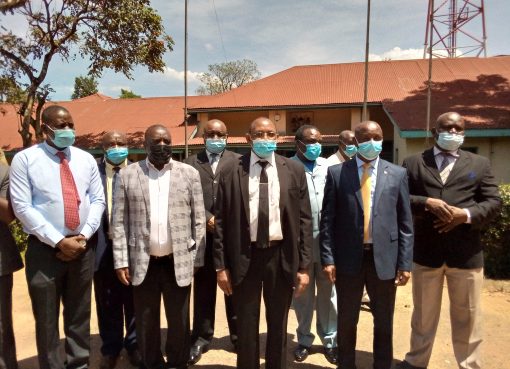
The three-day workshop organised by CEMASTEA brought together 118 INSET Centre Principals and 94 County Trainers, all of whom play a central role in cascading training and supporting programme implementation at both county and school levels.
Held under the theme “Enhancing management of CEMASTEA activities at the county level for effective implementation of STEM education“, the forum focused on strengthening coordination, leadership, and delivery of STEM initiatives nationwide.
Ms. Masai noted that over the past three years, CEMASTEA has expanded its mandate to include educational research and innovation aimed at improving science teaching and informing evidence-based policy development.
She stressed that teachers and education officers remain central to the success of the programme, adding that their active engagement is crucial for meaningful classroom impact.
Participants were encouraged to strengthen monitoring and follow-up systems to ensure that training translates into improved learning outcomes.
They were also urged to promote peer learning by enabling teachers to share experiences and adopt innovative teaching approaches. In addition, the workshop underscored the importance of holistic support for teachers, including mentorship and motivation alongside supervision.
Acting Director in charge of STEM Training at CEMASTEA, Makanda John Livingstone, said the institution works with a wide range of stakeholders to strengthen the capacity of curriculum implementers through enhanced teacher training, school outreach programmes, and the adoption of collaborative learning approaches.
“Our mandate is enhancing the capacity of curriculum implementers in the country around STEM education. We work with INSET Centre Principals who manage our training venues in every county,” he said.
Makanda noted that CEMASTEA operates 118 INSET Centres nationwide, which serve as key hubs for teacher training and professional development.
He said the workshop was meant to reflect on progress made and plan for improved delivery going forward.
To enhance inclusivity, Livingstone said CEMASTEA has rolled out school outreach programmes targeting under-resourced schools to promote STEM learning among both teachers and learners.
“We visit schools and work closely with teachers and learners, taking them through innovative teaching and learning activities in STEM. This has helped popularise STEM among learners,” he explained.
He said they remain focused on expanding access and participation in STEM pathways, particularly at the senior school level.
“We believe we are on course to achieving the aspiration of ensuring that 60 percent of learners pursue the STEM pathway in senior school in the coming years,” he said.
Livingstone further highlighted the importance of the lesson study approach, which he said is expected to strengthen collaboration among teachers once they return to their schools.
“We are taking them through lesson study, which they can use as a community of practice. When they go back, they will bring teachers together, identify challenges in STEM teaching and learning, and collectively develop solutions,” he said.
He noted that the approach allows teachers to share best practices, address pedagogical challenges, and improve learning outcomes in STEM subjects.
On infrastructure and expansion, Livingstone said CEMASTEA already operates sufficient INSET centers and is complementing them with 103 STEM model schools, which serve as centres of excellence for practical skills such as robotics and coding.
“These model schools support the popularisation of STEM subjects as learners transition to senior school,” he said.
He added that continued government support remains crucial in strengthening STEM delivery, noting that existing policy and resource support have already contributed significantly to the programme’s success.
“There is still room for more support to help us achieve the country’s STEM aspirations,” he said.
By Ian Chepkuto