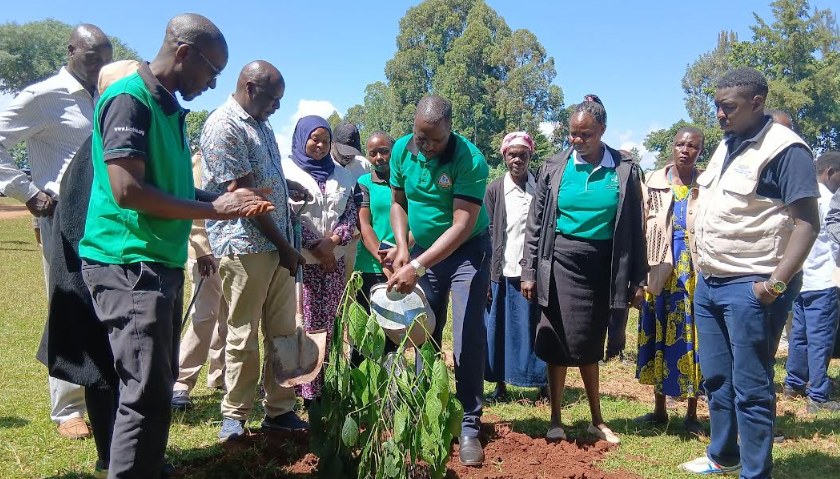
Kenyans have been urged to embrace environmental conservation measures in an effort to mitigate adverse effects of climate change.
Speaking at Kipkeikei Boys Senior School in Cherangany Sub-county, Trans Nzoia County Director of Environment and Natural Resources, Godfrey Wekesa, singled out climate change as a big threat to food security and challenged Kenyans to own environmental conservation efforts, among them tree planting.
Noting that climate change has had enormous effects on the environment, health, agriculture, and many other sectors, Wekesa added that prolonged droughts, unpredictable rainfall patterns, floods, and constant disease outbreaks affecting crops, livestock, and humans are on the rise as a result of climate change.
“Unlike in the past, we are now experiencing prolonged drought and irregular rainfall patterns, making it difficult for farmers to plan their agricultural activities. As the country’s food basket, Trans Nzoia has also been greatly affected by climate change,” he said.
However, Wekesa assured the county government has laid several mitigation measures, including distribution of gas cylinders to households, in an effort to curb deforestation brought about by overdependence on firewood.
“We still have tree seedlings available in our offices. Residents should collect them, plant them, and ensure they are nurtured to maturity for the benefit of future generations,” he said.
Deputy Director of the Kenya Plant Health Inspectorate Service (KEPHIS), Dr. Thomas Kosiomo, urged farmers to adopt climate-smart agricultural practices by using certified seeds and seeking professional agricultural advice to enhance productivity.
Dr. Kosiomo advised farmers to purchase only certified seeds approved by KEPHIS to ensure quality yields and reduce the risks associated with counterfeit planting farm inputs and encouraged them to take soil samples for testing before planting to enable experts to recommend the most suitable fertilizers based on soil nutrient requirements.
“As farmers adapt to the changing climate, it is important that they use certified seeds, conduct soil testing, and seek expert guidance on pest and disease control to improve productivity while protecting the environment,” he said.
Polly Loise, a sustainable agriculture expert, said farmers remain among the most vulnerable groups affected by climate change due to their dependence on natural resources and rainfall.
She observed that rivers are drying up because of widespread destruction of forests and tree cover, negatively affecting farming activities and food production.
She also noted that farmers are increasingly facing challenges in drying and storing harvested maize, leading to aflatoxin contamination that often makes the produce unsuitable for purchase by the National Cereals and Produce Board (NCPB).
“Climate change has affected our farming systems in many ways. Reduced tree cover has contributed to drying rivers, while changing weather patterns have made post-harvest handling more difficult,” she explained.
Environmental advocate Mercyline Morara called on residents to stop cutting down trees, saying deforestation has significantly contributed to declining agricultural productivity and reduced rainfall in the county.
Morara urged farmers to take the lead in environmental conservation by planting more trees and adopting environmentally friendly farming practices.
“If we continue destroying our forests, we will continue experiencing poor harvests and food shortages. We must plant trees today for a better tomorrow,” she said.
She also encouraged farmers to embrace organic fertilizers to improve soil health and promote the production of safe and healthy food.
Meanwhile, Leader of Slow Food Western Convivium, Christine Barasa, expressed concern over the gradual disappearance of indigenous vegetable varieties, warning that future generations could lose valuable traditional food crops if urgent conservation measures are not taken.
“Many indigenous vegetables that once thrived naturally are disappearing because of deforestation and environmental destruction. As ambassadors of traditional foods, we are encouraging communities to continue growing and consuming these vegetables to preserve our heritage and food security,” she said.
Christine said only about 210 traditional vegetable seed varieties remain, partly due to environmental degradation and destruction of natural habitats.
She noted that conserving indigenous seeds was essential in building resilient food systems capable of withstanding the effects of climate change.
By Isaiah Nayika and Winnie Jelagat