Sickle cell disease (SCD) is a group of inherited blood disorders that cause red blood cells to become hard, sticky, and crescent-shaped.
Instead of flowing smoothly, these abnormal cells block blood vessels, which restricts oxygen delivery and leads to severe pain, tissue damage, and chronic anemia
Treatment for the disease focuses on managing pain, preventing complications, and curing the underlying genetic condition. The therapy involves daily medications (like hydroxyurea), blood transfusions, supportive lifestyle care, and curative options like stem cell transplants and emerging gene therapies.
According to the Ministry of Health, sickle cell disease (SCD) affects an estimated 14,000 newborns annually in Kenya. The overall national prevalence of SCD is approximately 0.9 per cent, but the trait (SCT) reaches 10 per cent to 40 per cent in high malaria-endemic areas like Coast, Western and Nyanza regions. Without early screening, 50 to 90 per cent of these children do not survive past age five years.
Data shows roughly 21per cent of children in Kisumu carry the sickle cell trait, and approximately 4.5 per cent are born with the disease. Experts say it is highly prevalent in the county because the trait provides natural protection against severe malaria which is endemic in the region.
This makes the Lake Region, particularly Kisumu, to have the highest prevalence of Sickle Cell Disease (SCD) in Kenya. Because of this, some County health facilities such as Jaramogi Odinga Oginga Teaching and Referral Hospital (JOOTRH) and Pap Onditi in Nyakach have rolled out newborn screening and ultra-modern testing technologies to detect the disease early.
Local management programs focus on the distribution of Hydroxyurea drug to the patients, community health promoter training, and regular blood transfusions in order to save lives.
For thousands of Kenyan families, sickle cell disease is more than a medical condition. It is a daily fight against pain, stigma, poverty, and limited healthcare access. The SCD treatments in the county are supported under the essential drugs list. To access continuous care and medication, patients must ensure their Social Health Insurance Fund (SHIF) contributions are up to date.
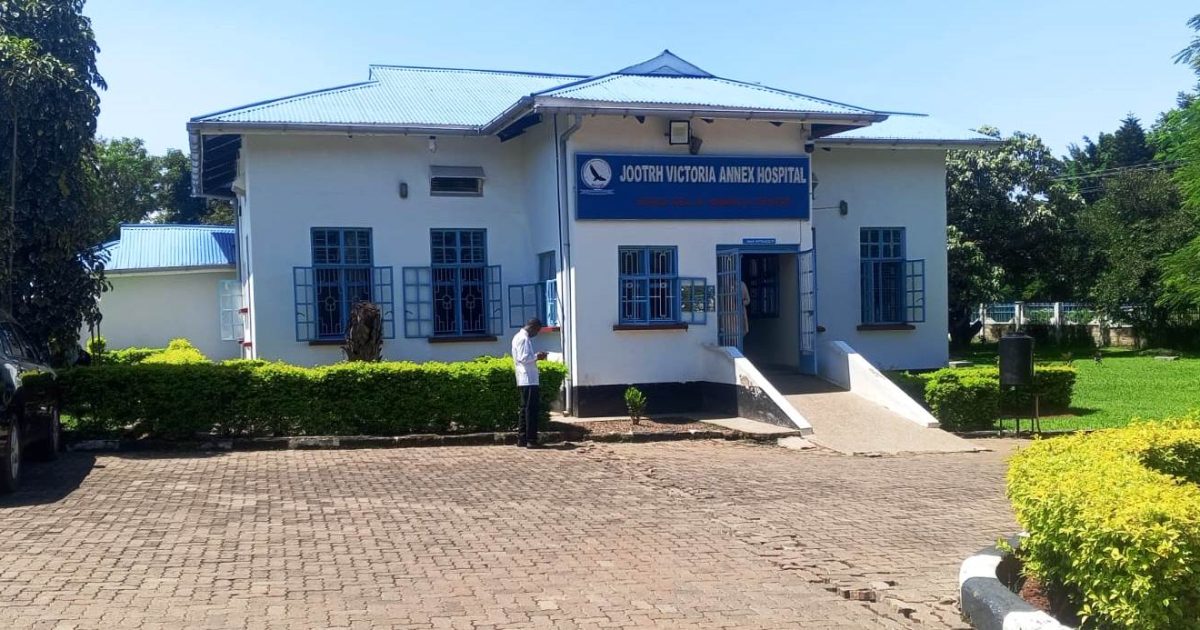
To improve cancer treatment and management in the region, Jaramogi Oginga Odinga Training and Referral Hospital (JOOTRH) in March this year set up the JOOTRH Victoria Annex. This facility is a dedicated facility equipped for comprehensive care, research, surgeries, and bone marrow transplants to support cancer treatment especially in sickle cell patients.
The Victoria Annex Hospital (an extension of JOOTRH) is a specialized Level 4 public health facility in Kisumu, located near Jamhuri Park. It operates as a dedicated Sickle Cell Disease Management Centre and surgical hub, offering advanced treatments like automated red blood cell exchange for the wider Western Kenya region.
In March this year, the county unveiled the Chung Jeong-Eun–Nyong’o Cancer Centre, a flagship project under the Africa Smart Cities and Townships Alliance (ASCA), which is set to position the city as a regional hub for comprehensive cancer care in future.
The programme is being implemented through partnerships with the Africa Cancer Foundation and the Cheon Jeong-Eun Future Foundation and will include installation of modern diagnostic equipment, as well as intensive training for healthcare workers and engineers to build sustainable local capacity.
As a branch of JOOTRH, Victoria annex was set up to help with handling Sickle Cell, HIV and specialized surgery to patients who required instant medical attention but could not manage that from the main hospital due to overstretching and lack of a special wing to handle sickle cell cases therefore acting as a solution to curb overstretching in the main hospital.
The hospital boosts a Sickle cell clinic, HIV clinic and specialized surgery wing that are well equipped and up for the task.
It offers outpatient and inpatient health care to about 70-100 patients in a day but the number could go up to 150 patients on major clinic days which is Monday and Wednesday with the main idea of providing them with specialized care because of the complexity of their disease.
“It is very important that clients are being followed up through the clinics. There is also an exchange program for regular blood cells, where cancer patients can receive specialized internal care,” Resident physician, Dr. Julie Awuor explains.
She says when patients come to the main hospitaL to the Medical Outpatient Centre (MOPC) they are often not given much individual attention because they are treated alongside many other patients. However, for people living with sickle cell disease, especially those who frequently go into crisis, they require specialized care at that particular time, and that is what Victoria Annex does.
“We continue following them up consistently monthly, or every three months depending on their condition. We give them clinic dates ranging between one and three months because there can be variations in how stable different patients are. We also keep their contacts and remind them whenever their clinic date is due,” medic says.
The patients are followed up and reminded of their visits and encouraged to come back for review appointments.
“Sickle cell patients can develop complications very quickly, sometimes even overnight. Because of this, it is very important to maintain close follow-up with each patient. At the end of the day, the goal is to ensure that they are taking their medication properly and that they are able to achieve a better quality of life than before,” Dr. Awuor says.
She notes that patients with sickle cell disease can deteriorate very rapidly. Someone may appear completely fine, but by the next minute, their haemoglobin levels may have dropped dangerously low sometimes to one or two and they can suddenly collapse or even pass away and that is why close monitoring, timely reviews, and continuous support are extremely important in improving both their quality of life and survival.
Dr. Awuor says if they miss follow-up for more than three to four months, there is a high risk that their condition and quality of life may deteriorate very quickly. That is why the medics put a strong focus on continuous follow-up and regular reminders, always informing them when their next clinic appointment is due.
This dedication has ensured timely monitoring and treatment of sickle cell related complications and therefore reduced mortality among the patients.
The hospital operates in a very special manner with direct and immediate stabilization of emergency cases and everything is done to make the patient stable so that treatment can begin.
“When a patient comes and is not stable, we admit them immediately and stabilize the patient first before treatment can begin,” the medic says.
Dr. Awuor says her joy and satisfaction comes when the patient comes out of the crisis, his or her health improves and goes back to living a near normal life
In many rural communities, however, awareness remains low, and myths still surround the condition.
Patients and advocates have continued to petition the government to classify sickle cell disease as a critical illness under Kenya’s Social Health Authority (SHA), arguing that many families cannot afford lifesaving procedures, medication, and regular blood transfusions.
The Ministry of Health, together with partners including the Sickle Cell Federation of Kenya and AMPATH, has expanded newborn screening programs in high-risk counties.
Kenya has also launched the “Afya Dhabiti Project,” aimed at improving diagnosis, training healthcare workers, and lowering the cost of treatment. In Kisumu, over 40,000 newborns have already been screened as part of county-led interventions targeting early diagnosis.
Health experts say awareness is key. Many Kenyans still do not know their genotype or carrier status, increasing the risk of two carriers unknowingly having children with the disease.
“Know your genotype,” health workers continue to urge during screening campaigns across western Kenya,” Dr. Awuor sums up the interview.
By Mabel Keya – Shikuku and Peter Omondi Odhiambo