The government has directed Ministries, Departments, and Agencies (MDAs) to integrate communication into their programmes and projects, to enhance public understanding of government initiatives, and to restore public trust.
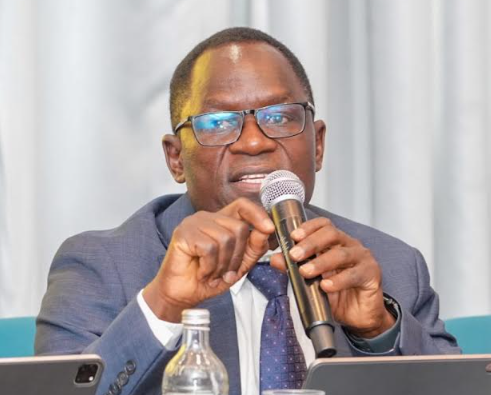
Principal Secretary (PS) for Broadcasting and Telecommunications, Stephen Isaboke, stressed that communication should no longer be treated as an afterthought, but as a core component of government operations, with Cabinet Secretaries (CSs), Principal Secretaries (PSs) and heads of agencies taking greater responsibility for explaining their work to the public.
Speaking during a strategic communication workshop bringing together government communication officers and senior officials, the PS outlined measures being undertaken to strengthen government messaging, tackle misinformation, and address declining public trust.
He pointed to the implementation of the National Communication Policy 2026 as a key step towards achieving coordinated, harmonized, and unified government communication.
The policy provides for clearer structures of accountability, adequate resourcing of communication functions, crisis communication planning, and greater use of traditional and digital media.
“We need coordinated, harmonized and unified communication so that if the CS is speaking, someone else is speaking the same thing. It is not someone saying something and someone else contradicting,” he reiterated.
The PS emphasised that communication officers should work closely with the leadership of their respective MDAs and serve as trusted advisers on messaging, public engagement, and crisis response.
“You must have the knowledge of the team. In fact, the right-hand person of the CS, the PS, or the CEO, because then you will manage or advise what they should say, how they should say it, or even how to deal with any crisis,” Isaboke explained.
He identified weak government narratives, inconsistent and uncoordinated messaging, misinformation, disinformation, and fake news among the challenges contributing to the erosion of public confidence.
The PS announced that the government is strengthening the National Communication Centre (NCC) as a central coordinating entity and repository for government information.
The Centre, according to the PS, is expected to receive, collate, validate, and prepare government information for dissemination, while also supporting public sentiment analysis through Artificial Intelligence tools.
Isaboke disclosed that the Government was exploring an integrated public communication platform through which citizens could access information on government programmes, projects, services, and statistics from a single source.
“We are testing the idea of having a website that can actually integrate public communication,” he noted, adding that citizens should not have to search through multiple platforms to find information on ministries, agencies and government programmes.
He also called for communication to be factored into the planning and budgeting of major government projects from inception, rather than being introduced after implementation has begun.
“Every venture project must have communication methods. You really must understand to be creative. You just can’t do it by discovery. You must always communicate that from the beginning,” Isaboke stated.
On crisis management, the PS stressed the need for government institutions to have clear communication plans that enable them to respond rapidly and accurately to emergencies.
The National Crisis Communication Standing Committee, chaired by the State Department for Broadcasting and Telecommunications and comprising representatives from relevant government departments, is being strengthened to establish protocols and guidelines for crisis, emergency, and risk communication.
Such coordinated communication, he observed, is particularly important during extreme weather events, where timely and accurate information can help communities prepare and minimise the impact of disasters.
Isaboke further encouraged government communicators to make strategic use of traditional and digital media, citing the growing influence of social media in shaping public opinion.
He pointed to recent efforts to counter misinformation surrounding the national budget as an example of how proactive communication can prevent false narratives from gaining ground.
According to the PS, government communicators must also learn to translate complex policies and programmes into simple, accessible information that ordinary citizens can easily understand.
“There is no need to use the law of science to actually explain it. You must simplify it enough that a very basic person, almost immediately, will be able to understand,” he emphasised.
The PS revealed that the Government is also reviewing its communication structures and expanding opportunities for communication professionals, including recruitment of additional officers and promotion to senior communication positions.
Isaboke challenged communication officers to take ownership of the government’s communication agenda and ensure citizens understand its development programmes and their impact.
“Change will not come if we wait for some other person. We are the ones we’ve been waiting for. We’re the change that we seek,” he quoted former US President Barack Obama as saying.
With the current administration entering the latter part of its term, Isaboke underscored the importance of communicating its programmes, achievements, and development agenda while maintaining meaningful public engagement.
He called on communication officers to remain proactive, factual, and innovative and to work closely with senior government officials to ensure citizens receive timely and credible information.
“Transformation will not happen without you communicating it,” he concluded.
By Nancy Omondi