The Independent Electoral and Boundaries Commission (IEBC) has commenced nationwide public participation forums, to discuss the Draft Election Campaign Financing Regulations, 2026.
The Sessions, meant to gather stakeholders’ views ahead of the 2017 General Election have proposed spending limits, rules on campaign contributions, authorized expenditures, financial disclosures and monitoring.
During a session held in Kakamega town, stakeholders demanded that laws on campaign financing be strictly enforced, to ensure transparency, accountability and fair electioneering process.
The stakeholder engagement forum brought together representatives from political parties, civil society organizations and members of the public.
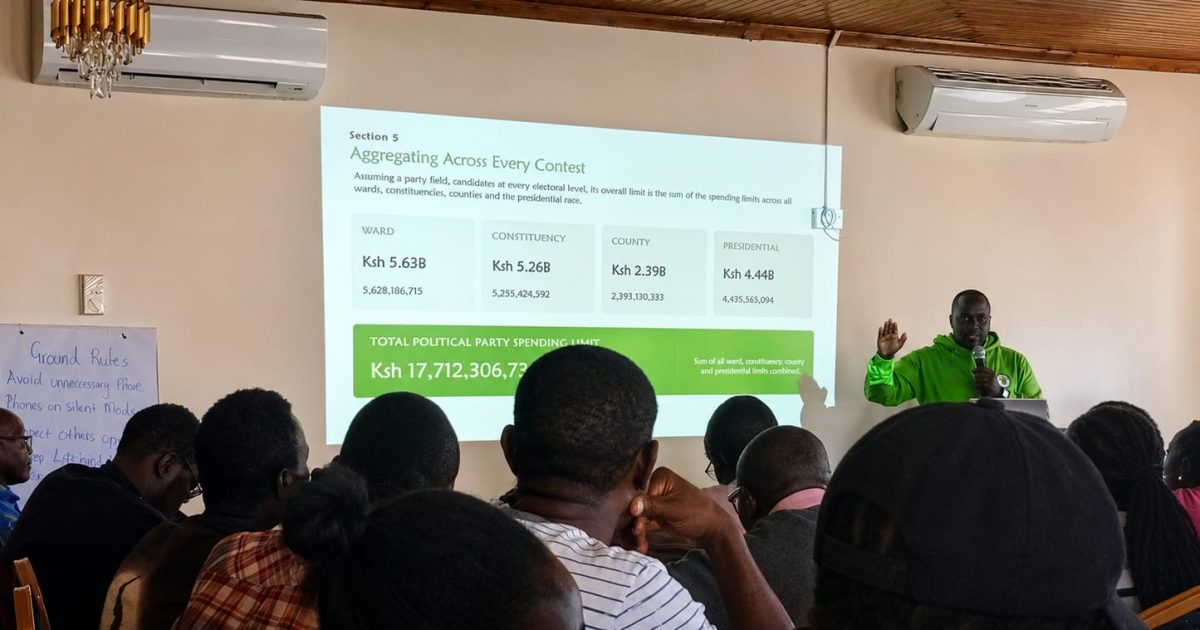
Participants were taken through the draft Election Campaign Financing Regulations, campaign expenditure limits, reporting requirements, electoral dispute resolution and challenges facing the Commission ahead of the 2027 General Election.
The proposed campaign spending limits were drawn up, based on the population, size of the electoral area, and how much it will cost to run a campaign in each electoral area, presenters said.
Under the proposed limits, the Commission has capped expenditure by political parties at 17.7 billion Shillings.
Capping spending limit for presidential candidates has been proposed to be 4.44 Billion shillings.
The proposals have put into consideration higher costs associated with campaign in geographically expansive counties, with those vying in those far flung areas allowed to spend the highest amounts, capped at Sh123 million.
Candidates contesting in similar positions in other areas have also been capped separately ,with those in Nairobi allowed up to a limit of 117.3 million shillings and Wajir allowed to spend up to 113.8 million shillings.
They pointed out that the persons running for election will have to explain their expenditures and present financial reports, as per the timeframe provided by law.
Participants, while welcoming the proposals, however questioned how the Commission would monitor campaign expenditure and make sure all candidates adhere to the regulations.
Sadam Ali, a resident, demanded to know what IEBC had done to ensure that incumbents were not using state resources in the process of campaigning.
“Who will be auditing the reports of campaign funds and will the reports be published for the people to access?” he posed.
“Most politicians use social media and online adverts. What will IEBC do about campaigns that take place on these platforms?” Deborah Khasandi asked.
IEBC officials stated that the body does not accept donations from foreign governments and that expenditure on paid digital ads or paid bloggers, must be reported as campaign expenditure under the Election Campaign Financing Act. Voluntary online support (not paid) would not be considered an expenditure of the campaign.
IEBC said they will enforce the Electoral Code of Conduct, to ensure political parties and candidates adhere to good campaigning practices..
The Commission also affirmed its dedication of fair and impartial resolution of electoral disputes, noting that “a well-functioning dispute resolution mechanism is an essential component to bolstering public trust in elections and fostering peaceful democratic practices.”
Participants also asked the Commission to further enhance monitoring tools on the expenditure of incumbents, to achieve a clear and fair system of campaign financing, that would be in place before the 2027 General Election.
By Valary Anyoso and Brandon Keya