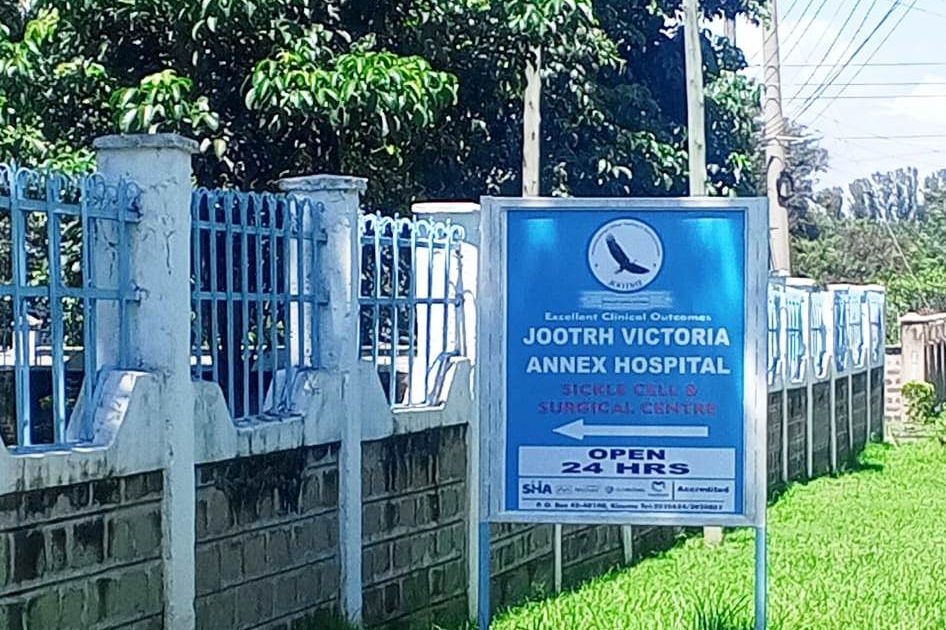
The County Government of Kisumu has designated Victoria Sub-County Hospital as a regional hub for specialized diagnostic services, with an initial focus on cancer and sickle cell disease screening, Governor Peter Anyang` Nyong`o has announced.
According to Nyong`o the facility will host two new programs under the initiative. They include; a Cancer Screening and Diagnostic Laboratory, developed in partnership with the Africa Smart Cities Alliance (ASCA) to offer advanced cancer screening and diagnostic services. It is set to be officially launched this month during the Africa Smart Cities summit.
In a statement, the Governor said a second initiative, the Sickle Cell Screening and Diagnostic Programme, will be established at the hospital in collaboration with Yunigen and its partners. The programme is intended to strengthen early detection, diagnosis, treatment and long-term management of sickle cell disease in the region.
Yunigen Pharmaceuticals is a US-based pharmaceutical company focused on developing and manufacturing medicines, with a particular focus on sickle cell disease. The company has developed Scedamin, a pediatric formulation of hydroxyurea intended to improve access to treatment for children living with sickle cell disease.
In May 2025, YUNIGEN entered into a partnership with the Kisumu County Government to strengthen sickle cell disease prevention, screening, diagnosis and treatment. The agreement included plans to expand routine newborn screening in public health facilities, build the capacity of healthcare workers, improve access to affordable pediatric hydroxyurea and establish a digital registry to support patient monitoring.
The partnership also included plans for Yunigen to establish pharmaceutical packaging and manufacturing operations in Kisumu, positioning the city as its African hub.
According to the Ministry of Health, sickle cell disease (SCD) affects an estimated 14,000 newborns annually in Kenya. The overall national prevalence of SCD is approximately 0.9 per cent, but the trait (SCT) reaches 10 per cent to 40 per cent in highly malaria-endemic areas like coast, Western and Nyanza regions. Without early screening, 50- to 90 per cent of these children do not survive past age five years.
Data shows roughly 21per cent of children in Kisumu carry the sickle cell trait, and approximately 4.5 per cent are born with the disease. Experts say it is highly prevalent in the county because the trait provides natural protection against severe malaria which is endemic in the region.
This makes the Lake Region, particularly Kisumu, to have the highest prevalence of Sickle Cell Disease (SCD) in Kenya. Because of this, some County health facilities such as Jaramogi Odinga Oginga Training and Referral Hospital (JOOTRH) and Pap Onditi in Nyakach) have rolled out newborn screening and ultra-modern testing technologies to detect the disease early.
Sickle cell disease each year, concentrated in seventeen high-burden counties, and the disease remains a leading driver of child and adult illness and death without appropriate intervention, an estimated 50 to 90 percent of affected children die before their fifth birthday.
Hospital data reviewed at JOOTRH indicates that a typical sickle cell patient experiences about five crises a year, each requiring five to ten days of hospitalization, revealing the strain the disease places on patients, families, and the health system.
The establishment of the cancer screening and diagnostic laboratory also comes amid a growing cancer burden in Kisumu County. Data cited by Jaramogi Oginga Odinga Teaching and Referral Hospital shows that Kisumu recorded 4,394 cancer cases between 2011 and 2025, with 720 new cases reported in 2024 alone, up from 292 cases in 2018.
Cervical cancer accounted for the highest number of cases at 1,038, followed by esophageal cancer with 596 cases and breast cancer with 524. The data further indicates that between 75 and 80 per cent of patients are diagnosed at advanced Stage III or IV, highlighting the need to strengthen screening and early diagnosis services.
The county also outlined plans to expand specialized diagnostic capacity at the hospital more broadly, including molecular diagnostics and advanced laboratory services, alongside coordination of cancer screening programs across Kisumu County and the wider Lake Region.
Officials described the investment as part of a shift in Governor Anyang’ Nyong’o’s administration’s health strategy, moving from reactive to preventive care with an emphasis on early detection and improved health outcomes region-wide.
The designation adds a second front in Kisumu’s response to sickle cell disease, running alongside Jaramogi Oginga Odinga Teaching and Referral Hospital’s (JOOTRH) existing apheresis-based treatment program using its Spectra Optia machine.
Where JOOTRH’s program centres on treatment for patients already diagnosed, the Victoria Sub-County Hospital initiative is focused on screening and early diagnosis raising the need for clear coordination of the two efforts, run by different facilities with different partners.
Sickle cell disease (SCD) is a group of inherited blood disorders that cause red blood cells to become hard, sticky, and crescent-shaped. Instead of flowing smoothly, these abnormal cells block blood vessels, which restricts oxygen delivery and leads to severe pain, tissue damage, and chronic anemia.
By Mabel Keya – Shikuku and Dorothy Pamela (Intern)