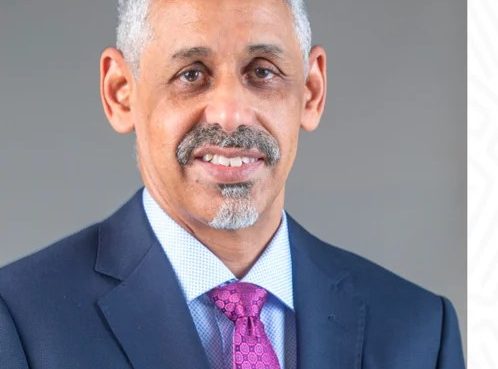
Chief of Staff and Head of Public Service Felix Koskei has challenged farmers in Mt. Elgon to abandon overreliance on traditional food crops and embrace high-value cash crops, saying the shift is key to unlocking the region’s vast economic potential.
Koskei said despite the region’s fertile volcanic soils and favourable climate, many households continue to struggle economically because they remain dependent on crops whose returns have steadily declined over the years.
He identified maize, potatoes, onions and cabbages as crops that no longer generate sufficient income for farmers, urging residents to diversify into coffee, macadamia, avocado and tea, which he said offer significantly higher returns.
According to Koskei, a well-managed acre of coffee can earn a farmer up to Sh.1 million annually, presenting an opportunity for families to improve their livelihoods while positioning Mt. Elgon as a leading producer of premium export crops.
“Mt Elgon has the potential to produce high-value coffee so that our farmers can start earning in dollars and transform this region. I have had the privilege of flying over every part of this mountain and what I see is enormous potential. Unfortunately, what I find on the ground is cabbage and maize. Those crops alone cannot unlock the wealth of this region,” he said.
Koskei spoke on Saturday during the commissioning of a Sh16 million dining hall and modern kitchen at Friends Moi Kaptama Girls Senior School in Mt Elgon, Bungoma County.
He said the transition to commercial agriculture must begin immediately, proposing that every household dedicate at least one acre to coffee, avocado and macadamia as part of a wider campaign to transform the region into a high-value agricultural zone.
The Head of Public Service called on professionals from the area, particularly those serving in government, to spearhead the campaign by sensitising farmers on the economic benefits of the new crops and helping them adopt modern farming practices.
“Soon we shall begin visiting farms across this region to assess the progress. I expect professionals and government officers from this area to take the lead in ensuring this transformation becomes a reality,” he said.
Koskei argued that commercialising agriculture would have a multiplier effect on the local economy by increasing household incomes and stimulating investment in education, healthcare, infrastructure and other sectors.
He praised professionals from Mt. Elgon who mobilised resources and supervised the construction of the new dining hall, saying the facility would improve the learning environment and contribute to better academic performance.
The Head of Public Service, however, expressed concern over what he described as the poor state of education in the region, noting that Mt. Elgon has only about 25 secondary schools, far fewer than other parts of the country.
“I have been informed that this entire area has only about 25 secondary schools. In some parts of the country, a single ward has more than seven secondary schools. We must work together to change this situation,” he said.
He said the shortage of schools has forced many parents to enrol their children in neighbouring counties such as Uasin Gishu and Trans Nzoia, weakening local institutions.
Although Friends Moi Kaptama Girls Senior School is among the largest secondary schools in the sub-county, Koskei noted that it has only about 350 students, which he said was well below its capacity.
He challenged parents to support local schools by enrolling their children and paying fees on time instead of investing in institutions outside the region.
“Some parents take most of their children to schools outside Mt Elgon and leave only one behind. Even then, they fail to pay school fees. How do we expect our schools to grow when we are financing the development of schools elsewhere while neglecting our own?” he posed.
In a boost to needy learners, Koskei donated Sh1 million towards clearing fee arrears at the school, which currently stands at Sh3 million.
He expressed optimism that the proposed shift to high-value agriculture would enable parents to comfortably educate their children in the future.
“These crops will take some time before they begin generating income. That is why I have decided to support these needy students today. But when I return next year, I expect parents to be clearing school fees from the proceeds of coffee, avocado and macadamia farming,” he said.
By Chris Mahandara