The inspection of a 350,000-seedling tree nursery in West Pokot County has brought into sharp focus the importance of early preparedness, environmental conservation and water harvesting as the country braces for anticipated heavy rains associated with the El Niño weather phenomenon.
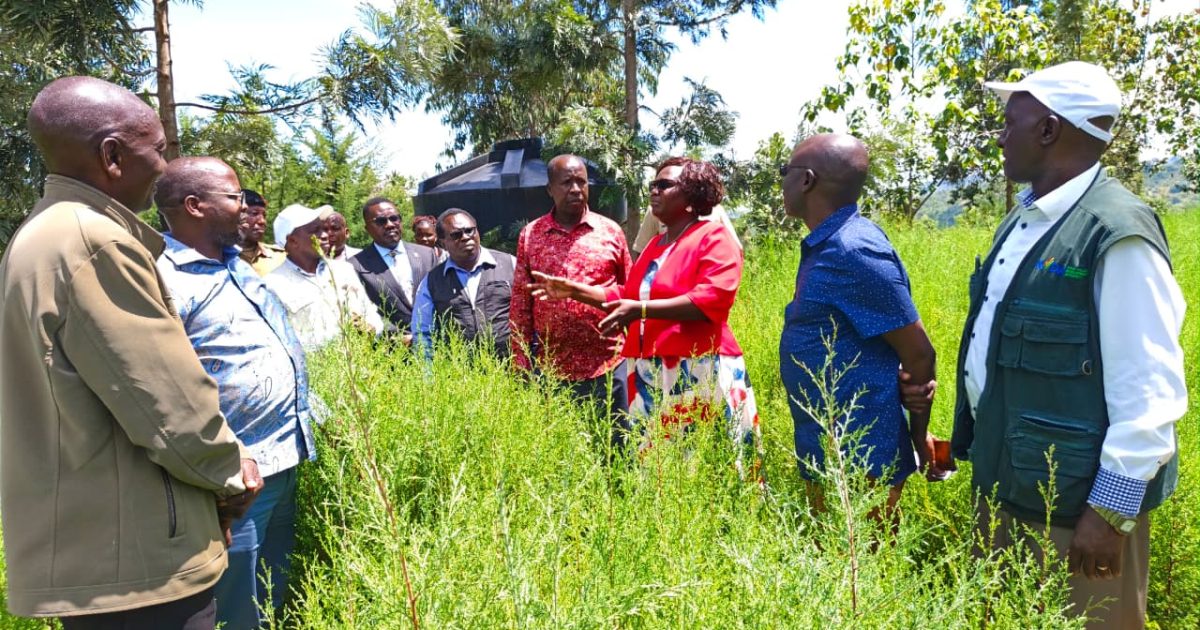
Cabinet Secretary for East African Community Affairs, ASALs and Regional Development Beatrice Askul inspected the Chepsurur Tree nursery in West Pokot Sub-County, one of 16 nurseries established by the Kerio Valley Development Authority (KVDA) across its area of jurisdiction.
The inspection was undertaken against the backdrop of weather advisories urging communities, farmers, pastoralists and government agencies to take early action ahead of the expected rains.
The Kenya Meteorological Department (KMD) provides seasonal, county and shorter-range forecasts to support early action in agriculture, water management and disaster preparedness, making the translation of weather information into practical measures an important part of building resilience.
For West Pokot, the preparations are particularly significant because the county combines highland water catchment areas with downstream arid and semi-arid lands where communities depend heavily on rivers, dams, water pans, boreholes and other water sources.
Askul said the inspection was aimed at assessing the region’s preparedness to take advantage of the expected rains while mitigating the risks that may accompany increased rainfall.
“This visit is in response to the meteorological report that has been shared countrywide on the likelihood of El Niño and the need for the country to prepare early,” she said.
She noted that environmental conservation in the upper reaches of the Kerio Valley was critical to the wellbeing of communities downstream, particularly in ASAL areas where water scarcity has been aggravated by prolonged drought and changing climatic conditions.
“Being the Cabinet Secretary in charge of regional bodies, and with West Pokot being within KVDA’s jurisdiction, we have to assess our preparedness in terms of conserving the environment in the upper parts of the Kerio Valley,” she said.
The CS said the Government had set aside resources for the production and distribution of tree seedlings to communities, with KVDA allocated provisions to support environmental conservation activities.
The Chepsurur nursery, she said, demonstrated the importance of translating early warning information into practical action before the rains arrive.
The nursery has about 350,000 assorted tree seedlings ready for planting, with 12 casual workers engaged in its operations. It is also among projects through which KVDA has created employment opportunities for women and youth while promoting environmental conservation and community livelihoods.
“Whenever there is a threat, there is also an opportunity. The anticipated rains provide an opportunity for us to plant trees and increase the country’s tree cover,” said KVDA Acting Chief Executive Officer Moses Kipchumba.
Kipchumba said the seedlings would support restoration of the Cherangany landscape and other areas within the Turkwel catchment, helping to protect soils, improve water retention and strengthen the sustainability of water resources.
He said KVDA’s mandate in river basin management made environmental conservation an important component of securing water resources for communities and economic activities.
“KVDA is a major stakeholder in environmental conservation because our role includes river basin management and ensuring that the necessary conservation is undertaken for rivers to continue flowing,” he said.
The Cherangany landscape is an important water catchment for the Turkwel River, which feeds the Turkwel Dam. The Turkwel Gorge project was developed as a multipurpose project, with hydropower being the major component realised so far.
Kipchumba said degradation of catchment areas could increase soil erosion and siltation, threatening the long-term sustainability of water storage infrastructure.
“The trees ensure that the soils are well conserved, aerated and able to hold water. This is an integrated approach to water management and wealth creation in a sustainable manner,” he said.
The anticipated rains also present an opportunity to replenish water sources that have been affected by prolonged dry conditions.
Askul said boreholes and water pans in ASAL areas had been affected by drought and climate variability, with some drying up or experiencing reduced water availability.
She said increased rainfall, if properly harvested and managed, could help recharge underground water sources and replenish water pans and dams.
“We expect the rains to recharge the water sources. The run-off can be captured through water harvesting structures, while the potential of dried boreholes can be enhanced through groundwater recharge,” she said.
However, the Cabinet Secretary warned that communities should not wait for the rains to begin before taking precautionary measures.
In pastoral areas, she urged residents living or grazing close to rivers to move to raised ground to avoid the dangers posed by sudden increases in water levels and flooding.
“As a pastoralist region, communities have to be alerted to move away from rivers to raised areas so that the impact of run-off does not affect them,” she said.
Farmers have also been advised to harvest mature crops, dry and store maize properly before the onset of heavy rains, while pastoralists have been encouraged to secure pasture and make preparations for their livestock.
The early action is intended to ensure that anticipated rainfall becomes an asset rather than a source of avoidable losses.
Askul said the Government would continue working with relevant institutions to create awareness across ASAL counties and mobilise communities living along the Turkwel River to participate in environmental conservation.
She said additional seedlings would be made available to communities willing to undertake tree-planting activities.
“We will work with the relevant institutions to move across the ASAL counties, create awareness and mobilise communities along the Turkwel to plant trees and conserve the environment,” she said.
Beyond environmental protection, the tree nursery programme is also contributing to economic empowerment.
The establishment of tree and fruit nurseries by KVDA has created employment for local women and youth, while communities have been encouraged to establish their own nurseries and generate income through the sale of seedlings and mature trees.
Kipchumba said trees could eventually provide households with income from timber and other tree products while simultaneously improving the environment.
The approach is particularly important in rural communities where environmental conservation, agriculture, livestock production and household incomes are closely interconnected.
The inspection therefore served as more than an assessment of the number of seedlings available for planting. It provided an opportunity to examine how early warning information can be translated into preparedness measures capable of protecting lives, infrastructure, livelihoods and critical water resources.
KMD’s climate services are designed to provide information for sectors including agriculture, water, energy and disaster management, underscoring the importance of government institutions and communities acting on forecasts before extreme weather occurs.
For West Pokot, the message from the Chepsurur nursery was clear that preparedness must begin before the first heavy rains fall.
The 350,000 seedlings standing ready at the nursery represent not only an environmental conservation intervention but also a potential source of livelihoods for local communities and a contribution towards protecting the catchment that sustains the Turkwel River and downstream water resources.
As the country continues to receive weather updates and advisories, the Chepsurur initiative demonstrates the importance of connecting early warnings with early action from tree planting and water harvesting to crop storage, pasture management and community safety.
The success of such interventions will ultimately depend on coordinated action by national and county governments, development agencies, communities and other stakeholders to ensure that the anticipated rains are harnessed to strengthen resilience while reducing the risks associated with extreme weather.
by Parklea Ivor