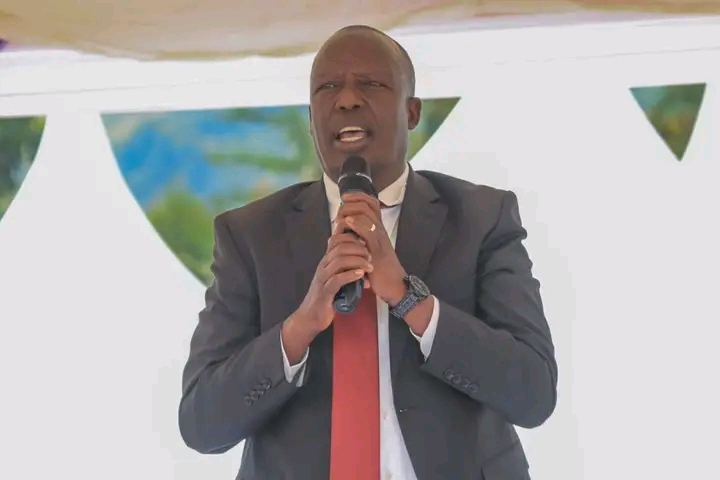
The call for greater civic participation is gaining momentum in Tinderet Constituency, with area Member of Parliament Julius Melly urging all eligible residents to register as voters and actively participate in shaping the country’s democratic future.
Speaking during the funeral service of a respected community elder in the Kamelilo area, Melly said voting remains the most powerful tool citizens have to influence leadership and accelerate development at both the national and grassroots levels.
He said voter registration should not be viewed as a routine administrative exercise but as a civic responsibility that determines the quality of leadership and the direction of social, economic, and political development.
The legislator urged every eligible Kenyan to take advantage of the voter registration exercise, noting that leaders are chosen by citizens who exercise their democratic right to vote.
“Development begins with the decisions people make at the ballot. Registering as a voter is the first step towards electing leaders who are committed to serving the people with integrity, accountability, and dedication,” said Melly.
He observed that communities which actively participate in elections are better placed to demand accountability from those they elect, adding that voters should assess the vision, integrity, and track record of aspiring leaders instead of being influenced by empty political promises.
According to the MP, Kenya’s democratic gains can only be safeguarded through active public participation in the electoral process.
He particularly encouraged young people who have attained the age of 18 years to register in large numbers, saying they represent a significant proportion of the country’s population and should play a central role in determining its leadership.
Melly cautioned residents against political apathy, warning that failure to register or vote leaves critical decisions affecting communities in the hands of a few individuals.
“Every vote counts. The future of our schools, roads, health facilities, water projects, and economic opportunities depends on the quality of leaders we elect. Registering as a voter is therefore an investment in our own future,” he said.
The MP further appealed to residents to uphold peace before, during, and after elections, saying democracy flourishes where citizens embrace unity, mutual respect, and issue-based politics.
He urged leaders across the political divide to conduct themselves with decorum and focus on policies that improve livelihoods rather than engaging in divisive politics.
Melly said communities that have co-existed peacefully for generations should not allow political competition to create unnecessary divisions.
He added that sustainable development cannot thrive in an environment characterized by conflict and hostility, calling on leaders to inspire hope by presenting practical solutions to challenges facing wananchi, including unemployment, access to quality education, healthcare services, and improved agricultural productivity.
The legislator also encouraged parents and guardians to mentor young people on responsible citizenship and the importance of participating in democratic processes.
He said voter education should not be confined to election periods but should be a continuous process that empowers citizens to understand governance, public participation, and their constitutional rights throughout the electoral cycle.
Community elder David Kiprono echoed the MP’s sentiments, saying informed voting enables citizens to reward leaders who perform well while peacefully replacing those who fail to meet public expectations.
“Our Constitution gives every eligible citizen an opportunity to determine the direction of the country. We should not waste that opportunity by failing to register as voters,” he said.
Businesswoman Esther Chepkemoi said economic transformation depends on visionary leadership elected through credible and transparent democratic processes.
She noted that citizens who participate in elections acquire the moral authority to question how public resources are utilized and to demand accountability from elected leaders.
“When people participate in elections, they also gain the moral authority to question how public resources are utilised. That is why voter registration is important for every eligible citizen,” she said.
Youth leader Ben Kibet challenged fellow young people to embrace the exercise, saying their numbers give them the ability to influence policies affecting education, employment, and entrepreneurship.
“The youth should not wait for others to make decisions on their behalf. Registering as voters is one way of ensuring our aspirations are reflected in leadership,” he said.
Farmer John Langat also encouraged residents to register, observing that leaders elected through broad public participation are more likely to prioritize agricultural development, improvement of road infrastructure, access to markets, and other projects that improve livelihoods.
He added that active citizen participation strengthens democracy by promoting transparency, accountability, and responsiveness among elected leaders.
By Sammy Mwibanda