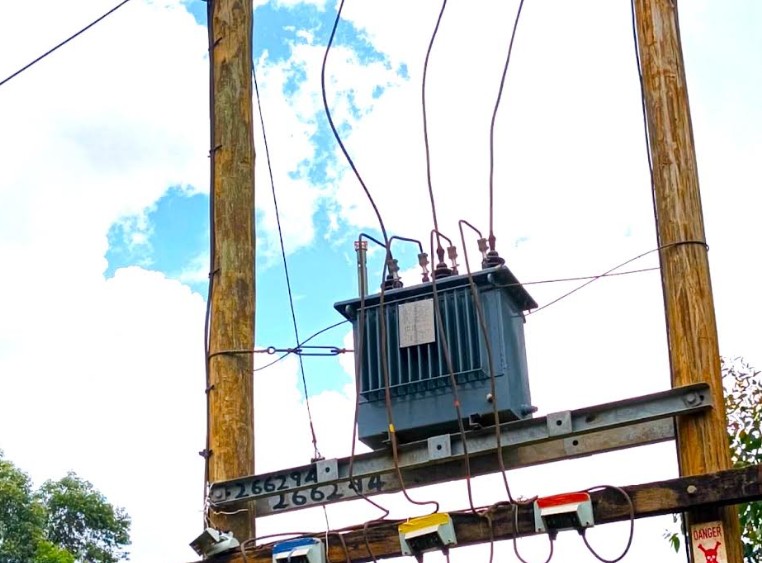
Residents of the Kongu Sub-Location in the Gichugu Constituency are optimistic that insecurity and livestock theft will decline following their connection to the National Electricity Grid under the Government’s Last Mile Connectivity Programme.
Speaking during the commissioning of the electrification project, Gichugu Member of Parliament (MP), Githinji Gichimu, said the initiative would transform the area by improving education, boosting agricultural production, creating business opportunities, and strengthening security.
The MP said access to electricity would provide reliable lighting for homes, schools, and trading centres, enabling students to study for longer hours, while allowing families to access information through television, radio, and other electronic media.
“This Last Mile Connectivity project being implemented by the National Government will greatly benefit the people through improved education and other activities that require electricity,” Gichimu said.
He noted that electricity would also promote food security by supporting irrigation farming and modern dairy production, where power is required to operate equipment such as water pumps, chaff cutters, milk coolers, and other farm machinery.
“There are many farming machines that require electricity. This is a good opportunity for farmers to increase productivity, reduce production costs, and improve their incomes,” he said.
According to the MP, the project is expected to enhance security in an area that has in recent years experienced frequent cases of cattle theft and theft of raw farm produce.
Residents said the absence of electricity had left homes and trading centres in darkness, creating a conducive environment for criminals to operate at night.
They expressed confidence that improved lighting would discourage theft, improve surveillance, and restore peace in the community.
The electrification project is one of 15 Last Mile Connectivity projects currently being implemented in Gichugu Constituency as part of the National Government’s efforts to expand electricity access to underserved areas.
Gichimu urged residents to take advantage of the new power connection by investing in income-generating activities such as welding, carpentry, grain milling, salons, and other small enterprises that depend on electricity.
“I encourage residents with small businesses to make use of this opportunity as we continue expanding electricity connections to more areas that have remained unserved,” he said.
Beneficiaries welcomed the project, saying it would improve their livelihoods by easing farm operations, lowering production costs, and opening-up new economic opportunities.
Jane Wanjiru, a resident of Kongu, said operating a chaff cutter had previously been difficult because of the lack of electricity.
“With electricity now available, our farming activities will become easier and more efficient,” she said.
Another resident said the community had endured repeated livestock and farm produce theft because homes remained unlit at night, leaving families vulnerable to attacks by criminal gangs.
On water supply, Gichimu acknowledged that the responsibility lies with county governments but said collaboration between the National Government and the County Government would help improve access to clean and reliable water for residents.
By Mutai Kipng’etich