Milk supply in Nyeri is on the decline as farmers struggle with high cost of dairy feeds coupled with a prolonged cold and dry weather condition.
A survey by KNA at milk delivery outlets in Nyeri town and its environs has laid bare the situation on the ground with some dairies being forced to reduce the number of their clients to cope with the drop.
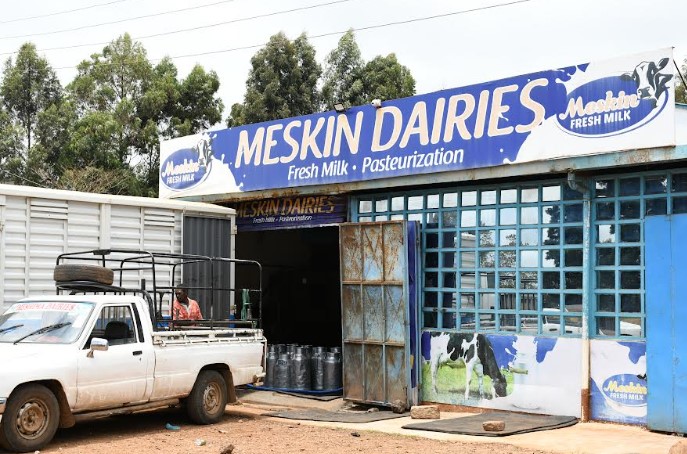
Mr Jackson Maina who is the Operations Manager at Meskins Dairy near Gatitu trading center said they have been forced to cut down on the amount of milk they supply to clients due to the biting shortage.
Maina said currently the firm is only collecting 6,000 liters of milk on a daily basis compared to 10,000 liters it used to handle early this year.
“The situation is not good in terms of the amount of milk we are receiving from our suppliers on a daily basis. From January this year we used to collect up to 10,000 liters of fresh milk on a normal working day. But beginning June this year deliveries started dropping drastically. Today we are only receiving 6,000 liters daily which is far below the daily demand of our clients.” he said.
Maina now says their only hope is for the weather to improve during the anticipated El Nino rains next month to allow pasture to regenerate and ease farmers’ dependence on commercial dairy feeds owing to their high cost.
He warned that unless this happens the future of the dairy sector is at stake.
“One of the causes for the current milk shortage is the high cost of animal feed which has forced many dairy farmers to abandon milk production. The problem has also been aggravated by the long cold and dry spell that has greatly affected production of Napier grass and other animal fodder which in effect has affected the milk production for individual animals. Right now our only hope for the situation to stabilize is early January next year if the El Nino rains do come,” he added.
Robert Wambugu a Manager at the Senior Nyeri Dairy told KNA milk delivery at the plant has dropped from 30,000 liters early this year to 25,000 in September.
Wambugu said the drop in delivery has been counterproductive to the facility forcing it to lay off some of the staff until the situation improves.
He blames the decline in milk production to shortage of animal pasture and the high cost of commercial feeds which he said is way above what farmers can afford.
“The situation at this facility is not so good owing to the decline in the amount of milk we are receiving from our farmers. Most of our suppliers are complaining about the high cost of production in the dairy sector and some have abandoned it altogether.
Right now we are closing down at 5 pm since by then we have already sold out our remaining stock. The less we get from our farmers the less we deliver to our clients which ultimately translates to lost earnings,” he said.
Meanwhile leading supermarket outlets in Nyeri town are also grappling with shortage of milk with some of the popular milk brands missing from the retail shops shelves.
Mr Samuel Kasyoki, a manager at Magunas Supermarket, said the shortage in milk deliveries was being felt by consumers at all points of sale.
Kasyoki attributed the drop in milk supply to the hard economic times farmers were facing due to increase in animal feed.
Magunas said some milk brands like Royal, Kinangop, Naru and Mount Kenya that previously retailed at about 58 shillings had increased to approximately 62 shillings.
Only KCC and Brookside brands have retained the original price at Sh 65.
“The farmers are going through difficult economic times and there is a need to cushion them against the high cost of animal feed they purchase for their dairy cows. This (high cost) has affected the amount of milk they bring to dairy stations and eventually what is delivered to us.’’Kasyoki said.
Jacqueline Maigua,an employee at Chieni Supermarket, said the KNA shortage had necessitated an increase in the cost of a packet of 500 milliliters of milk.
Maigua said some milk brands that previously retailed at about Sh 58 had increased to Sh 62 shillings, while some brands were selling at around Sh 65 for a 500 milliliters packet.
She noted that although some brands were still available, others were missing from shelves in large quantities.
Maigua however said the increase was only a temporary and would come down once the supply improves.
Kenya’s milk demand stands at 8 billion liters annually against a production of 5.76 billion liters according to statistics from the Kenya Dairy Board.
This year milk production in the country fell by 3.7 per cent from 844 million litres in June to 81.3 million liters in July year prompting the cost of the product to rise by Sh15 for a 500 milliliter packet.
The Board has attributed the decline to the prevailing cold and dry weather coupled with high cost in dairy feeds.
By Samuel Maina/Kevin Opiyo