The Government has intensified efforts to restore the Mau Forest Complex, Kenya’s largest water tower, with the grand launch of the Second Edition of the Mau Conservation Marathon competition.
The Race is scheduled for July 3, 2026, and will be held under the Mau Forest Complex Integrated Conservation and Livelihood Improvement Programme (MFC-ICLIP), a ten-year initiative seeking to reverse decades of degradation in the country’s most important forest ecosystem.
The Marathon is a flagship initiative spearheaded by the Ministry of Environment, Climate Change, and Forestry, aimed at mobilizing resources, creating environmental awareness, and supporting community livelihoods through conservation efforts.
Approximately 500 athletes so far have registered for the event dubbed; “Linda Mau, Boresha Maisha”, with organizers targeting 2,500 participants before registration closes on June 25, 2026.
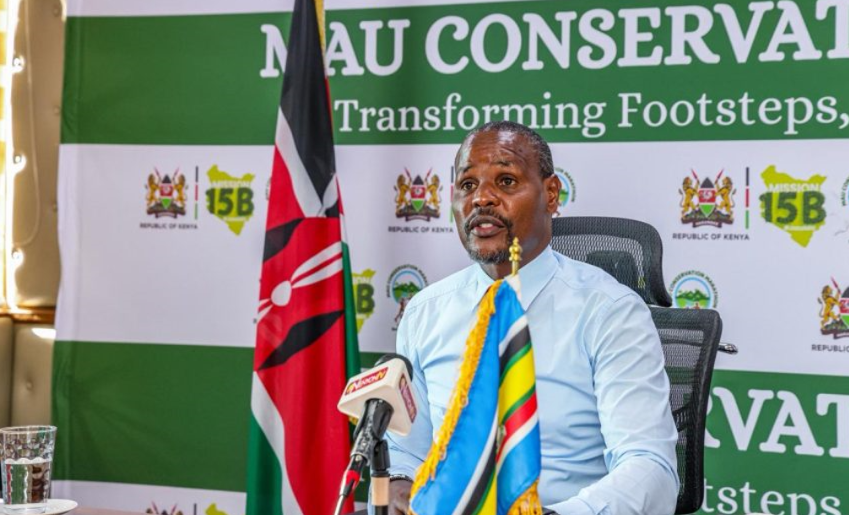
Speaking during a media briefing in Nairobi, Environment and Climate Change Principal Secretary (PS), Dr Eng. Festus Ng’eno, urged Kenyans, institutions, and corporate organizations to support the initiative by participating in the race.
The PS said the race will be flagged off in Olenguruone, Kuresoi South, and traverse the scenic Mau landscape before finishing at Baringo Senior Secondary School grounds in Kuresoi North.
“The Mau Forest Complex supports millions of livelihoods, sustains agriculture, provides water for hydropower generation, and is the source of 12 major rivers including Sondu, Mara, Ewaso- Ng’iro, Nzoia among others and also supports major lakes including; Turkana, Baringo, Nakuru, Nakuru, Natron and Victoria,” highlighted Dr. Ng’eno.
He regretted that the ecosystem continues to face threats from illegal logging, land-use changes, and overreliance on forest resources driven largely by poverty.
“The ecosystem has faced significant degradation and remains threatened by changes in land use,” said PS.
As a native of the Mau region, the PS said he has personally witnessed the degradation of the ecosystem and has since joined forces with local communities, development partners, the private sector, and government agencies to establish the MFC-ICLIP programme.
Dr. Ng’eno described the initiative as a community-owned and partner-driven conservation model requiring no direct allocation from the national exchequer.
“MFC-ICLIP is not your everyday conservation programme. It is a unique ten-year programme integrating conservation and livelihoods, with a resource requirement of Sh21 billion over the implementation period, translating to Sh2.1 billion annually,” said PS.
The programme focuses on five key pillars: sustainable landscape management, community livelihood improvement, circular economy, environmental education and research, and project governance and coordination.
According to Dr. Ng’eno, the programme aims to rehabilitate 33,138 hectares of forest land, restore 668.7 hectares of wetlands, and improve 143,803 hectares of agro-ecosystems across the Mau landscape.
The Environment PS said the initiative aligns with the government’s climate commitments, including the Sustainable Development Goals, Vision 2030, the Bottom-Up Economic Transformation Agenda, and the national tree-growing campaign of 15 billion trees by 2032.
Since its official launch by President William Ruto on October 27, 2025, the programme has attracted more than 74 partners, mobilizing resources worth Sh884 million, of which 98 percent has been contributed through in-kind support.
Despite the progress, Dr. Ng’eno noted that the programme still faces a funding gap of approximately Sh1.27 billion for its first-year targets ending June 30, 2026.
“As we begin the Second Edition on July 1, 2026, we require additional resources of up to Sh2.1 billion. We thank our current partners for their support and invite more organizations and individuals to join us in this transformative journey,” he said.
The programme has already recorded notable restoration achievements. Against a target of restoring 3,313 hectares, more than 1,500 hectares of forest land have been rehabilitated, while approximately 1.5 million tree seedlings have been established.
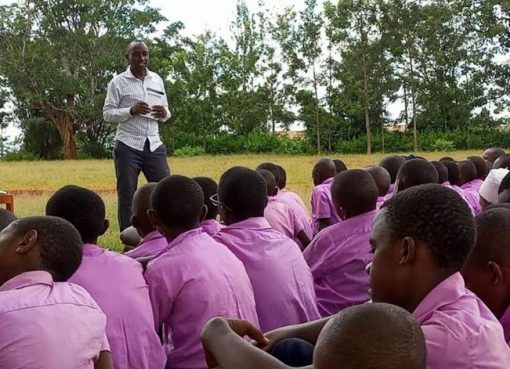
A key innovation driving these gains is the Tree Establishment and Livelihood Improvement System (TELIS), which allows local communities to cultivate crops while nurturing tree seedlings in designated restoration blocks.
“TELIS has become a game changer. Communities are directly participating in forest restoration while improving household food security and diversifying incomes,” Dr. Ng’eno said.
Currently, 657 hectares have been approved for TELIS activities, benefiting 4,625 households who are growing crops such as potatoes alongside tree seedlings.
The programme has also reached 10,230 farmers through initiatives, including seed potato bulking, pyrethrum farming, avocado cultivation, pig rearing, dairy farming, agroforestry, and tree nursery establishment.
Additionally, 180 schools have received avocado orchards, with each school receiving 40 seedlings.
Dr. Ng’eno said the First Edition of the Mau Conservation Marathon, which took place on October 24, 2025, attracted 1,019 athletes from more than ten counties and awarded Sh5.39 million in prize money.
“The winners received Kenya shillings 350,000 for the 21 km and 100,000 shillings for the 10 km, and the winners have utilized their prize money to advance their lives, including paying off school fees and buying land and livestock programs,” he revealed.
He stated that this year’s event has been expanded to include a full marathon category and will feature four race distances: 42km, 21km, 10km, and a 5km corporate fun run.
He revealed that winners of the 42km race will receive Sh600,000, while winners in the 21km and 10km categories will pocket Sh350,000 and Sh100,000, respectively.
The initiative plans to award the top 20 athletes in each category, with a total prize reward of Sh7.798 million.
“We are transforming footsteps into conservation action,” said Dr. Ng’eno, adding, “This race is not only about athletics; it is about raising awareness, mobilizing resources, identifying talent, and safeguarding the future of the Mau Forest Complex.”
“The registration can be done online through the MFC-ICLIP website. Participants in the 42-kilometre race will pay a registration fee of Sh1,500, those in the 21-kilometre category Sh1,000, while participants in both the 10-kilometre and 5-kilometre races will pay Sh500 each,” the PS said.
“The climate crisis demands urgency. Ecosystem degradation demands action. Communities living around the Mau deserve dignity, livelihoods, and resilience. The Mau Forest cannot wait,” he said.
Quoting the late Nobel Laureate Prof. Wangari Maathai, the PS reiterated that, “It is the little things citizens do that make the difference.”
By Ian Chepkuto