Kenya must shift from reactive to preventive measures to curb organised political violence ahead of the 2027 General Election, the Independent Policing Oversight Authority (IPOA) has said.
IPOA Commissioner Dr. Annette Mbogoh said political violence had evolved into an organized and coordinated threat to constitutional democracy, public safety, and the rule of law, requiring intelligence-led policing, stronger community partnerships, and accountability for those behind the violence.
“Political goonism is no longer an isolated security concern. It is evolving into an organized and coordinated threat to constitutional democracy, public safety, and the rule of law,” Mbogoh said.
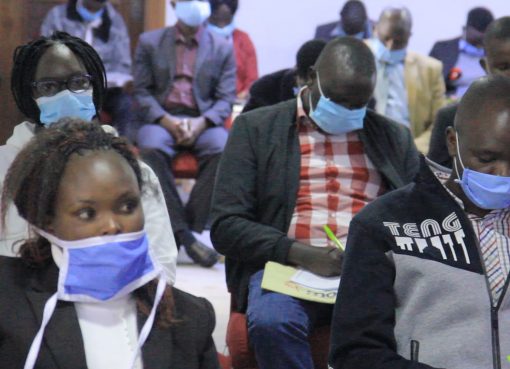
The Commissioner, who was the keynote speaker at a National Multi-stakeholder on Political Violence meeting, said IPOA had monitored 29 by-elections conducted in 2025 and 2026 and identified the infiltration of peaceful demonstrations, political gatherings, and electoral activities by organised criminal groups.
She said such groups had been used to intimidate voters, disrupt political meetings, suppress opponents, and influence electoral participation, warning that unchecked violence could undermine both electoral integrity and public confidence in democracy.
“As we approach the 2027 General Election, we must recognize that elections are particularly vulnerable to organised violence,” she said.
Mbogoh called for comprehensive mapping of electoral hotspots, improved intelligence sharing, and joint operational planning by security agencies.
She said investigations should extend beyond individuals committing violence on the streets to those who organize, finance, and sponsor political violence.
“Investigations must go beyond those who just commit violence on the streets. I’m talking of investigations also targeting organizers, financiers, and sponsors of political violence, who must also be identified and also held accountable,” she said.
Mbogoh also urged authorities to strengthen community policing, saying communities were often the first to detect emerging tensions, mobilization of criminal groups, and political intimidation.
She emphasised the need for professional and impartial public-order policing, noting that the presence of criminal elements in a demonstration should not result in the indiscriminate treatment of an entire assembly as criminal. “Professionalism is our strongest defense against escalation,” she said.
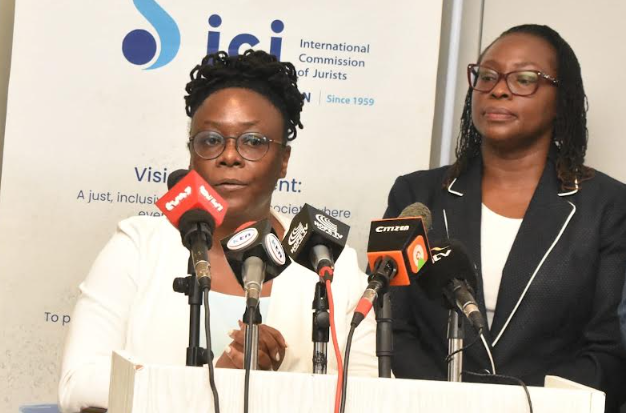
International Commission of Jurists (ICJ) Kenya Chairperson Christine Alai said Kenya had the constitutional and institutional tools needed to prevent a recurrence of electoral violence but warned that failure to confront the networks financing and organizing violence could have serious consequences.
“We are not helpless; we have the tools, we have the Constitution. We may be worried, but I hope that we leave today with the solutions to take action,” Alai said.
Alai said political violence had evolved from the recruitment of youth by individual politicians and parties into a sophisticated political economy involving recruitment, financing, and mobilization.
She further warned that digital platforms had added a new dimension to political violence through misinformation, disinformation, hate speech, and artificial intelligence-generated content.
“The weapons of violence are no longer just machetes and stones. They are now sophisticated tools of misinformation and disinformation, amplified by social media and increasingly powered by artificial intelligence,” she said.
The stakeholders called for stronger coordination among State institutions, civil society, communities and other actors to develop practical measures for preventing violence and strengthening accountability before the 2027 elections.
By Zipporah Odionyi and Lilian Gichohi