As temperatures continue to drop in Nyeri County, residents are increasingly turning to warm clothing in search of warm clothes to keep themselves warm in this cold season.
Temperatures in Nyeri are expected to dip to lows of up to 120C as the country ushers in the cold June –July chilly season according to a routine weather forecast released by the office of the County Director of Meteorological Services for the period between June 2 and June 8.
Among areas expected to experience the lowest temperatures include Kieni West, Tetu, Nyeri Central, Mukurwe-ini, Mathira West Sub Counties and Othaya.
Temperatures in the aforementioned areas are expected to oscillate between 210C and 130C.
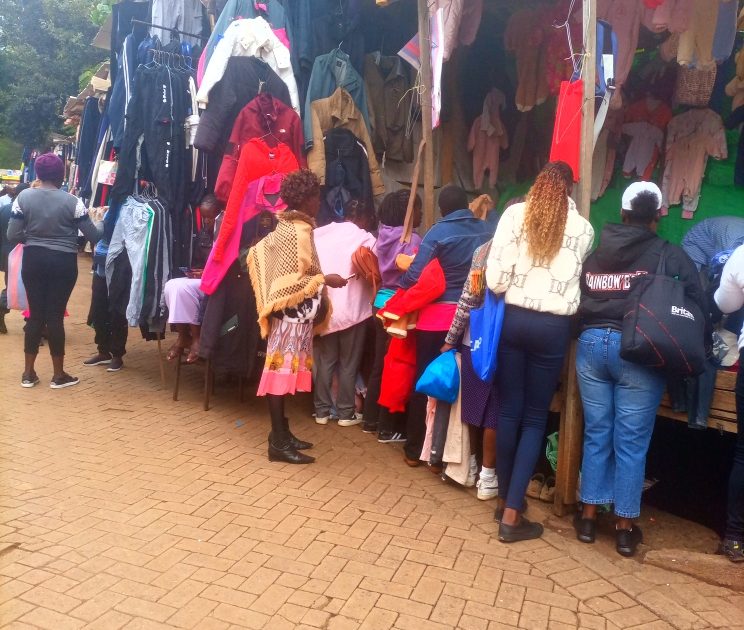
At Kamukunji Market, one of Nyeri Town’s busiest trading centers, the cold season has turned out to be both a bane and boom for traders dealing in second-hand clothes.
Here the demand for heavy clothing like jackets, hoodies, sweaters, scarves, and sweatshirts has surged significantly as families seek to protect themselves from cold-related illnesses.
However, while some traders are celebrating a rise in sales, other sellers are struggling with changing consumer preferences, rising stock costs, and reduced purchasing power among customers.
Interviews conducted at the market present an emerging pattern of how weather patterns, economic pressures, and consumer behavior shape business fortunes during the cold season.
For Collins Wachira, a trader specializing in sweatshirts, hoodies, jackets, and other warm clothing, the onset of the cold season has brought a noticeable increase in customer flow.
Wachira says the demand for heavy clothing has risen considerably compared to previous months when lighter clothing was on high demand.
“With the onset of the cold season, there have been both positive and negative repercussions. On the positive side, the demand for heavy clothes such as jackets, hoodies, and scarves has risen. The sales of heavy clothes have increased while light clothes such as T-shirts and vests have gone down a great deal,” he states.
Wachira noted that compared to the previous four months, sales of heavy clothing have increased considerably while demand for lighter garments such as T-shirts and dresses has declined.
Despite the increase in sales, traders are also facing new challenges.
Wachira observed that the rising demand has triggered a corresponding increase in wholesale prices.
Suppliers have raised bale prices as more traders switch to selling warm clothing to capitalize on the cold season.
“The increased demand has resulted in an increase in the buying price of the bales because many people are switching their businesses to selling these heavy clothes,” Wachira notes.
These price adjustments have forced retailers to pass the extra cost to clients.
Second-hand jackets are currently selling between Sh500 and Sh700 depending on quality and type, while hoodies and sweatshirts retail at approximately Sh400 and Sh200 respectively.
Wachira also highlighted the challenge of customer retention.
While demand is high, some customers continue to bargain aggressively despite the rising wholesale prices.
“Sometimes retaining customers depends on the discount offered by the seller which sometimes forces us to incur losses,” he explained.
While traders dealing in adult outfits are recording increased sales, the situation is different for those specializing in children’s clothing.
Charity Nicolas, a trader dealing in baby clothes for children aged between one month and eleven years, says the cold season has significantly altered customer preferences.
Many parents are opting to buy heavy clothing for their children, leaving traders with unsold stocks of lighter garments that were purchased before the cold season began.
“Customers are shifting from light clothes to heavy clothes, making them leave previously purchased stocks of lighter clothes,” she explains.
The accumulation of unsold has led to financial strain for the majority of these traders.
According to Nicolas, many business owners have been forced to seek loans to keep their businesses operational.
Unfortunately, some of these loans come with high interest rates that make repayment difficult.
“Retaining dead stock usually leads to losses that have forced traders to opt for loans to keep their businesses running,” she explains.
The challenge illustrates the risks small-scale traders face when market demand shifts unexpectedly.
Beyond the effects of the weather, traders point to economic challenges affecting purchasing decisions.
Nicolas observed that many customers now prioritize essential household needs, particularly food, over purchasing new clothing.
“Many customers have chosen to buy food instead of new clothes since they have heavy clothes that were bought during previous cold seasons,” she noted.
The high cost of living has reduced expenditure among households, making consumers more cautious about spending on non-essential items.
Additionally, traders say the rise of online marketplaces and social media referrals has intensified competition, even as the number of customers physically visiting the market declines.
“The demand is high but the people coming to purchase the goods are less,” Nicolas explained.
Despite the rise in demand, business owners complain about the increased purchase price by the suppliers.
According to Nicolas, suppliers have raised bale prices by approximately Sh2,000 for children’s clothing and Sh3,000 for older children’s clothing.
These increases have made it difficult for traders to maintain affordable retail prices while still making a profit.
Many customers continue to expect prices similar to those offered before the cold season despite the increased operating costs faced by traders.
As Nyeri continues to experience chilly weather conditions, Kamukunji Market remains a reflection of the opportunities and challenges created by seasonal changes.
For traders like Collins Wachira, the cold season has brought increased sales and renewed business activity.
The growing demand for jackets, hoodies, sweaters, and scarves has created opportunities for entrepreneurs willing to adapt to changing market conditions.
However, for traders such as Charity Nicolas, the season has also highlighted vulnerabilities associated with shifting consumer preferences, rising costs, and reduced household expenditure.
But even as people rush to acquire warm clothes to cushion themselves against the cold weather, Mount Kenya Hospital Medical Superintendent Dr Paul Pauline Kamau has advised the public to equally adhere to sound health principles to avoid falling victims to opportunistic infections.
Dr Kamau has also demystified the long held view that diseases like pneumonia are directly linked to the cold weather and clarified that such illnesses are spread through contact with an infected person or touching a surface contaminated with the virus or bacteria.
She said the ideal solution to tackling such respiratory infections is through proper observance of sound health practices such as body hygiene and eating a well-balanced diet.
“Some of these diseases like Pneumonia are caused by viruses and bacteria and not being exposed to cold. Let people observe cleanliness by washing their hands with water and soap just like during the days of Covid 19 pandemic. Let people subsist on a healthy diet rich in foods rich in vitamins such as vegetables and fruits. By doing so, the body will be able to fight off infections,” she has advised.
“Keeping warm and wearing warm clothing is important but it is not the main reason people are contracting some of these diseases. Most are being spread through the air we breathe or contact with an infected person or surface.”
by Samuel Maina/Stephen Nderitu and Sharon Nashipae