West Pokot County has stepped up efforts to address teenage pregnancies, early child marriages, female genital mutilation (FGM) and poor maternal and neonatal health outcomes through a new five-year initiative targeting adolescent girls and young women.
The Her Health Kenya Project, supported by the Reproductive Health Network of Kenya (RHNK), seeks to strengthen health systems and social structures that influence the health, education and future of adolescent girls and young women.
The initiative is being implemented in West Pokot, Samburu, Garissa, Tana River and Homa Bay counties, with a focus on improving access to quality Sexual, Reproductive and Maternal Health (SRMH) information and services.
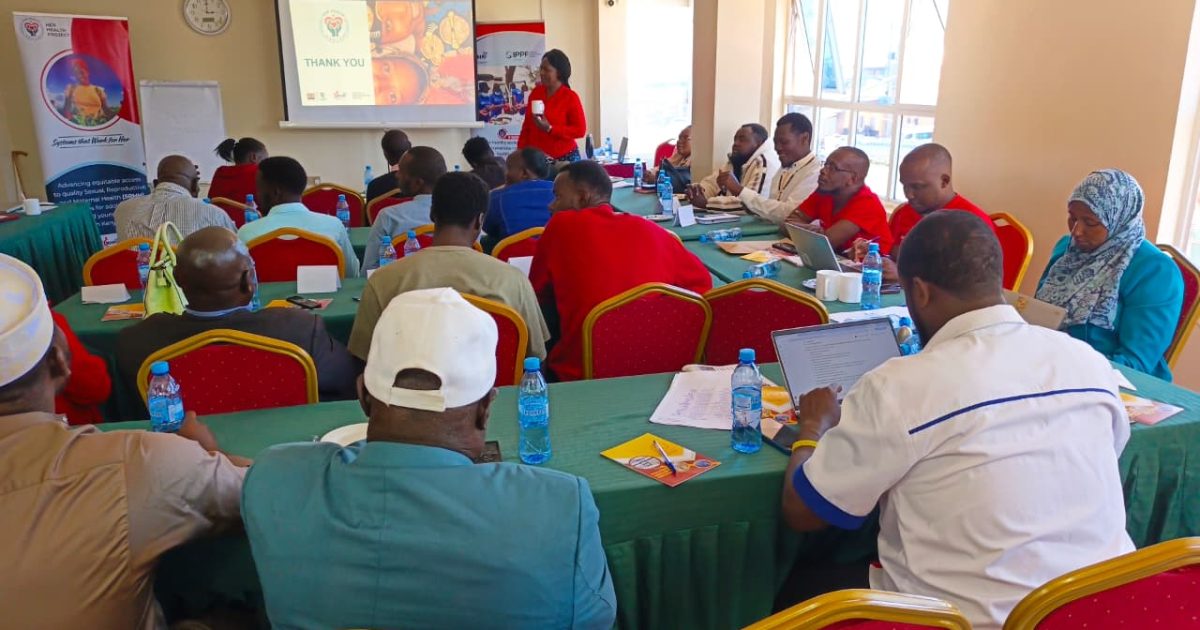
Speaking during the project’s inception and stakeholder engagement meeting in Makutano, Fidelis Ndung’u of the National Council for Population and Development (NCPD) said West Pokot was among the counties selected because of its concerning reproductive health indicators.
According to the 2022 Kenya Demographic and Health Survey (KDHS), teenage pregnancy in West Pokot stands at 36 per cent.
Ndung’u said the figure illustrated the magnitude of the challenge facing adolescent girls, with teenage pregnancies often disrupting education and exposing girls to health and socio-economic challenges.
“The project focuses on systems that work for her. We want to strengthen the systems to ensure that her health will be delivered by the end of the five-year programme,” she said.
The project will target adolescent girls and young women across the county, with special attention to areas identified as hotspots because of the high burden of teenage pregnancies and other reproductive health challenges.
Ndung’u said teenage pregnancies were also closely linked to maternal health complications, adding that some maternal deaths could be prevented through timely access to quality healthcare and reproductive health information.
“These deaths are preventable,” she said, calling for stronger interventions to ensure girls and young women receive the information and services they need.
Consolata Siree, the County Coordinator for Reproductive Health, said the worrying indicators required stronger collaboration between the county government and partners supporting reproductive health programmes.
“Our maternal and neonatal indicators in the county are still low and wanting. We therefore commit to working hand in hand with the partner to strengthen the systems and ensure that we improve these indicators for the benefit of mothers, newborns and the girl child,” Siree said.
The Health and Sanitation County Executive Committee Member Claire Parklea welcomed the project, saying it had come at a critical moment when the wellbeing of the girl child remained under threat from multiple challenges.
She thanked RHNK for partnering with the county and said the administration of Governor Simon Kachapin was committed to supporting interventions aimed at improving health outcomes.
“The health of the girl child is in jeopardy and she carries a lot of burden. This initiative comes at the right time,” Parklea said.
She said addressing the challenges affecting adolescent girls required the involvement of different sectors and communities.
The inception meeting brought together representatives from the county government, NCPD, RHNK, youth, Maendeleo ya Wanawake, the Council of Elders and community representatives in a multisectoral engagement.
Parklea said empowering young people was crucial in shaping the future of the county, noting that “the youths of today are the leaders of tomorrow.”
Besides teenage pregnancy, stakeholders identified early child marriage as another major barrier to girls’ education and development.
Ndung’u called for sustained community sensitisation to ensure girls remain in school and are protected from practices that expose them to early marriage and motherhood.
“When you educate a woman, you are educating a community,” she said.
FGM was also highlighted as a harmful cultural practice that continues to affect girls in some communities.
Ndung’u said the practice was sometimes associated with the belief that circumcision marked a girl’s transition into adulthood and made her eligible for marriage.
She called for the abandonment of such practices and greater investment in empowering girls and women.
“All these needs to stop so as to empower the women in the society,” she said.
At the education front, Emmy Korir, a teacher at Samor Comprehensive School, said she had witnessed the challenges facing girls since she began working in West Pokot in 2021.
Korir, who comes from neighbouring Elgeyo Marakwet County, said cultural practices sometimes made it difficult for teachers to support girls and keep them in school.
“The culture is fighting with education,” she said, noting that acceptance of education remained low in some communities.
She attributed early pregnancies and school dropout to several factors, including poverty, inadequate parental supervision, peer pressure and cultural expectations.
Korir said some parents were unable to provide adequately for their children, while others did not closely monitor their daughters, leaving them vulnerable to early relationships.
She also said peer pressure sometimes pushed girls into boy-girl relationships, with some viewing such relationships as a form of competition.
Korir called for greater empowerment of mothers and other female role models to enable them to build stronger relationships with girls and guide them through adolescence.
The ‘Her Health Kenya Project’ will use a systems-strengthening approach, working through existing government structures to promote sustainability and long-term ownership.
Its strategic areas include service delivery, advocacy, adolescent and youth engagement, research and evidence generation.
Through collaboration between government agencies, communities, development partners, civil society and the private sector, the initiative seeks to address the root causes of poor reproductive health outcomes.
The project aims to contribute to reductions in teenage pregnancies, maternal morbidity and mortality, new HIV infections and unmet need for family planning, while helping more girls remain in school.
For West Pokot, stakeholders say the success of the initiative will depend not only on improving health services but also on confronting the social and cultural barriers that continue to limit opportunities for girls.
By bringing health workers, educators, communities, young people and policymakers around one table, the initiative seeks to strengthen the systems supporting the girl child and create lasting improvements in her health, education and future prospects.
by Parklea Ivor