When Sheila Atieno Onyango trained as a telecommunications engineer, she never imagined her career would one day revolve around traditional weaving, artisan networks and cultural preservation.
Yet today, the founder of Okapu has built a growing cultural enterprise that blends heritage, craftsmanship and community empowerment, proving that traditional skills can thrive in a modern marketplace.
Her journey began in the renewable energy sector, where she worked on infrastructure projects across rural Kenya.
Part of her role involved engaging communities affected by transmission lines and energy developments, helping them understand technical projects in practical terms.
Looking back, Sheila says those experiences laid the foundation for her current work.
“That job prepared me for what I’m doing now. We were constantly interacting with rural communities, and that experience shaped how I connect with people today,” she says. The idea for Okapu, she says, emerged unexpectedly.
While working in Nairobi, Sheila bought a kiondo bag from a roadside vendor near her office in Karen, and shortly afterwards, a friend admired the bag and asked to buy it.
“I didn’t even think about making a profit. I just gave it to her and bought another one for myself,” she recalls.
Soon, more friends began requesting similar bags, prompting her to start posting them on Instagram.
“I realised people loved them—not just the bags themselves, but how they were styled and presented,” she says.
What began as casual reselling soon evolved into something deeper.
Curious about the origins of the products, she started asking who actually made them. The answer took her beyond Nairobi’s retail markets and into rural artisan communities.
A turning point came when a colleague revealed that her aunt was one of the women weaving the bags Sheila had been selling.
“That changed everything. I had been searching for the people who actually make them. In Nairobi, you mostly meet the sellers, not the source,” she says.
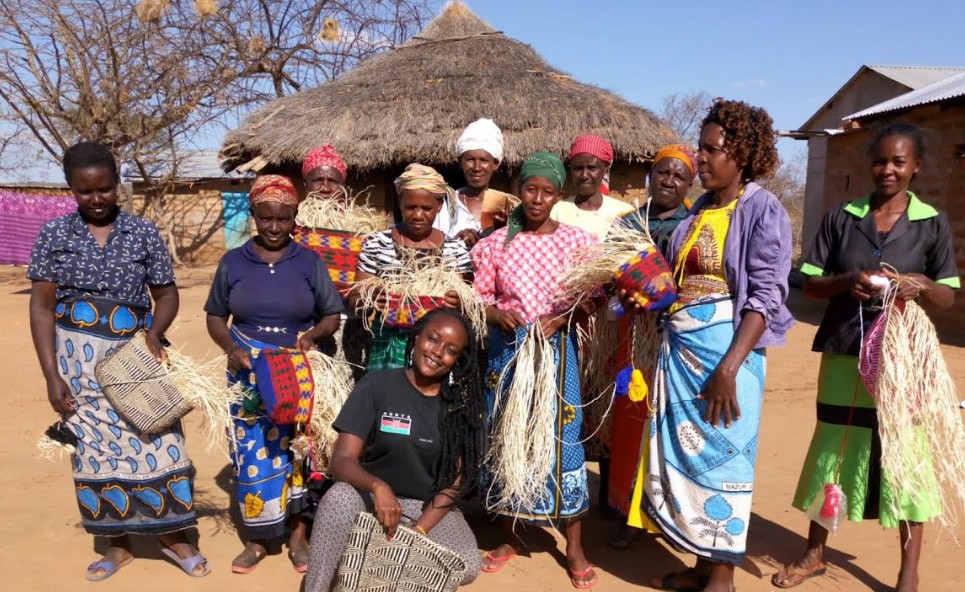
Sheila shifted from reselling to working directly with artisans, collaborating on designs while preserving traditional weaving techniques.
As she interacted with customers at markets and pop-up events, she noticed a recurring trend.
Many people fondly remembered seeing relatives weave baskets and kiondos while growing up, but few had learnt the skill themselves.
“It kept coming up. People grew up around it but never got the chance to learn,” she says.
That gap between cultural memory and practical knowledge inspired the next phase of Okapu’s growth.
In 2022, she launched the company’s first weaving classes, offering hands-on opportunities for people to reconnect with traditional craft while learning directly from artisans.
“It has never been something fully planned. It has grown from listening to what people like, what they ask for and what they feel disconnected from,” she says.
Today, Okapu works with artisans across Kenya, using a variety of natural materials, including sisal, yarn, coastal palm leaves and water hyacinth sourced from Kisumu. Each region contributes unique techniques, designs and innovations.
Sheila says Kisumu stands out for its creativity and experimentation.
“It’s the most innovative in terms of materials and styles,” she notes.
While the weaving methods remain rooted in tradition, Okapu adapts designs to suit contemporary lifestyles and fashion trends, enabling handmade products to move beyond cultural exhibitions into everyday use.
Social media has played a critical role in the company’s growth, transforming what began as informal sharing into a major sales platform.
“Most of my sales are online. It’s given me reach I wouldn’t have had otherwise,” she says.
The business and its artisan collaborations are also showcased through its website, where customers can learn about weaving workshops and cultural design initiatives.
Beyond generating income, Sheila believes the enterprise has helped restore confidence among artisans.
“It’s not just a financial boost; it’s a confidence boost. People realise they have valuable skills that others want to learn,” she says.
However, perceptions remain a challenge. Many skilled artisans still struggle to see weaving as a viable source of income.
Sheila recalls meeting a highly talented water hyacinth weaver in Kisumu whose products had never reached a wider market.
“She had beautiful work, but she wasn’t selling it because she didn’t know how to reach customers,” she says.
Unlike luxury craft brands that target affluent buyers, Okapu positions itself in the middle market, balancing affordability with fair value for artisans.
“We’re not super high-end, but we’re also not cheap. We want to sit somewhere in the middle,” she says.
Most products retail between Sh2,000 and Sh5,000, depending on the complexity of the design.
The enterprise operates through flexible partnerships rather than fixed employment arrangements, recognising the realities of rural life where farming seasons and material availability often determine production schedules.
“In some months people are busy on their farms. In others, materials are harder to get,” she explains.
Like many entrepreneurs in the creative sector, Sheila identifies access to capital as one of the biggest obstacles to expansion.
“If I had more capital, I’d be reaching more people and creating more income opportunities for them,” she says.
Despite the challenges, she remains patient about growth.
Her long-term vision extends beyond the kiondo. She hopes to position Kenyan weaving traditions within a broader creative economy that can compete in global markets while preserving cultural knowledge.
“If we sell more, more people benefit,” she says.
Through Okapu, Sheila is demonstrating that heritage can be both preserved and reimagined—transforming traditional craftsmanship into a sustainable source of livelihood while ensuring cultural knowledge is passed on to future generations.
By Pamella Dorothy