By C, KNA
More than 5,000 acres of land across five counties are earmarked for compulsory acquisition as the government moves to extend the Standard Gauge Railway (SGR) from Naivasha to Kisumu, with a launch now set for March 28.
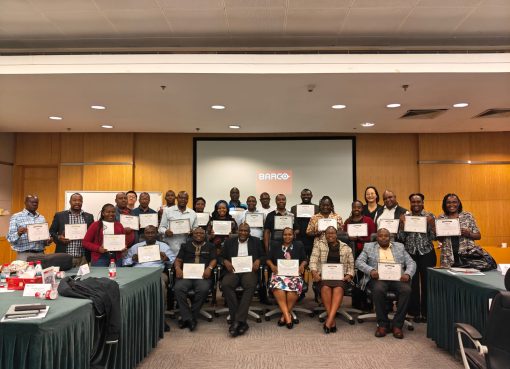
The National Land Commission (NLC) announced the plans during a high-level stakeholder engagement meeting convened by Kenya Railways in Kisumu on Monday, attended by Governor Prof. Anyang’ Nyong’o, MPs, MCAs, national government officials and other key stakeholders.
NLC Director of Valuation and Taxation Joel Ombati said the commission has received formal notice from the Ministry of Transport to acquire the land required for the 269-kilometre Phase II B stretch, which will traverse Narok, Bomet, Kericho, Nyamira and Kisumu counties.
“Kisumu has the highest number of Project Affected Persons (PAPs),” said Ombati. “All affected persons will be compensated in accordance with Kenyan law and prevailing market rates.”
He said a digital platform will be deployed to demarcate parcels and collect ownership data, targeting completion of compensation within eight months to ensure construction proceeds without delay.
Kenya Railways Managing Director (MD) Philip Mainga, speaking at the same meeting, said the project will be launched simultaneously in Narok and Kisumu, with completion scheduled for June 2027.
“We have instructions to start this project by March 28. We must launch on that date and we are working to ensure we meet the timelines,” he said, noting that groundwork in Narok near Narok Teachers College was already at an advanced stage following consultations with the county government and local leadership.
Mainga stressed that the railway route has been fully designed and cannot be altered, explaining that even minor deviations could compromise safety and operational efficiency.
“The route has been identified, designed and approved. We cannot change even an inch of it. Railway engineering relies on strict gradient requirements to support passenger speeds of 120 km/h and cargo trains at 80 km/h,” he said.
To avoid delays that have dogged past projects, Mainga said compensation disputes will be resolved on the ground in collaboration with NLC, local leaders and administrators.
“We will not wait to go to court. All land matters will be solved on the ground so that we deliver this project on time,” he said.
He urged affected residents to ensure they have valid identification and bank accounts to facilitate prompt compensation, noting that missing documents have previously slowed projects.
Mainga further challenged counties along the corridor to plan for last-mile connectivity. “In Kisumu, we can collaborate on a trunk line connecting the city to Butere and other nearby towns,” he said.
Kisumu Governor Prof. Anyang’ Nyong’o, addressing the same forum, described the railway as a structural economic intervention that could redefine Western Kenya’s economic landscape for decades.
“This is not just a transport project,” Nyong’o said. “The extension toward Kisumu and onward to Malaba carries enormous promise for the Lake Region and our hinterland. It will expand trade, lower logistics costs, stimulate industrial parks, strengthen agricultural value chains including fisheries, sugar, rice and horticulture, and attract investment in warehousing, cold storage, and manufacturing.”
He added that Kisumu’s location on Lake Victoria positions it as a multimodal logistics hub, integrating rail, lake, and road transport networks, and potentially transforming the city into a gateway for trade with Uganda, Tanzania, Rwanda, and South Sudan.
Nyong’o emphasised that infrastructure alone will not guarantee transformation. “Local participation, job creation for youth, integration of local enterprises into supply chains, environmental protection, and fair engagement with affected communities must accompany this project,” he said.
Muhoroni Member of Parliament (MP) James Onyango K’oyoo pledged full political support from legislators in Kisumu County and neighbouring areas.
“We want this project fast-tracked. We will give maximum cooperation as long as there is constant engagement with the people and their leaders,” he said.
Kisumu East MP Shakeel Shabir urged Kenya Railways to work closely with elected leaders and prioritise local youth for employment during construction and operations. He also called for transparent handling of Kenya Railways land, warning against conflicts that had plagued past demolitions.
Nyanza Regional Commissioner (RC) Flora Mworoa said the railway would stimulate agro-processing, manufacturing and cross-border trade, boosting Kisumu’s role as a regional trade gateway.
Kenya Railways engineer Tobias Otieno said Phase II B will feature seven stations — six intermediate stops at Mulot, Narok, Bomet, Sotik, Sondu, and Ahero — and a main terminus in Kisumu West.
Kisumu County will host four stations: two passenger stations at Ahero and Kisumu West and two freight stations at Kibos and Kodiaga.
The line will include tunnels and 79 bridges to navigate challenging terrain.
Once completed, the Naivasha–Kisumu SGR is expected to significantly enhance business within the East African Community (EAC), easing cargo movement from the Port of Mombasa through Nairobi and Naivasha to the Lake Region, from where goods can be ferried by lake or road into Uganda, Tanzania, Rwanda, and South Sudan.
The link to Malaba will further strengthen Kenya’s position as a regional logistics hub while promoting continental trade integration.
With financing discussions ongoing and land acquisition preparations now underway, stakeholders said the project’s success will depend on transparent compensation, strong political goodwill, and strict adherence to timelines, as the government races to deliver the railway before the 2027 General Election.