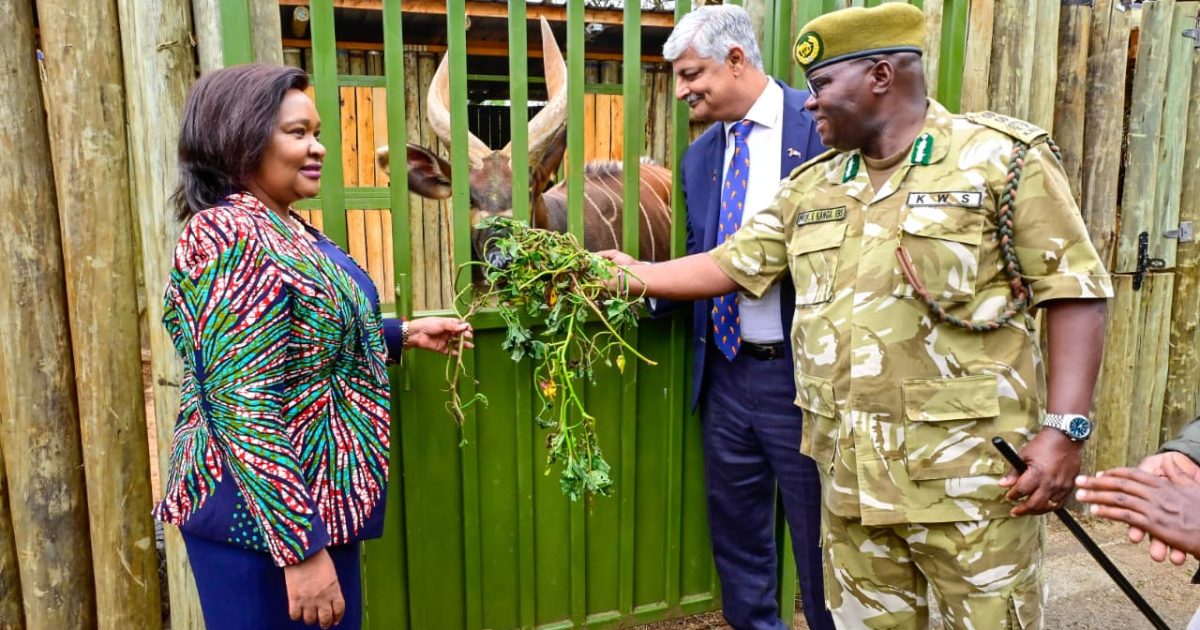
The government has launched the National Recovery and Action Plan for the Mountain Bongo 2026–2030, a five-year programme aimed at strengthening the breeding, protection, and recovery of the critically endangered Mountain Bongo species.
Tourism Cabinet Secretary Rebecca Miano, speaking during the commissioning of the action plan at the Mount Kenya Wildlife Conservancy in Nanyuki, said the government is targeting a 50 per cent increase in Kenya’s Mountain Bongo population by 2030, with a long-term goal of establishing a self-sustaining population of 750 animals by 2075. The current population of these rarest antelopes is about 100 at the conservancy.
“The five-year programme will secure and grow wild populations in at least two ecosystems, maintain increasing populations in at least two breeding sanctuaries, and prepare at least one suitable forest release site within the species’ former range,” said Miano.
The CS said the Mountain Bongo, which is found only in Kenya, continues to face serious threats to its survival, requiring sustained commitment from government agencies, conservation organizations, communities, and other stakeholders.
“The mountain bongo is found only in Kenya and is critically endangered. Its recovery is therefore more than a wildlife project. It tests how we govern the mountain forests that supply water, store carbon, support agriculture and tourism, and sustain communities. Securing the bongo means securing a wider national asset,” she said.
Miano said the new action plan would bring together stakeholders to ensure that the recovery programme is fully implemented while also creating employment and business opportunities within the tourism and conservation sectors.
“This plan translates those obligations into priorities, responsibilities, budgets, and results. It gives practical effect to the National Wildlife Strategy 2030 through resilient ecosystems, evidence-based decisions, and accountable governance,” said Miano.
She added that the plan supports the Kenya Wildlife Service Strategic Plan 2024–2028 and the Bottom-Up Economic Transformation Agenda by protecting natural resources that support tourism, employment and local enterprises.
Miano expressed concern over the implementation of the first Mountain Bongo Action Plan, saying only a small proportion of its planned activities were fully achieved.
“The Second Edition changes implementation discipline. A review of the first plan found only 28 of 129 activities fully implemented,” she said, challenging stakeholders to ensure that the new five-year plan achieves its targets.
The CS said implementation of the Mountain Bongo Recovery Plan is estimated to require approximately Sh400 million, which will be directed towards priority interventions identified in the five-year action plan.
Kenya Wildlife Service Director General Prof. Erastus Kanga said fewer than 65 Mountain Bongos are estimated to remain in the wild, with the animals existing in isolated forest populations.
He said KWS was committed to protecting the remaining wild population through genetic management, disease control, preparation of suitable animals, securing release sites and undertaking reinforcement and reintroduction programmes.
Kanga said the second edition of the action plan would also strengthen collaboration with partners, including county governments and local communities, to protect existing Mountain Bongo habitats and prepare potential future release sites.
“Our work with communities must remain practical and site-specific. Local knowledge, community scouts, habitat restoration, forest protection and fair benefits linked to conservation will determine whether recovery lasts,” said Kanga.
Meanwhile, IUCN Species Survival Commission Steering Committee Chair Vivek Menon pledged support towards strengthening the Mountain Bongo’s profile on the global Red List of threatened species and supporting efforts to secure its recovery.
The launch marks a renewed push by the government and conservation partners to reverse the decline of the Mountain Bongo and secure its future within Kenya’s forests and protected ecosystems.
By Muturi Mwangi