The Government has outlined progress in the country’s health sector reforms, highlighting expanded health insurance coverage, increased access to primary healthcare and investments in emergency response and medical infrastructure ahead of the inaugural Kenya Health Summit.
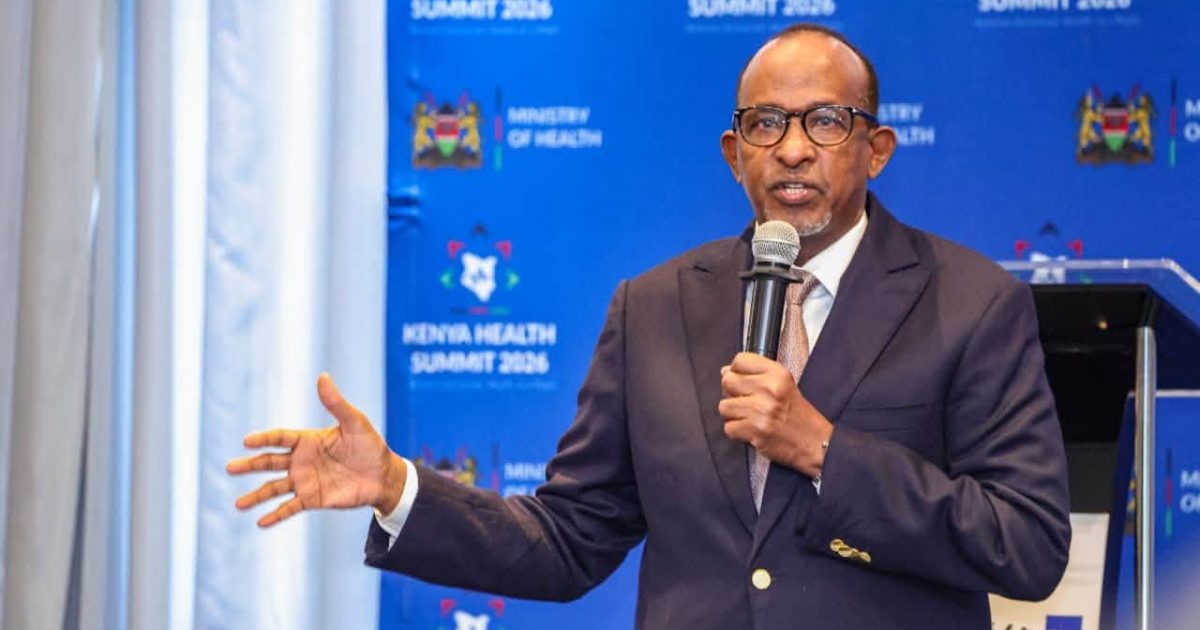
Health Cabinet Secretary Aden Duale said the Government was committed to ensuring healthcare becomes a right accessible to all Kenyans, rather than a privilege for a few.
Speaking to journalists ahead of the Kenya Health Summit, scheduled for August 18–19 at the Kenyatta International Convention Centre (KICC), Duale urged the media to scrutinise the reforms and explain their impact to the public beyond official statistics.
The summit, held under the theme “Reforms Delivered, Health as a Right,” will bring together the National and County Governments, development partners, healthcare institutions, private-sector players, health professionals and members of the public.
According to Duale, one of the most significant reforms has been the transition from the National Health Insurance Fund (NHIF) to the Social Health Authority (SHA), which was launched on October 1, 2024.
He said more than 32 million Kenyans are now registered under SHA, compared with about eight million people previously covered by the defunct NHIF.
The authority has processed nearly 7.9 million claims, while billions of shillings have been paid out to support patients receiving medical services. The Government said the programme has also facilitated more than 48,000 cancer treatments, 469,000 surgeries and 1.24 million safe deliveries.
Duale said the reforms were designed to ensure that Kenyans do not miss out on essential healthcare because of an inability to pay at the point of service.
Under the Primary Healthcare Fund, registered Kenyans can access services at Level 2, 3 and 4 health facilities without making payments at the point of care.
The Government is also relying on community-based healthcare to strengthen preventive and primary care.
More than 107,000 Community Health Promoters (CHPs) have been recruited and are supported through 277 Primary Care Networks across the country.
The CHPs are expected to deliver preventive, promotive and basic healthcare services closer to households, helping identify health challenges before they develop into more serious conditions.
The Ministry of Health is also investing in local pharmaceutical manufacturing, essential medicines, medical equipment and health infrastructure as part of efforts to strengthen the health system.
The Government said it was strengthening public health preparedness through emergency operations centres, disease surveillance systems and field epidemiology programmes.
The National Ambulance Dispatch Centre and toll-free 922 emergency line have also been established to provide a coordinated platform for accessing emergency medical services, regardless of a patient’s location or SHA registration status.
The Ministry said the ultimate measure of the reforms should be their impact on ordinary Kenyans. This includes mothers receiving safe maternity services, patients accessing treatment without suffering financial hardship and families being able to obtain quality healthcare closer to their homes.
Duale urged journalists to move beyond government figures and assess the reforms on the ground by visiting health facilities, engaging healthcare workers and speaking directly to patients and communities.
He said such scrutiny would help establish what was working, identify gaps and determine areas requiring further improvement.
The Kenya Health Summit is expected to provide a platform for national and county governments, health institutions and partners to take stock of progress made towards Universal Health Coverage and agree on priorities for the next phase of the country’s health transformation agenda.
The meeting will also assess the implementation of the Taifa Care Model, through which the Government seeks to make quality healthcare accessible to Kenyans regardless of their income, location or circumstances.
Those present during the media engagement included Principal Secretaries Dr Ouma Oluga and Mary Muthoni, Director-General for Health Dr Patrick Amoth, Council of Governors Chief Executive Officer Mary Mwiti, Kenya Editors Guild Chief Executive Officer Linda Bach, development partners, representatives of the media, chief executives of health-sector State corporations and senior Ministry of Health officials.
By Joseph Ng’ang’a