By C, KNA
The national government has moved to fast-track the operationalization of radiotherapy services at Jaramogi Oginga Odinga Teaching and Referral Hospital(JOOTRH).
Consequently, Medical Services PS Dr. Ouma Oluga on Thursday lead a high-level delegation to the facility to solidify a strategic oncology partnership with King’s College London.
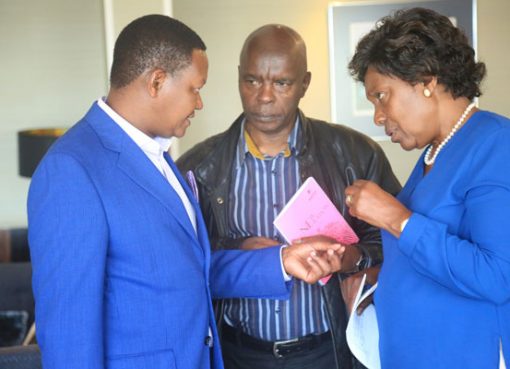
The high-level delegation included the Executive Director, King’s Health Partners at King’s College London, Prof. Graham Lord, Broadcasting and Telecommunications PS Stephen Isaboke and Joel Owino from the National Cancer Institute of Kenya.
The partnership will focus on expanding diagnostic and treatment capabilities, establishing oncology fellowships and academic exchanges, while developing a regional research and clinical trials hub.
The government is also exploring establishment of a sickle cell research centre in Kisumu, which would position the hospital as a research and academic hub for western Kenya and neighbouring countries.
Dr. Oluga said, while the government had already allocated about Sh500 million to complete construction of the Comprehensive Cancer Centre, urgent discussions were underway to ensure the facility is equipped with radiotherapy machines and other essential tools.
“We have funded the building. The next phase is equipping it. Patients get lost when you refer them elsewhere, and some never reach the facilities,” he said.
Currently, nearly half of JOOTRH patients, who require radiotherapy are referred to Moi Teaching and Referral Hospital in Eldoret or to facilities in Nairobi, a journey of 350 to 500 kilometres.
At the Moi Teaching and Referral Hospital, Eldoret, which handles approximately 150 radiotherapy sessions daily, the backlog stretches up to six months, partly due to the influx of referrals from JOOTRH and other facilities in western Kenya.
The PS said the delays, cost, travel challenges and long queues contribute to high loss-to-follow-up rates, with some patients dying before accessing treatment or returning with advanced-stage disease.
Dr. Oluga added that the investment case for Kisumu’s JOOTRH was strong, given the population served across western Kenya and neighbouring counties, as well as cross-border patients from Uganda, accessible by a 40-minute flight.
The region currently lacks specialised private sector oncology infrastructure, leaving a wide gap in radiotherapy services, trained personnel, theatres and supportive care beds.
Dr. Fiona Awor Adagi, Clinical Oncologist and Director of Oncology and Palliative Care at JOOTRH, presented hospital data revealing an escalating cancer burden in Kisumu County.
According to the hospital’s Cancer Dashboard, tracking cases from 2011 to 2025, Kisumu recorded 4,394 cancer cases during this period. Women account for 64.1 per cent of the cases.
Cervical cancer leads with 1,038 cases, followed by esophageal cancer (596), breast cancer (524), prostate cancer (339), and colorectal cancer (167).
In 2024 alone, the county recorded 720 new cases, nearly double the 292 cases reported in 2018.“Most of our patients present late, at Stage III and IV,” Dr. Adagi said.
At the same time, about 50 per cent of patients are at risk of being lost to follow-up within the first year of care.
The Clinal Oncologist also noted that approximately 32 per cent of cancer patients are HIV-positive, adding complexity to management and treatment.
Despite the transition from the National Hospital Insurance Fund to the Social Health Authority, which now provides oncology coverage up to Sh800,000, many patients still bear high out-of-pocket costs for essential diagnostics such as CT scans and biopsies.
JOOTRH Acting Chief Executive Officer (CEO) Dr. Joshua Okise, said referring patients hundreds of kilometres away has long hindered effective treatment.
“Imagine referring a patient and praying you see them again. Some do not reach. Some deteriorate before treatment,” he said.
The Ag. CEO said the hospital’s vision was to become a centre of excellence providing chemotherapy, radiotherapy and surgical oncology services under one roof.
If timelines are met, radiotherapy services at JOOTRH could begin by late this year, marking a major milestone in decentralizing specialised cancer care from Nairobi to the Lake Region.
Dr. Okise said the facility was expected to reduce referrals, shorten waiting times, improve survival rates through earlier intervention and strengthen continuity of care for thousands of families, who have endured long journeys and interrupted treatment.