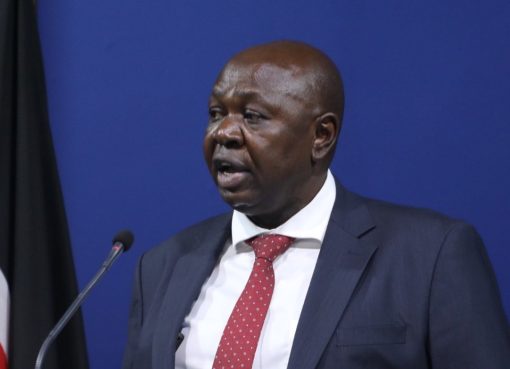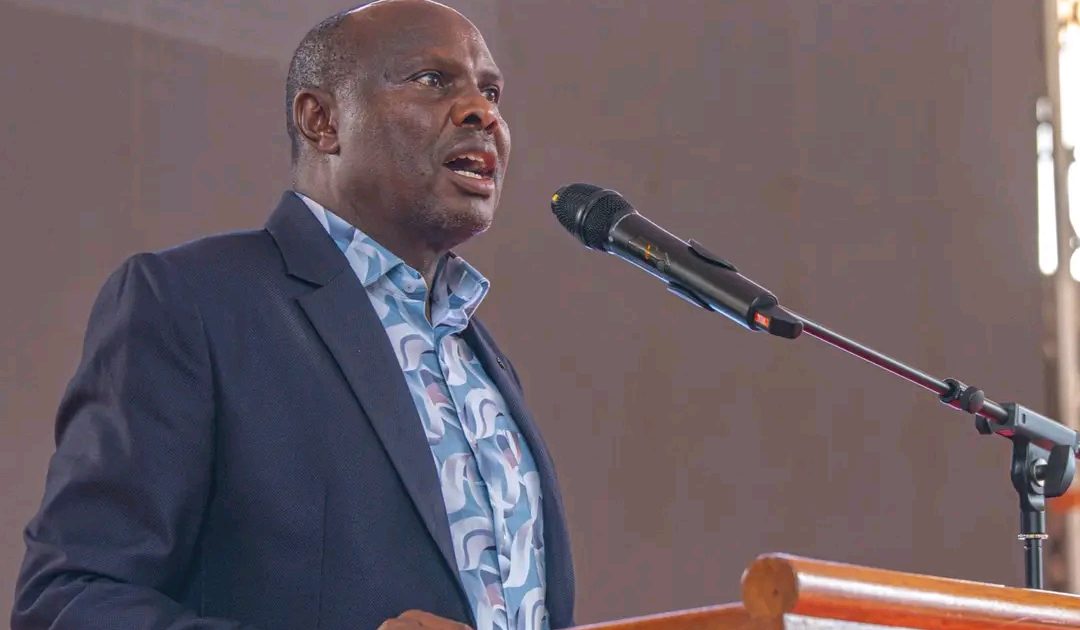
Head of Public Service Felix Koskei has challenged Kenyan professionals to reclaim their place in national discourse, accusing them of retreating from governance and leaving the country’s development agenda to politicians, propaganda and misinformation.
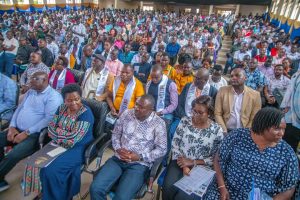
Addressing a meeting of Bungoma County professionals at Kibabii University on Saturday, Koskei said the silence of professionals had allowed politics to overshadow development, making it difficult for Kenyans to objectively assess the government’s performance.
He urged professionals to actively evaluate, explain and defend government programmes using facts and evidence, saying their involvement would help the country make informed decisions ahead of the 2027 General Election and enable President William Ruto to secure a second term to complete his development agenda.
“For over 40 years, this country has been overrun by politics. The political class has dominated the national conversation to the extent that people can no longer distinguish truth from propaganda,” Koskei said.
He argued that professionals possess the expertise, integrity and objectivity required to steer public discourse and restore confidence in governance.
“Professionals are the true north of any society. Without them there is speculation, misinformation and guesswork. Expertise is not private property; it is a public asset that must be shared for the benefit of society,” he said.
Koskei said history would judge the current generation harshly if professionals continued watching from the sidelines while critical national decisions were shaped solely by politicians.
“Future generations will ask where professionals were when these decisions were being made. We must occupy our rightful space in governance and contribute to policy formulation and implementation,” he said.
The Head of Public Service called on teachers, doctors, engineers, administrators, economists and other experts to engage more actively in public affairs, including county and national budget-making processes, policy discussions and development planning.
He regretted that professionals rarely participated in public participation forums, leaving major decisions to individuals without the technical knowledge to interrogate government proposals.
“Whenever county budgets or development plans are presented for public participation, professionals stay away because they believe politics is beneath them. Yet they are the very people who should be shaping those decisions,” he said.
Koskei further urged professionals to independently assess the Kenya Kwanza administration’s manifesto and measure its implementation against the promises made during the 2022 election campaign.
He noted that President Ruto was the first Kenyan leader to reduce campaign pledges into a structured manifesto complete with timelines and measurable targets.
“I want professionals to go through every promise and determine what has been achieved, what remains pending and what needs improvement. Speak from evidence, not politics,” he said.
He said professionals should guide their communities using factual assessments rather than relying on political rallies or social media narratives.
“You should be able to tell your neighbour what has been done, what has not been done and what still requires improvement based on facts and your professional expertise,” he said.
Koskei defended several flagship programmes being implemented by the Kenya Kwanza administration, describing them as bold reforms that previous governments had avoided because of their political sensitivity.
He cited reforms in the sugar sector, saying the government’s decision to lease state-owned sugar factories had revived production in western Kenya after years of decline.
According to Koskei, factories including Nzoia, Muhoroni, Chemelil and Sony Sugar were gradually returning to production, with investors expected to modernise ageing equipment over the next year.
He also defended the Social Health Authority (SHA), saying the transition from the previous health insurance system had experienced initial challenges but had since stabilised and was reducing the financial burden on families seeking medical care.
Rather than politicising the programme, he urged health professionals to objectively evaluate its effectiveness and recommend improvements where necessary.
Koskei also highlighted the National Infrastructure Fund, which he said was designed to reduce reliance on public borrowing by attracting private investment into major infrastructure projects.
He said the model would enable the government to finance strategic projects through public-private partnerships while easing pressure on the country’s growing debt burden.
The Head of Public Service further pointed to the recently established Sovereign Wealth Fund, saying revenues from extractive industries such as mining and petroleum would be invested to benefit future generations instead of being entirely consumed by the present generation.
He described the Affordable Housing Programme as another transformative initiative aimed at expanding home ownership while stimulating employment and economic growth.
Koskei also cited the ongoing rollout of the national digital superhighway, saying the government’s plan to install 100,000 kilometres of fibre optic infrastructure would expand internet connectivity, improve digital services and create opportunities for businesses and young people.
He maintained that such reforms represented long-term structural changes whose benefits would outlive the current administration.
Koskei urged professionals to champion truthful conversations on the government’s achievements and shortcomings instead of allowing public debate to be dominated by political rhetoric.
“This country requires transformation, not endless politics. We need professionals to provide direction, defend the truth and help Kenyans make informed decisions so that the work already started can be completed,” he said.
He concluded by urging professionals to take leadership in governance, policy development and civic engagement, saying Kenya’s future depended not only on elected leaders but also on the willingness of experts to shape national development through informed participation.
Among those present were Bungoma Governor Kenneth Lusaka, Public Service Principal Secretary Dr. Jane Imbunya, Industry Principal Secretary Dr. Juma Mukhwana, Tourism Principal Secretary Prof. Julius Bitok, Mining Principal Secretary Harry Kimtai and Higher Education Principal Secretary Dr. Beatrice Inyangala.
Also in attendance were President’s Advisors Prof. Edward Kisiang’ani (Economy) and Harriette Chigai (Women’s Rights) , alongside other senior government officials and professionals from the county.
By Chris Mahandara