By C, KNA
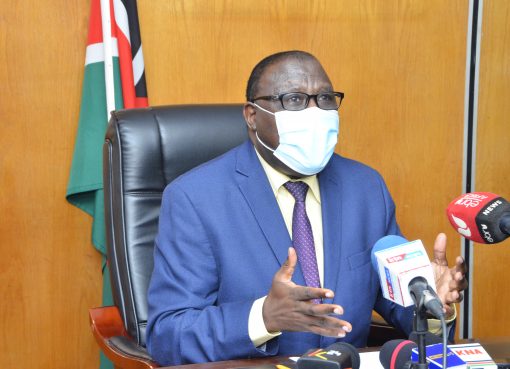
Treasury Cabinet Secretary (CS) John Mbadi has defended the proposed National Infrastructure Fund, revealing that the government has already mobilized about Sh350 billion through divestment of shares in key state-linked firms to finance mega capital projects.
Speaking during the launch of the Ahero–Kobong’o irrigation upgrade in Nyando Sub-County, Mbadi said the fund is designed to finance large-scale infrastructure that cannot be supported through ordinary tax revenues.
He disclosed that the government had raised Sh244 billion from the sale of additional shares in Safaricom and a further Sh106 billion from divestment of shares in Kenya Pipeline Company (KPC), bringing the total to Sh350 billion.
“We cannot borrow more and we cannot tax Kenyans more. Our tax revenues are already stretched, and we are servicing debts taken in previous years. The only responsible option is to mobilize capital through an infrastructure fund,” Mbadi said.
The proposed National Infrastructure Fund Bill is currently before Parliament, and the CS expressed confidence it would be concluded before the end of March.
According to Mbadi, proceeds from the fund will finance high-impact projects including the proposed Koru-Soin Dam, expansion of irrigation infrastructure, upgrade of Jomo Kenyatta International Airport (JKIA), and extension of the Standard Gauge Railway (SGR) from Naivasha to Malaba.
He said the Koru-Soin Dam alone is projected to cost more than Sh20 billion and will be critical in unlocking irrigation potential in Kisumu County and stabilizing water supply for agriculture.
“We cannot talk about food security without water storage. When it rains, we must harvest that water and store it in dams so that we can irrigate when the rains fail,” he said.
Mbadi argued that irrigation expansion, particularly in Nyanza and Western Kenya, could significantly reduce food imports and create jobs for thousands of young people.
On the SGR, Mbadi said the line must extend from Naivasha to Kisumu and onward to Malaba to make it commercially viable and support regional trade.
“The railway cannot remain stuck in Naivasha. To unlock its value, it must connect to Kisumu and the border to support trade with Uganda and the wider region,” he said.
Mbadi sharply criticized leaders opposing the sale of Safaricom and KPC shares, emphasizing that the government was restructuring ownership, not relinquishing control. Majority shareholding would remain in Kenyan hands, with pension funds, local banks, and the National Social Security Fund holding significant stakes.
“You cannot say we should not sell shares and at the same time demand dams, irrigation, and modern infrastructure. These projects require capital. Selling a portion of shares to raise funds for national development is a strategic decision,” he said.
The CS maintained that the infrastructure fund represents a shift towards asset-backed financing, aimed at stimulating economic growth while easing pressure on public debt and taxpayers.
If implemented as outlined, the fund is expected to anchor long-term capital investments in water storage, transport, and agriculture, sectors central to driving productivity and food security.