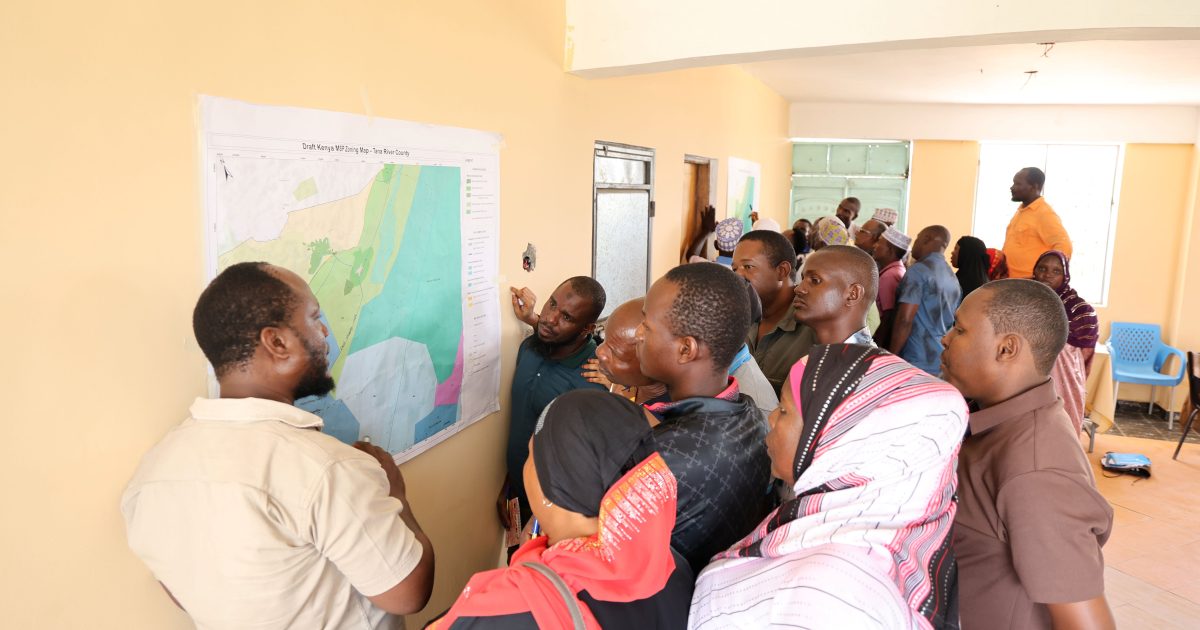
Marine stakeholders in Tana River County have endorsed a draft plan mapping the utilization and management of the county’s marine spaces, expressing optimism that the initiative will unlock economic opportunities and improve the livelihoods of coastal communities.
During a validation forum held in Minjila Town on Wednesday, stakeholders drawn from local communities, county government departments, Beach Management Units, and conservation groups convened to review and approve the draft Marine Spatial Plan (MSP) ahead of its final adoption.
Participants expressed satisfaction with the mapping and zoning proposals contained in the draft plan, noting that many of the recommendations submitted during earlier public participation forums had been incorporated.

They described the validation exercise as a significant milestone toward the realization of a comprehensive framework for managing the county’s marine resources.
Speaking during the forum, County Executive Committee Member for Lands, Physical Planning and Fisheries, Mwanajuma Hiribae, said the validation process underscored the importance of involving communities in decisions that affect marine resources and coastal livelihoods.
“Scientists have conducted extensive research on the resources available in the ocean. By combining those findings with the Spatial Plan that we are currently validating, we will be able to determine our economic position and identify opportunities for growth,” she said
She noted that although the draft plan had received widespread support from stakeholders, there was still a need for extensive civic education to enhance public understanding of its objectives and minimize potential resistance during implementation.
Local residents, led by Islam Abdalla, welcomed the progress made in developing the marine spatial plan, saying it would create economic opportunities for low-income households while promoting the sustainable use and conservation of marine resources.
Abdalla praised the mapping exercise, noting that the allocation of specific marine zones for different users would help protect small-scale fishers from unfair competition posed by large commercial operators, while ensuring equitable access to marine resources.
Stephene Ndegwa, a fisheries officer from the State Department for Blue Economy and Fisheries, which is spearheading the development of the Marine Spatial Plan, said stakeholders have a two-month window to submit further comments, recommendations, or objections before it is forwarded to Parliament for consideration.
by Jackson Msanzu